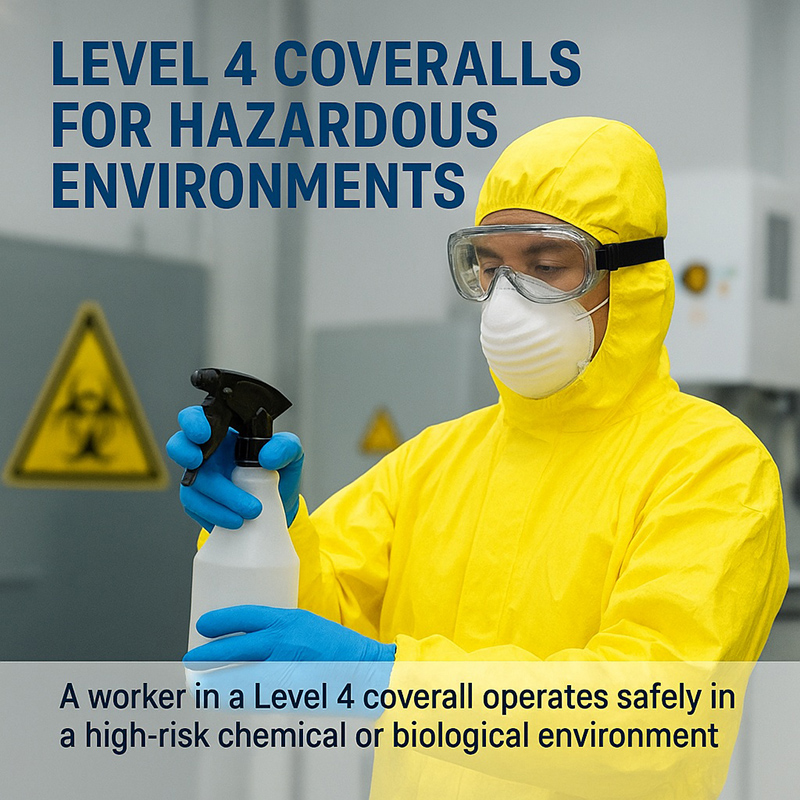
In workplaces where the highest level of protection is required, Level 4 coveralls represent the ultimate barrier against dangerous contaminants, fluids, and infectious materials. Whether in healthcare, chemical handling, or emergency response, these garments are designed to keep workers safe in the most hazardous environments.
Understanding Level 4 Coveralls
Level 4 coveralls are classified as high-risk protective garments, offering the maximum fluid and pathogen resistance among all protection levels.
They are typically made from multi-layered, impermeable materials such as coated fabrics or film laminates that create a solid barrier against blood, body fluids, and chemical splashes.
These garments are tested under rigorous standards such as AAMI PB70 Level 4, EN 14605 Type 3-B/4-B, or ASTM F1670/F1671, ensuring full protection even under high-pressure fluid exposure.
Where Are Level 4 Coveralls Used?
Level 4 coveralls are essential in situations where exposure to infectious diseases, toxic chemicals, or high biological risk agents is possible.
Common applications include:
-
Healthcare and emergency response during outbreaks or contamination control
-
Pharmaceutical manufacturing and research laboratories
-
Hazardous chemical handling and cleanup operations
-
Disaster response and decontamination zones
-
Industrial environments involving toxic aerosols or biohazards
These suits protect against not only liquids and particulates but also viral and bacterial penetration, providing total-body coverage from head to toe.
Key Features and Benefits of Level 4 Coveralls
-
Maximum Fluid and Pathogen Barrier
Designed to withstand heavy liquid exposure, Level 4 fabrics prevent penetration even under pressure—ideal for handling biological or chemical hazards. -
Sealed Seams for Total Protection
Ultrasonically welded or taped seams ensure that no contaminants can pass through stitch holes or fabric joints. -
Full-Body Coverage
Integrated hoods, boot covers, and storm flaps help create a sealed system that minimizes contamination risks. -
Durability in Extreme Conditions
Level 4 suits are built to maintain integrity during demanding operations such as chemical handling, medical emergencies, or field decontamination. -
Compatibility with Other PPE
They are designed to be worn with respirators, gloves, and face shields, forming a complete protection ensemble.
Level 4 vs. Lower Protection Levels
Compared with Level 1–3 coveralls, Level 4 offers the highest protection but with reduced breathability due to its fully sealed design.
It is ideal for short-term, high-risk exposure where safety outweighs comfort.
For lower-risk environments, lighter PPE (such as Level 2 or 3) may be more practical and comfortable for long wear.
Choosing the Right Level 4 Coverall
When selecting a Level 4 coverall, consider the following:
-
Certified compliance with AAMI PB70 Level 4 or EN Type 3-B/4-B standards
-
Sealed or taped seams for complete fluid protection
-
Chemical resistance data from manufacturers
-
Comfort-enhancing design, such as ergonomic fit and flexible materials
Gonow Safety provides reliable Level 4 coveralls that combine advanced materials with user comfort, ensuring workers remain safe in even the most critical environments.
Final Thoughts
In hazardous environments, protection cannot be compromised. Level 4 coveralls represent the highest standard of defense—ensuring that workers facing dangerous pathogens, fluids, or chemicals stay fully shielded.
At Gonow Safety, we are committed to providing PPE solutions that protect those who protect others—because every layer of safety matters.