
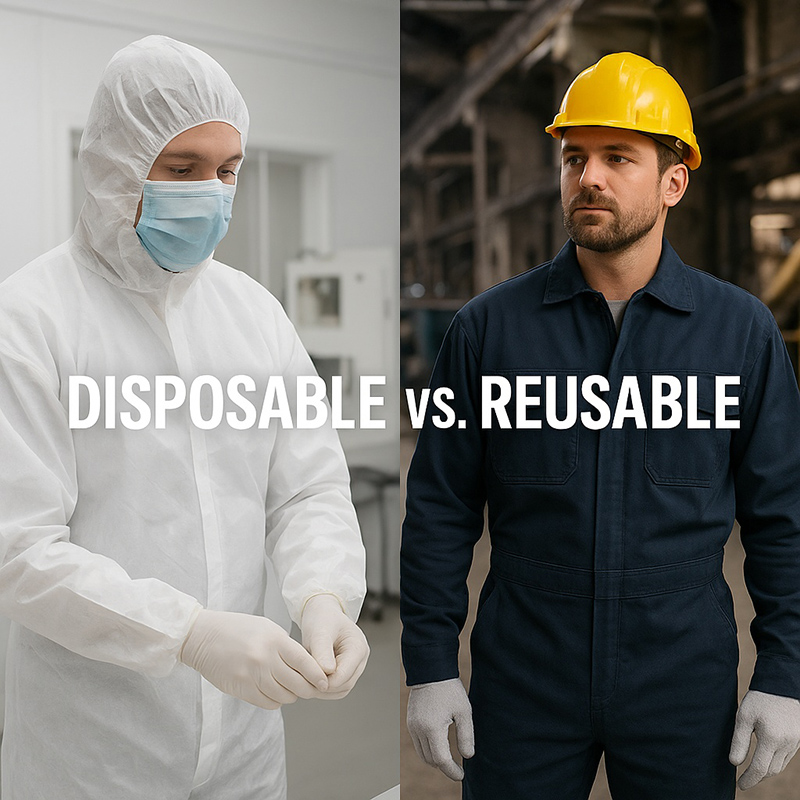
When choosing protective clothing, one of the most common questions safety managers face is whether to use disposable or reusable coveralls. Both types have their strengths, and the best option often depends on your work environment, protection requirements, and long-term cost considerations.
Let’s explore the key differences and determine which option offers the best value for your team.
1. Understanding Disposable Coveralls
Disposable coveralls are designed for single-use protection in environments where contamination control is critical.
They are typically made from lightweight materials such as polypropylene, microporous film, or SMS fabric, providing a balance of breathability and protection.
Common uses include:
-
Healthcare and laboratory work
-
Painting, cleaning, or light chemical handling
-
Food processing or controlled environments
-
Short-duration maintenance and inspection tasks
These suits are popular because they’re cost-effective upfront and eliminate the need for decontamination or laundering after use.
Pros:
-
No cleaning or maintenance required
-
Hygienic—ideal for contamination control
-
Lightweight and comfortable
-
Lower initial cost
Cons:
-
Not environmentally friendly
-
Limited durability—tear and puncture resistance is lower
-
Recurrent replacement increases long-term costs
2. Understanding Reusable Coveralls
Reusable coveralls are made from durable materials such as cotton, polyester blends, or coated fabrics, built to withstand multiple washes and extended use.
They are commonly used in industrial, construction, and mechanical settings where long-term durability is essential.
Common uses include:
-
Manufacturing and assembly lines
-
Welding, construction, and heavy-duty maintenance
-
Automotive and mechanical workshops
-
Industrial cleaning or utilities
Pros:
-
Strong, durable, and long-lasting
-
More sustainable—reduced waste
-
Better fit and comfort for extended wear
-
Cost-effective over time
Cons:
-
Requires laundering and decontamination
-
Higher upfront investment
-
May degrade if not properly maintained
3. Comparing Protection Levels: Level 1 to Level 4
Whether disposable or reusable, the protection level (1–4) determines how well a coverall resists fluids and contaminants:
| Level | Protection Rating | Best Suited For | Typical Type |
|---|---|---|---|
| Level 1 | Minimal barrier | Dry environments, dust | Usually Reusable |
| Level 2 | Low to moderate barrier | Light fluid contact | Both |
| Level 3 | Moderate barrier | Moderate splash and aerosols | Usually Disposable |
| Level 4 | Maximum barrier | Hazardous fluids or pathogens | Disposable (sealed seams) |
In general, disposable coveralls dominate higher protection levels (3–4) due to their impermeable materials, while reusable suits perform best in Levels 1–2 where comfort, flexibility, and durability matter more.
4. Which Offers the Best Value?
The best value depends on your environment and frequency of use:
-
Choose Disposable Coveralls If:
Your workers face contamination or infection risks, or tasks involve biohazards, painting, or chemical splashes. These suits save time and ensure hygiene. -
Choose Reusable Coveralls If:
You need long-term protection in industrial or mechanical environments with minimal contamination risks. They reduce waste and lower total costs over time.
A mixed strategy is often ideal—use disposable suits for high-risk, short tasks and reusables for daily low-risk work.
5. Balancing Cost, Comfort, and Compliance
Cost shouldn’t be the only factor. The right choice ensures:
-
Regulatory compliance (EN, ISO, or AAMI standards)
-
Worker comfort and mobility
-
Sustainability and waste reduction goals
At Gonow Safety, we offer both disposable and reusable coveralls across multiple protection levels—helping you select the right combination for your team’s safety and budget.
Final Thoughts
Both disposable and reusable coveralls have their place in workplace safety.
Disposable options provide quick, clean protection for high-risk tasks, while reusable suits offer long-term durability and value for everyday work.
The key is understanding your environment—and choosing PPE that delivers both safety and practicality.