In modern industrial workplaces, musculoskeletal injuries and worker fatigue remain major challenges. Heavy lifting, repetitive tasks, and long hours contribute to workplace accidents and long-term health problems. Industrial exoskeletons are emerging as a transformative solution, combining ergonomics, wearable technology, and safety innovation to protect employees and improve productivity.
As 2026 progresses, more companies are recognizing the potential of exoskeleton technology to enhance workplace safety and efficiency.
What is an Industrial Exoskeleton?
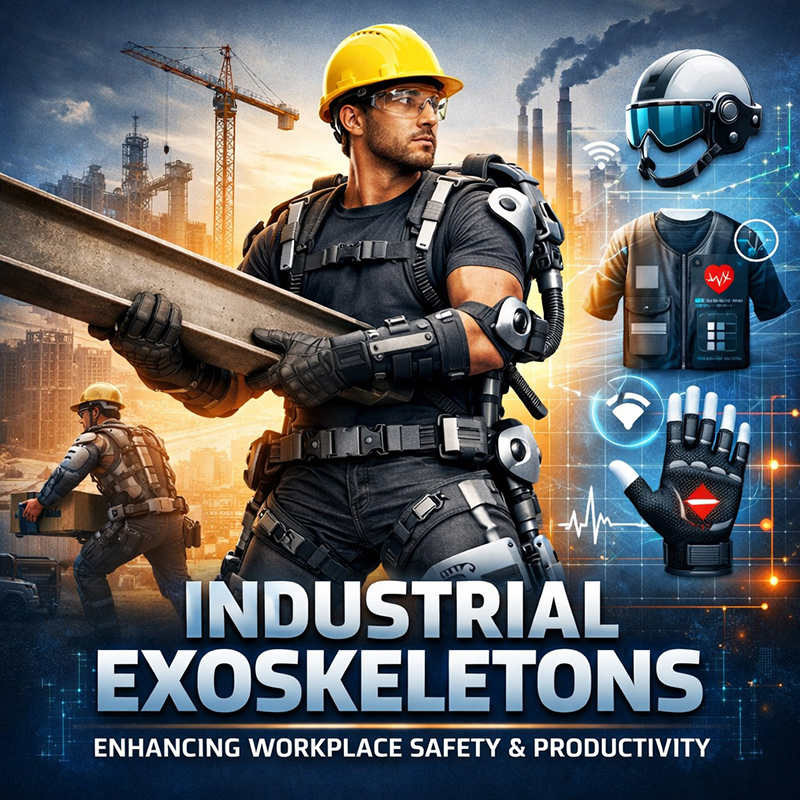
An industrial exoskeleton is a wearable device designed to support, enhance, or assist human movement. By distributing load and reducing strain on muscles and joints, exoskeletons help workers perform physically demanding tasks safely and efficiently.
Types of exoskeletons include:
-
Upper-body support: Assists with lifting and overhead tasks
-
Lower-body support: Reduces leg and back strain for long-standing or walking-heavy jobs
-
Full-body exoskeletons: Combine upper and lower support for maximum protection
These devices are designed for industrial environments, including construction sites, warehouses, and manufacturing plants.
Benefits of Using Exoskeletons
1. Reduce Worker Fatigue and Injuries
Exoskeletons reduce muscle fatigue, strain, and the risk of repetitive strain injuries. This allows employees to work longer safely, without compromising their health.
2. Improve Ergonomics
By supporting proper posture during lifting, bending, and repetitive movements, exoskeletons promote correct ergonomics and prevent long-term musculoskeletal damage.
3. Increase Productivity
With physical support from exoskeletons, workers can perform heavier tasks with less effort, improving efficiency and workflow without increasing risk.
4. Enhance Safety Compliance
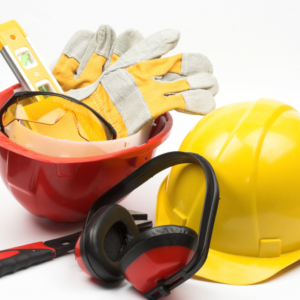
When integrated with PPE programs, exoskeletons complement helmets, gloves, and vests to form a holistic approach to worker safety.
Applications Across Industries
Construction
Exoskeletons assist workers with lifting beams, handling heavy tools, and repetitive overhead tasks, reducing the incidence of back and shoulder injuries.
Logistics and Warehousing
In warehouses, workers benefit from lifting and stacking heavy items with less strain, reducing fatigue and error rates.
Manufacturing
Assembly line workers use exoskeletons for prolonged standing tasks or repetitive assembly motions, which improves consistency and reduces musculoskeletal stress.
Oil, Gas, and Chemical Plants
Combined with smart PPE, exoskeletons provide enhanced support in high-risk environments, ensuring safe movement while handling equipment or hazardous materials.
Integration with Smart PPE
The future of workplace safety lies in integrating exoskeletons with smart PPE:
-
Smart helmets can monitor posture and detect unsafe movements
-
Sensor gloves can track lifting techniques
-
Connected vests can log strain and fatigue data
This creates a data-driven safety ecosystem, allowing managers to proactively prevent injuries and improve worker health and productivity.
Future Outlook
In 2026 and beyond, exoskeletons are expected to:
-
Become lighter, more flexible, and easier to wear
-
Integrate IoT and AI for real-time feedback and predictive injury prevention
-
Be used in combination with smart PPE and wearable sensors to create fully monitored workplaces
-
Expand to industries such as logistics, healthcare, and disaster response
The trend is clear: exoskeleton technology is moving from experimental trials to mainstream adoption, transforming the way workplaces approach safety and ergonomics.
How Companies Can Implement Exoskeletons
-
Pilot Programs – Start with a small group of employees to evaluate comfort and effectiveness
-
Training and Education – Teach employees correct usage and adjustment techniques
-
Integration with Existing PPE – Combine with helmets, gloves, and vests for comprehensive safety
-
Monitor Data – Use sensor data to optimize usage and reduce risks
-
Scale Gradually – Expand adoption as benefits are proven
Conclusion
Exoskeletons are no longer just futuristic concepts—they are practical solutions for reducing fatigue, preventing injuries, and boosting productivity. When combined with smart PPE, these wearable technologies form a complete safety ecosystem that addresses both human and operational needs.
For organizations committed to worker safety, adopting exoskeleton technology is a strategic step toward a healthier, safer, and more productive workplace.