
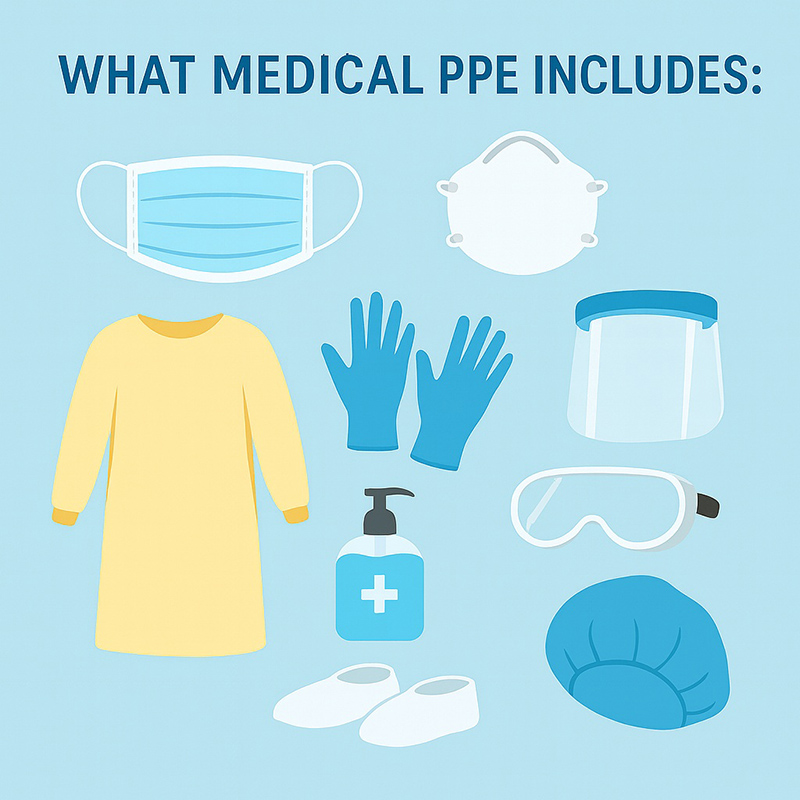
In healthcare environments, Personal Protective Equipment (PPE) is more than a set of tools — it is a critical safety barrier. Hospitals, clinics, laboratories, and emergency units all rely on medical PPE to protect healthcare workers, patients, and visitors from infection risks and cross-contamination.
So, what exactly does medical PPE include?
Which items are essential, high-risk, and require continuous replenishment?
This guide offers a clear and practical overview for healthcare buyers.
1. Medical Masks & Respiratory Protection: The Most Fundamental Layer
Medical Masks
Common types include:
-
Disposable medical masks
-
Medical surgical masks
-
Medical protective masks (similar to N95-level protection)
Their functions range from splash resistance to high-efficiency filtration of airborne particles. Surgical masks and higher-grade protective masks are typically core inventory in healthcare facilities.
Medical Respirators
Examples:
-
N95 / FFP2 medical respirators
-
Medical-grade foldable respirators
These provide higher filtration efficiency and are essential in operating rooms, infectious disease units, laboratories, and high-risk departments.
2. Medical Gloves: The First Line of Defense in Infection Control
Medical gloves are usually categorized by material:
-
Nitrile gloves – high strength, chemical resistance; the current mainstream choice.
-
Latex gloves – excellent fit, but may cause allergies in some users.
-
Vinyl (PVC) gloves – cost-effective, suitable for low-risk tasks.
Gloves are used in examinations, patient care, surgical procedures, cleaning, and more — making them one of the most frequently purchased PPE items in the healthcare sector.
3. Medical Protective Clothing: Full-Coverage Protection
Isolation Gowns
Used for routine care, examinations, and situations with minimal fluid exposure.
Medical Protective Coveralls
Designed for high-risk environments such as infectious disease wards, negative-pressure rooms, and emergency response.
Surgical Gowns
Used by surgical teams; require strict fluid resistance and sterile conditions.
4. Face & Eye Protection: Essential Against Splashes
Face Shields
Protect the eyes, nose, and mouth against droplets and bodily fluid splashes — often used together with masks.
Medical Goggles
Critical during high-risk procedures, such as intubation, suctioning, and emergency care.
Eye protection is sometimes overlooked, but it is mandatory in high-exposure departments.
5. Medical Caps & Shoe Covers: Supporting Environmental Hygiene
Bouffant or Clip Caps
Used in operating rooms, maternity units, and cleanrooms.
Disposable Shoe Covers
Help prevent contamination carried by footwear.
These consumables have a low unit cost but extremely high turnover, making them a stable and continuous procurement item.
6. Additional Protective Accessories
Some procedures require extra layers of protection:
-
Disposable PE aprons
-
Disposable sleeves
-
Protective drapes and sheets
These items reduce splash exposure and extend the lifespan of primary protective clothing.
7. Disinfection Supplies Paired with PPE
While not traditional PPE, the use of disinfectants is inseparable from PPE protocols:
-
Medical disinfectant wipes
-
Hand sanitizing gel
-
Portable disinfectant sprays
These maintain hygiene throughout the “wear — remove — dispose” PPE cycle.
How Healthcare Buyers Can Choose the Right Medical PPE
Here are practical, updated recommendations — avoiding outdated or overused advice:
✅ 1. Prioritize globally recognized medical standards
Look for compliance with:
-
EN 14683, ASTM F2100, EN 13795
-
ISO 13485
-
NIOSH (for respirators)
✅ 2. Evaluate supply chain reliability, not just price
Medical supply interruptions directly impact patient safety. Reliability and traceability matter.
✅ 3. Consider bundled PPE kits to increase efficiency
Examples:
-
ICU kits
-
Emergency response kits
-
Surgical packs
These save procurement time and improve consistency in high-demand settings.
✅ 4. Ensure products include batch numbers and traceability
LOT codes, production dates, and tracking systems are essential for medical-grade PPE.
Conclusion
Medical PPE covers a wide range of products — from basic masks and gloves to advanced protective suits, respirators, and splash-resistant face shields. Each item plays an essential role in reducing infection risks and ensuring a safe healthcare environment.
For medical buyers, understanding the purpose, use scenarios, and selection criteria of each PPE category helps build a more reliable and efficient supply chain — ultimately protecting healthcare workers and patients alike.