Choosing the right harness, fall arrest device, anchor points, and connectors, and combining them properly, is key to a safe fall protection system. This guide explains component selection and system integration for safe working at heights.
1. Why a Complete Fall Protection System is Essential
High-altitude work carries significant risks, and accidents often occur due to incompatible or improperly assembled equipment. A fall protection system forms a safety loop, connecting the worker securely to a reliable anchor point.
2. Harness Selection and Compatibility
Types of Harnesses
-
Full-body harnesses: Offer maximum support and distribute fall forces across the body.
-
Half-body harnesses: Suitable for lighter tasks but provide limited fall force distribution.
Key Considerations
-
Comfort and adjustability for long shifts
-
Weight capacity and fall force rating
-
Compatibility with connectors and fall arrest devices
3. Fall Arrest Device Selection
Purpose
A fall arrest device stops a fall quickly, minimizing the impact force on the worker.
Types
-
Self-locking devices: Automatically lock when a fall occurs.
-
Pulley-style devices: Ideal for vertical movement and rope systems.
Key Considerations
-
Ensure device load rating matches harness and connectors
-
Check for compliance with international safety standards
4. Anchor Points: Installation and Load Requirements
Importance
Anchor points are the foundation of any fall protection system. Proper placement and sufficient load capacity are critical.
Recommendations
-
Load rating should generally meet or exceed 15 kN
-
Choose suitable materials: steel structures, concrete anchors, or portable anchors
-
Verify installation location ensures safe fall paths
5. Connectors: Choosing and Using the Right Accessories
Common Connectors
-
Carabiners
-
D-rings
-
Pulleys
-
Quick links
Key Considerations
-
Material and strength: steel vs. aluminum
-
Load rating certification
-
Compatibility with harnesses and fall arrest devices to avoid failure
6. Fall Protection System Examples
Example 1: Construction Work at Heights
-
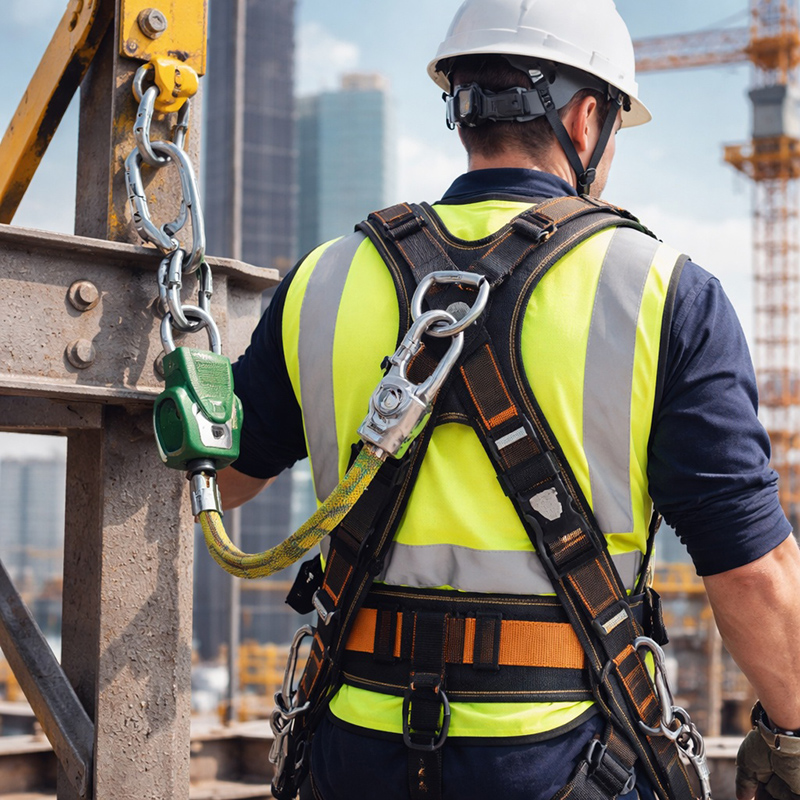
Full-body harness + self-locking fall arrest device + fixed steel anchor point + carabiner
Example 2: Wind Turbine Maintenance
-
Full-body harness + pulley-style fall arrest device + portable anchor point + high-strength connector
Tip: Ensure every system forms a complete closed loop; any weak link can compromise safety.
7. Summary and Safety Tips
-
A complete fall protection system is the cornerstone of high-altitude work safety.
-
Proper selection, system compatibility, and regular inspection = safer work at heights.
-
Always consult safety professionals to customize a system for your specific needs.
Contact Gonow Safety for professional guidance on selecting and assembling your fall protection system.