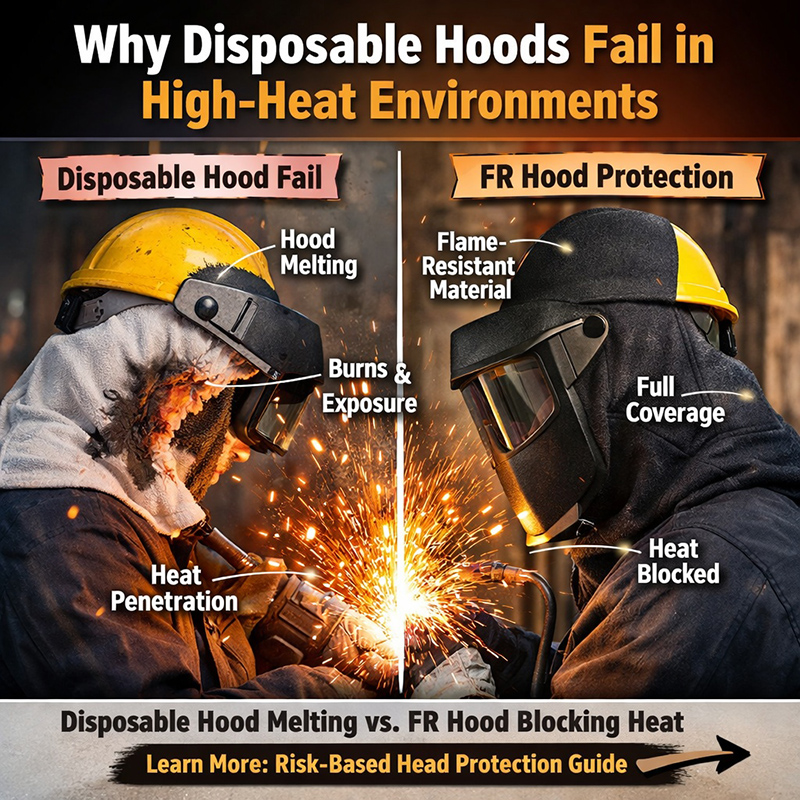
In many industrial workplaces, high-heat tasks such as welding, metal spraying, and hot surface handling are common. Workers sometimes assume that simply wearing a disposable hood is enough to protect against these hazards. However, disposable head covers are typically designed for light dust or contamination and are not built to withstand high temperatures. Using them inappropriately can result in burns, material melting, and serious workplace injuries.
High-Heat Risk Scenarios and Common Mistakes
| High-Heat Scenario | Suitable Head Cover | Common Mistake |
|---|---|---|
| Welding / Sparks | Flame-resistant (FR) hood | Using disposable hood that melts or ignites |
| Metal Spraying / Molten Particles | Heat-resistant hood with full coverage | Assuming any hood will block molten droplets |
| Hot Surface Work | Layered protection or FR hood with sweat-wicking material | Using thin disposable material leading to burns or heat stress |
Analysis
Disposable hoods often fail under high-heat conditions because their materials cannot resist flame, molten particles, or prolonged heat exposure. Even brief contact with sparks or hot metal can cause holes or burns, creating dangerous exposure to the worker’s head and neck.
Consequences of Wrong Selection
-
Severe burns or injuries
-
Compromised PPE system effectiveness
-
Increased liability and non-compliance with safety standards
Best Practices for Head Protection in High-Heat Environments
-
Always assess the type of heat hazard before selecting a hood.
-
Use flame-resistant or heat-resistant hoods according to industry standards.
-
Ensure hoods are compatible with helmets, respirators, and face shields.
-
Train workers on proper usage and limitations of each hood type.
Internal Link CTA
For a complete guide on head cover selection based on application and risk, visit our Risk-Based Head Protection Logic guide.