As workplaces evolve and safety standards rise, Personal Protective Equipment (PPE) is no longer limited to passive protection. Smart PPE, equipped with sensors, connectivity, and advanced analytics, is transforming the way companies manage safety, prevent accidents, and protect their workforce.
In 2026, this technology is becoming increasingly mainstream, and understanding its impact is essential for businesses, safety managers, and procurement professionals worldwide.
What is Smart PPE?
Smart PPE refers to protective gear integrated with digital technologies, such as sensors, IoT devices, and communication modules. Unlike traditional PPE, which only serves as a physical barrier, smart PPE actively monitors hazards, tracks worker conditions, and provides real-time feedback.
Common examples include:
-
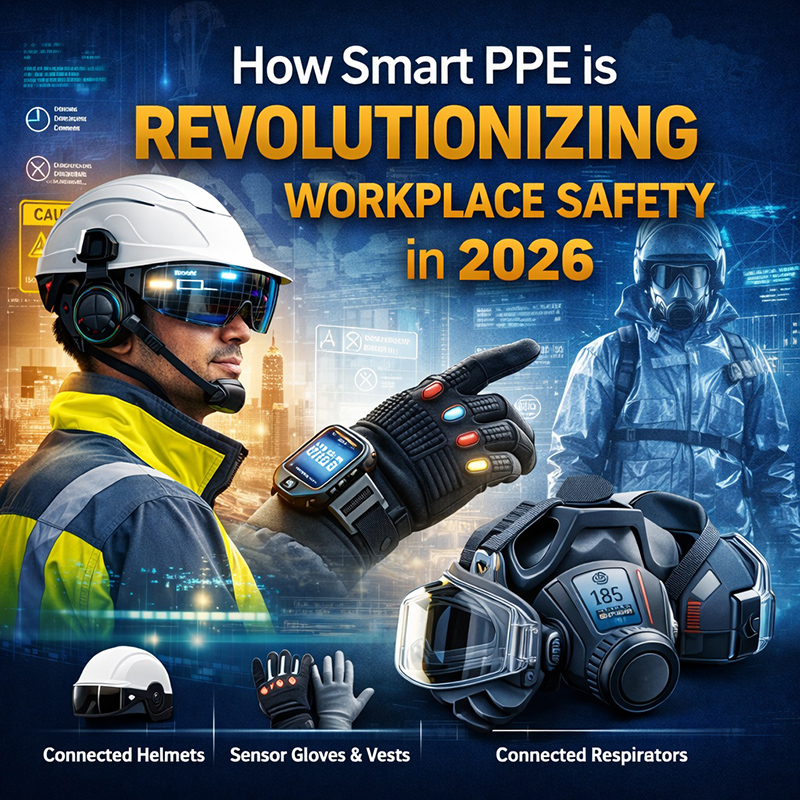
Smart helmets with impact sensors, cameras, or AR displays
-
Gloves and vests that monitor movement, posture, and fatigue
-
Connected respirators that track air quality and usage time
-
Wearable health sensors that detect heart rate, body temperature, and stress levels
By collecting and analyzing data, smart PPE empowers both workers and managers to respond proactively to potential risks.
Key Technologies Driving Smart PPE
1. Connected Helmets and Headgear
Modern smart helmets can detect impacts, alert supervisors in real time, and even overlay augmented reality (AR) information. These helmets improve situational awareness on construction sites, factories, and mining operations.
2. Sensor-Integrated Gloves and Vests
Smart gloves and vests monitor hand movements, lifting patterns, and posture, helping to reduce repetitive strain injuries and ensure safe handling of heavy materials.
3. AI-Powered Respirators
Connected respirators can measure air quality, alert workers to hazardous gases, and ensure compliance with occupational health regulations. Coupled with data analytics, they help identify high-risk areas in real time.
4. Wearable Health and Safety Monitors
Devices that track vital signs and fatigue can prevent accidents caused by exhaustion, heat stress, or overexertion. Alerts are sent automatically when workers approach unsafe levels, allowing timely intervention.
Real-World Applications of Smart PPE
Several industries are already benefiting from smart PPE:
-
Construction: Helmets and vests monitor environmental hazards and worker location in real time.
-
Manufacturing: Sensor gloves reduce repetitive strain injuries, while smart helmets enhance situational awareness.
-
Logistics and Warehousing: Exoskeletons and sensor-integrated PPE reduce musculoskeletal injuries during heavy lifting.
-
Oil, Gas, and Chemical Plants: Connected respirators and PPE monitor exposure to harmful chemicals continuously.
By combining data collection, real-time alerts, and analytics, smart PPE is helping companies prevent incidents before they occur, rather than responding after accidents happen.
The Benefits of Adopting Smart PPE
-
Enhanced Worker Safety – Continuous monitoring detects hazards early and reduces workplace accidents.
-
Data-Driven Safety Decisions – Management can track trends, identify risky areas, and optimize safety protocols.
-
Regulatory Compliance – Automated reporting ensures compliance with global occupational health and safety standards.
-
Increased Efficiency – Real-time monitoring reduces downtime due to accidents and improves overall productivity.
-
Employee Confidence – Workers feel more protected, boosting morale and engagement.
Future Trends in Smart PPE
As 2026 progresses, we expect smart PPE to continue evolving:
-
Integration with IoT and AI for predictive safety alerts
-
Wearable exoskeletons combined with smart sensors for high-risk labor tasks
-
Eco-friendly and sustainable materials combined with smart technology
-
Virtual and augmented reality integration for training and hazard simulation
The future of PPE is active, intelligent, and adaptive, moving beyond passive protection to holistic safety management.
How Companies Can Adopt Smart PPE
To integrate smart PPE successfully:
-
Start with a pilot program to identify which devices suit your workforce
-
Collect and analyze real-time safety data to understand high-risk areas
-
Train employees to use smart features effectively
-
Gradually scale adoption to cover multiple sites and operations
-
Partner with trusted suppliers who offer reliable devices and technical support
In 2026, smart PPE is no longer optional—it is a competitive advantage. By combining real-time monitoring, predictive analytics, and wearable technology, companies can ensure safer, more productive workplaces while staying ahead of global safety standards.
For organizations committed to workforce protection and efficiency, adopting smart PPE today is investing in the safety and resilience of tomorrow.