
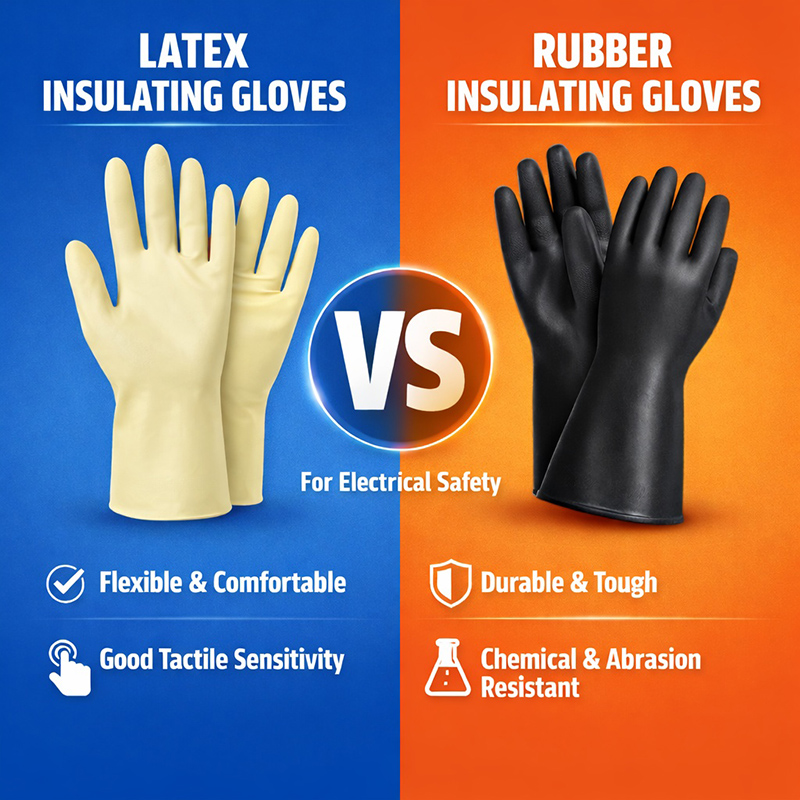
In electrical work, insulating gloves are essential personal protective equipment (PPE) for ensuring safety. The most common types on the market are latex gloves and rubber gloves. While both provide electrical insulation, they differ in material properties, applications, and user experience. This article explains the differences to help you choose the right gloves for your work.
1️⃣ Material and Properties
| Feature | Latex Gloves | Rubber Gloves |
|---|---|---|
| Material Source | Natural latex from rubber trees | Natural or synthetic rubber (e.g., nitrile, neoprene) |
| Elasticity | High elasticity, fits hand snugly | Slightly less elastic, more durable |
| Hand Feel | Soft, flexible, good tactile sensitivity | Thicker, heavier, hand feel is stiffer |
| Chemical Resistance | Limited resistance to acids and alkalis | Certain rubbers (like nitrile) have better resistance to oils and chemicals |
Tip: Latex gloves are softer and more comfortable for precise tasks, while rubber gloves are more suitable for heavy-duty or harsh environments.
2️⃣ Electrical Insulation Performance
| Indicator | Latex Gloves | Rubber Gloves |
|---|---|---|
| Standards | Usually meet ASTM D120 or IEC 60903 | Usually meet ASTM D120 or IEC 60903 |
| Insulation Voltage | 5,000V to 36,000V (depending on class) | 5,000V to 36,000V (depending on class) |
| Puncture Resistance | Generally lower | Generally higher, more resistant to wear |
| Service Life | Shorter, requires regular inspection | Longer, more resistant to environmental aging |
Note: Regardless of material, gloves must be chosen according to voltage class and inspected regularly for damage or aging.
3️⃣ Suitable Environments and Applications
Latex Gloves:
-
Indoor low-voltage operations (e.g., low-voltage electrical maintenance)
-
Precision instrument handling
-
Dry environments requiring flexibility and tactile sensitivity
Rubber Gloves:
-
High-voltage electrical work
-
Outdoor or harsh environments (rain, oil, chemicals)
-
Industrial heavy equipment operation
Tip: Rubber gloves are safer than latex gloves in wet or high-voltage conditions.
4️⃣ Care and Inspection
Proper maintenance is crucial for both types of gloves:
-
Inspect for cracks, punctures, or stiffness before each use
-
Avoid direct sunlight for extended periods to prevent aging
-
Clean and dry after use; store in a cool, dry place
-
Test electrical insulation regularly according to standards
Suggested image: Show a pair of latex gloves and a pair of rubber gloves side by side for comparison.
5️⃣ Buying Recommendations
-
Precision work and low-voltage environments → Prefer latex gloves
-
High-voltage or harsh industrial environments → Rubber gloves are safer
-
High chemical and abrasion resistance needed → Consider synthetic rubber gloves
-
Regular inspection → Ensure gloves remain effective and protective
Conclusion
Both latex and rubber insulating gloves have their advantages. Choosing the right gloves depends on working voltage, environmental conditions, task precision, and safety requirements. Proper selection and maintenance are key to ensuring safety in electrical work.