
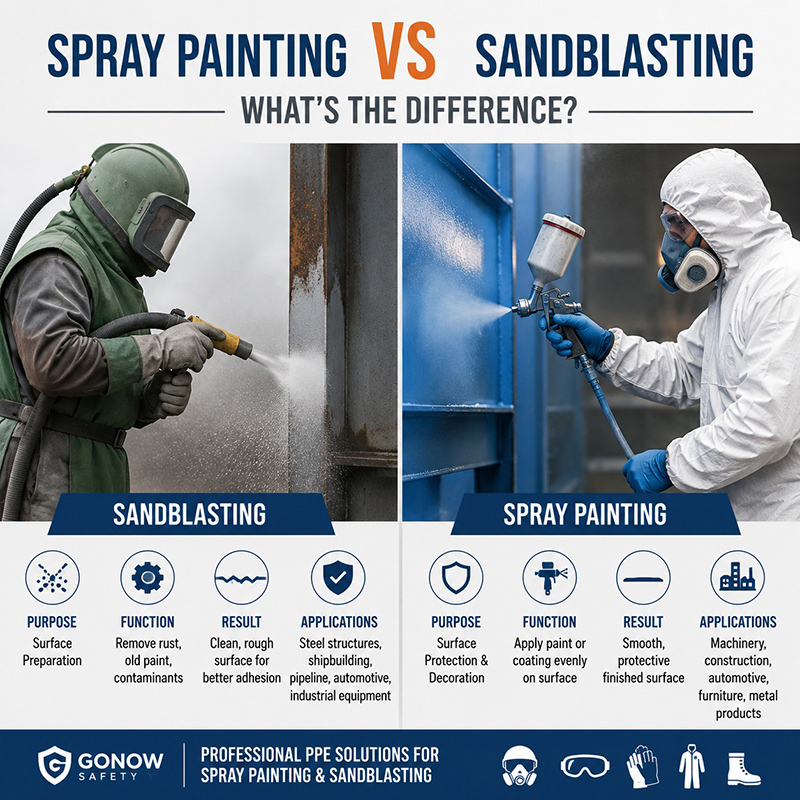
In industrial environments, spray painting and sandblasting are two commonly used surface treatment processes. While they are often used together, they serve completely different purposes and involve different safety requirements.
Understanding the difference between these processes is important for improving surface quality, workplace safety, and PPE selection.
1. What Is Sandblasting?
Sandblasting, also known as abrasive blasting, is a process that uses high-pressure abrasive materials to clean or prepare surfaces.
It is commonly used to:
- Remove rust
- Strip old paint
- Clean metal surfaces
- Prepare surfaces before coating
During the process, abrasive particles are propelled at high speed against a surface to remove contaminants and create a rough texture for better coating adhesion.
Common Sandblasting Applications
- Steel structure preparation
- Shipbuilding and marine maintenance
- Pipeline cleaning
- Industrial equipment restoration
- Automotive surface preparation
2. What Is Spray Painting?
Spray painting is the process of applying paint or coatings onto a surface using spray equipment.
Unlike sandblasting, spray painting focuses on:
- Surface protection
- Corrosion resistance
- Decorative finishing
- Product durability
Spray painting creates a smooth and even coating layer that helps protect materials from environmental damage.
Common Spray Painting Applications
- Industrial machinery
- Automotive manufacturing
- Construction equipment
- Steel structures
- Furniture and metal products
3. The Main Difference Between Spray Painting and Sandblasting
Although both processes are related to surface treatment, their purposes are completely different.
| Process | Main Purpose | Typical Result |
|---|---|---|
| Sandblasting | Surface cleaning and preparation | Rough, clean surface |
| Spray Painting | Surface coating and protection | Smooth protective finish |
In many industrial projects, sandblasting is performed first, followed by spray painting.
This combination improves coating adhesion and extends product lifespan.
4. Safety Risks in Sandblasting
Sandblasting can create extremely hazardous working conditions if proper PPE is not used.
Common Risks Include:
- Large amounts of airborne dust
- High-speed abrasive particles
- Eye and face injuries
- Respiratory hazards
- Noise exposure
Long-term exposure to blasting dust may cause serious respiratory problems.
Recommended PPE for Sandblasting
- Blasting helmets
- Respiratory protection systems
- Protective clothing
- Heavy-duty gloves
- Safety footwear
- Hearing protection
5. Safety Risks in Spray Painting
Spray painting also presents serious workplace hazards, especially in enclosed environments.
Common Risks Include:
- Chemical exposure
- VOC inhalation
- Skin irritation
- Fire and explosion risks
- Poor ventilation hazards
Without proper protection, workers may experience long-term health effects caused by paint fumes and airborne chemicals.
Recommended PPE for Spray Painting
- Respirators
- Chemical-resistant gloves
- Protective coveralls
- Eye protection
- Anti-slip safety shoes
6. Why PPE Is Essential in Both Processes
Both spray painting and sandblasting expose workers to airborne hazards, physical risks, and chemical exposure.
Using proper PPE not only improves worker safety but also helps companies:
- Reduce workplace injuries
- Improve compliance
- Increase productivity
- Lower long-term operational risks
Choosing the correct PPE should always depend on the working environment, exposure level, and application requirements.
7. Conclusion
Spray painting and sandblasting play different but equally important roles in industrial surface treatment.
Sandblasting prepares the surface, while spray painting protects and finishes it.
Because both processes involve significant workplace hazards, proper PPE is essential for maintaining safety, efficiency, and long-term worker protection.
As a one-stop PPE supplier, GONOW SAFETY provides industrial safety solutions designed for demanding environments such as spray painting, abrasive blasting, manufacturing, and construction.