Electrical work involves various hazards, including electric shock, arc flash, burns, and flying particles.
Whether workers are performing electrical installation, maintenance, inspection, or repair tasks, selecting the correct Personal Protective Equipment (PPE) is essential for reducing workplace injuries.
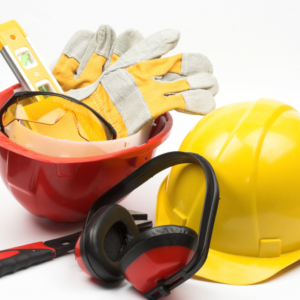
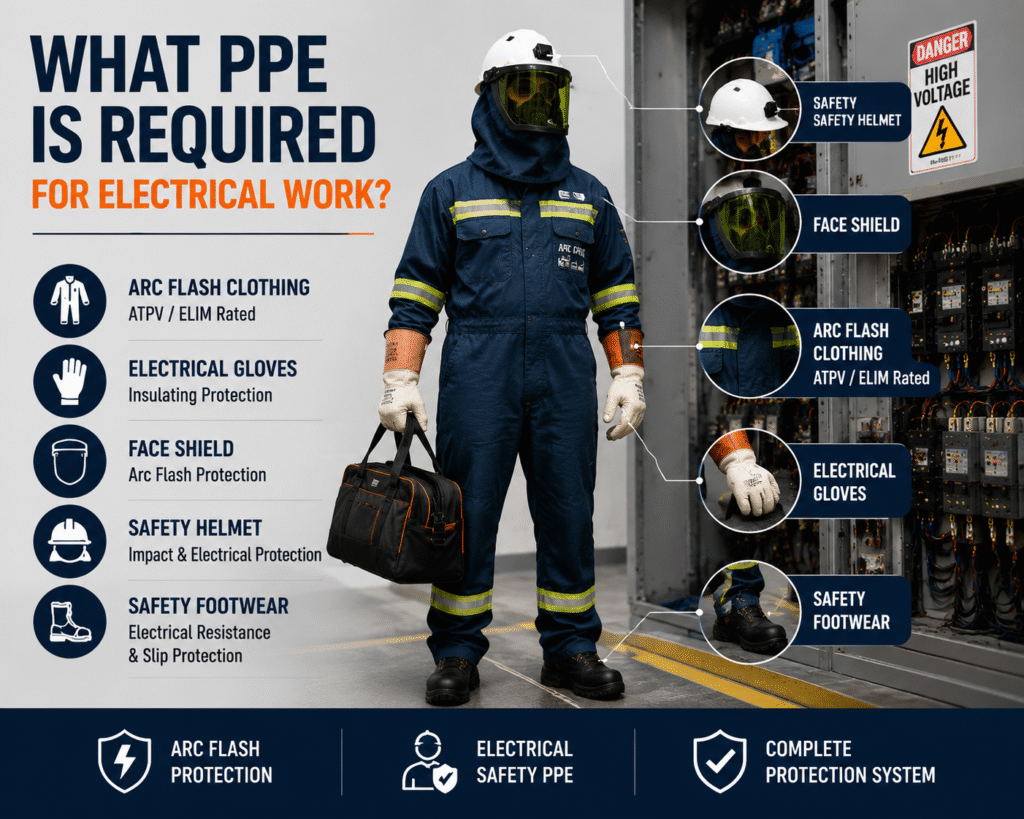
Electrical PPE is not limited to protective clothing. A complete electrical safety system usually includes:
- Arc flash protective clothing
- Electrical gloves
- Safety helmets
- Face protection
- Safety footwear
- Eye protection
This guide explains the essential PPE required for electrical work and how companies can choose suitable protection based on workplace hazards.
Why Is PPE Important for Electrical Work?
Electrical hazards can cause serious injuries within seconds.
Common electrical risks include:
1. Electric Shock
Contact with energized equipment can result in:
- Severe burns
- Electrical injuries
- Fatal accidents
2. Arc Flash
An arc flash can release:
- Extreme heat
- Intense light
- Molten metal
- Pressure waves
Workers need arc-rated PPE to reduce thermal injury risks.
3. Flying Particles and Equipment Hazards
Electrical operations may also involve:
- Metal fragments
- Sparks
- Mechanical risks
Proper PPE provides additional protection.
Essential PPE for Electrical Work
1. Arc Flash Protective Clothing
Purpose:
Protect workers against thermal hazards caused by electrical arcs.
Common products:
- Arc flash coveralls
- Arc-rated jackets
- Arc-rated trousers
- Flame-resistant workwear
Important Standards:
IEC 61482
International standard for arc flash protective clothing.
ASTM F1506
North American standard for arc-rated electrical worker clothing.
NFPA 70E
Electrical workplace safety standard used for PPE selection.
Key Ratings:
Look for:
- ATPV
- ELIM
- Arc rating value
The correct rating depends on the incident energy level of the workplace.
2. Electrical Safety Gloves
Electrical gloves protect workers from electric shock and electrical contact hazards.
Common types:
Insulating Rubber Gloves
Used for:
- Electrical maintenance
- Energized equipment work
Leather Protector Gloves
Often worn over insulating gloves to provide:
- Mechanical protection
- Cut resistance
- Abrasion resistance
Important considerations:
- Voltage rating
- Glove class
- Inspection requirements
3. Arc Flash Face Shield and Eye Protection
Arc flash incidents generate intense light and heat.
Face and eye protection may include:
- Arc-rated face shields
- Safety goggles
- Protective glasses
Protection helps reduce:
- Eye injuries
- Facial burns
- Flying particle risks
4. Electrical Safety Helmet
Electrical workers may require helmets that provide:
- Impact protection
- Electrical insulation
- Arc flash compatibility
Common features:
- Non-conductive shell
- Face shield attachment
- Comfortable suspension system
5. Electrical Safety Footwear
Safety footwear protects against:
- Electrical hazards
- Falling objects
- Workplace impact risks
Important features:
- Electrical resistance
- Slip resistance
- Protective toe caps
6. Hearing Protection
Arc flash events can create intense sound pressure.
Workers may need:
- Earplugs
- Earmuffs
Especially in:
- Industrial facilities
- Power plants
- Electrical rooms
Complete Electrical PPE System
Electrical protection is not based on one product.
A complete PPE system may include:
| PPE | Main Protection |
|---|---|
| Arc-rated clothing | Arc flash thermal protection |
| Electrical gloves | Shock protection |
| Helmet | Head and electrical protection |
| Face shield | Arc flash and eye protection |
| Safety footwear | Foot protection |
| Eye protection | Flying particles and light exposure |
How to Choose Electrical PPE?
Step 1: Identify Electrical Hazards
Evaluate:
- Voltage level
- Equipment type
- Working distance
- Incident energy
Step 2: Select the Correct Protection Level
For arc flash clothing, consider:
- ATPV rating
- ELIM rating
- Required protection level
Higher ratings should only be selected based on actual hazards.
Step 3: Check Applicable Standards
Different markets may require different standards.
North America:
- NFPA 70E
- ASTM F1506
Europe and International Markets:
- IEC 61482
- EN ISO 11612
- EN 1149
Electrical PPE Checklist
Before electrical work, workers should check:
✅ Arc-rated clothing
✅ Electrical gloves
✅ Safety helmet
✅ Face shield
✅ Safety glasses
✅ Safety footwear
✅ Hearing protection
✅ Proper PPE inspection
Common Mistakes When Selecting Electrical PPE
Mistake 1: Using Regular Workwear
Normal clothing may ignite or continue burning during an arc flash event.
Mistake 2: Choosing PPE Without Risk Assessment
The highest protection level is not always the best choice.
Correct PPE depends on:
- Hazard level
- Work environment
- Required standards
Mistake 3: Ignoring PPE Condition
Electrical PPE should be inspected regularly for:
- Damage
- Contamination
- Wear
- Expiration
Electrical PPE for Different Applications
Electrical Maintenance
Recommended:
- Arc-rated clothing
- Insulating gloves
- Face protection
Power Utilities
Recommended:
- High-performance arc flash PPE
- Electrical protection system
- Complete PPE combination
Industrial Facilities
Recommended:
- Arc-rated workwear
- Safety helmet
- Electrical gloves
How GONOW SAFETY Supports Electrical Safety Solutions
At GONOW SAFETY, we provide electrical safety PPE solutions for demanding industrial environments.
Our solutions include:
- Arc flash protective clothing
- Flame-resistant workwear
- Electrical safety gloves
- Protective helmets
- Customized PPE solutions
We help customers select suitable PPE based on:
- Workplace hazards
- Industry requirements
- International safety standards
From electrical maintenance to industrial operations, GONOW SAFETY supports safer workplaces with reliable PPE solutions.
Conclusion
Electrical work requires more than basic protective equipment.
A complete electrical PPE system helps protect workers from:
- Electric shock
- Arc flash
- Thermal hazards
- Mechanical risks
Choosing the correct PPE starts with understanding workplace hazards, selecting appropriate standards, and ensuring workers have complete protection.
The right PPE protects workers when electrical hazards happen.