
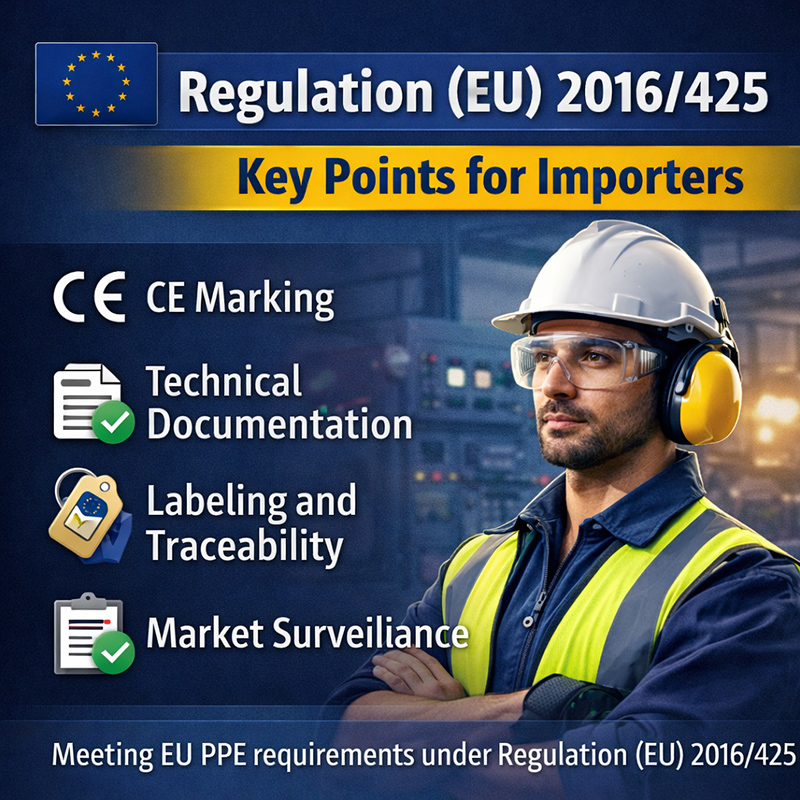
The European Union PPE Regulation (EU) 2016/425 is the core legal framework governing the design, manufacture, and placing of personal protective equipment (PPE) on the EU market. For importers, compliance is not optional—failure to meet regulatory requirements can result in product withdrawal, fines, or liability in the event of workplace accidents.
For companies sourcing PPE from outside the EU, understanding importer obligations under Regulation (EU) 2016/425 is essential. This article outlines the key responsibilities, compliance requirements, and practical considerations importers must address to ensure smooth market access and regulatory conformity.
What Is Regulation (EU) 2016/425?
Regulation (EU) 2016/425 replaced the former PPE Directive 89/686/EEC and has been fully applicable since April 21, 2018. Unlike a directive, a regulation is directly applicable in all EU Member States, ensuring consistent enforcement across the EU.
The regulation covers PPE intended to protect users against risks to health or safety, including:
-
Head, eye, face, hearing, and respiratory protection
-
Hand and arm protection
-
Protective clothing and footwear
-
Fall protection and high-visibility PPE
Who Is Considered an Importer Under EU PPE Law?
An importer is any natural or legal person established in the EU who places PPE from a non-EU country onto the EU market.
If your company:
-
Purchases PPE from manufacturers outside the EU
-
Sells PPE under your own brand (OEM/private label)
-
Distributes PPE within the EU under your name
you are legally considered an importer and bear specific regulatory responsibilities.
Key Responsibilities of PPE Importers
1. Ensure PPE Compliance Before Market Placement
Before placing PPE on the EU market, importers must verify that:
-
The PPE complies with Regulation (EU) 2016/425
-
Appropriate conformity assessment procedures have been completed
-
The product bears a valid CE marking
For Category II and Category III PPE, this includes verification of EU-type examination certificates issued by a notified body.
2. Verify Technical Documentation Availability
Importers must ensure that the manufacturer has prepared complete technical documentation, including:
-
Product design and risk assessment
-
Applied harmonized standards (e.g., EN standards)
-
Test reports and certificates
While importers are not required to hold full technical files, they must be able to make documentation available to market surveillance authorities upon request.
3. Declaration of Conformity (DoC)
Each PPE product must be accompanied by:
-
An EU Declaration of Conformity, or
-
A clear reference (URL or document) indicating where the DoC can be accessed
Importers must confirm the DoC is accurate, complete, and up to date.
4. Labeling and Traceability Requirements
Importers must ensure that:
-
The importer’s name, registered trade name or trademark, and postal address are indicated on the PPE or its packaging
-
Products carry batch or serial numbers for traceability
-
Instructions and safety information are provided in the official language(s) of the destination EU Member State
5. Storage and Transport Conditions
Importers are responsible for ensuring that storage and transport conditions do not compromise PPE compliance. Improper handling that affects performance or safety may result in non-compliance, even if the product was originally certified.
6. Market Surveillance and Corrective Actions
If an importer believes that PPE placed on the market is non-compliant or poses a risk, they must:
-
Take corrective actions immediately (e.g., withdrawal or recall)
-
Inform relevant national authorities
-
Cooperate fully with market surveillance bodies
PPE Risk Categories and Importer Implications
PPE is classified into three categories based on risk level:
-
Category I – Minimal risks (self-certification allowed)
-
Category II – Intermediate risks (EU-type examination required)
-
Category III – High risks (ongoing conformity surveillance required)
Importers must clearly understand the category of each PPE product, as obligations increase significantly for Category II and III products.
Common Compliance Risks for Importers
Importers frequently face issues related to:
-
Expired or invalid CE certificates
-
Incorrect or missing importer labeling
-
Non-harmonized or outdated EN standards
-
Incomplete user instructions or translations
Proactive compliance checks before shipment can significantly reduce regulatory and commercial risk.
How GONOW SAFETY Supports EU PPE Compliance
At GONOW SAFETY, we understand the regulatory challenges faced by EU importers sourcing PPE internationally. Our products are developed with a strong focus on:
-
Compliance with Regulation (EU) 2016/425
-
Alignment with relevant EN and ISO standards
-
Clear documentation, traceability, and labeling support
We work closely with our partners to ensure PPE products meet EU regulatory expectations and support smooth market entry.
Conclusion
Regulation (EU) 2016/425 places clear and enforceable responsibilities on PPE importers. Understanding and fulfilling these obligations is critical for legal compliance, market access, and user safety.
By implementing proper compliance checks, maintaining documentation, and working with reliable PPE suppliers, importers can minimize regulatory risk and build long-term trust in the EU market.
Need Compliance Support?
If you are importing PPE into the EU and require technical documentation support or compliant product solutions, GONOW SAFETY is ready to assist.