1. Introduction: Why PPE Is Critical in the Chemical Industry
The chemical industry involves handling hazardous substances such as corrosive liquids, toxic gases, reactive chemicals, and flammable materials. Even minor exposure can lead to serious injuries including burns, respiratory damage, poisoning, or long-term health issues.
Personal Protective Equipment (PPE) is the last line of defense between workers and chemical hazards. A properly designed PPE system significantly reduces workplace risks and ensures compliance with international safety standards.
2. Key Chemical Hazards in the Workplace
Before selecting PPE, it is important to understand the main risks in chemical environments:
- Corrosive chemicals (acids and alkalis)
- Toxic vapors and gases
- Skin contact with hazardous liquids
- Chemical splashes and spills
- Fire and explosion risks
- Airborne particles and fumes
Each hazard requires specific protective equipment, not a one-size-fits-all solution.
3. Essential PPE Requirements in the Chemical Industry
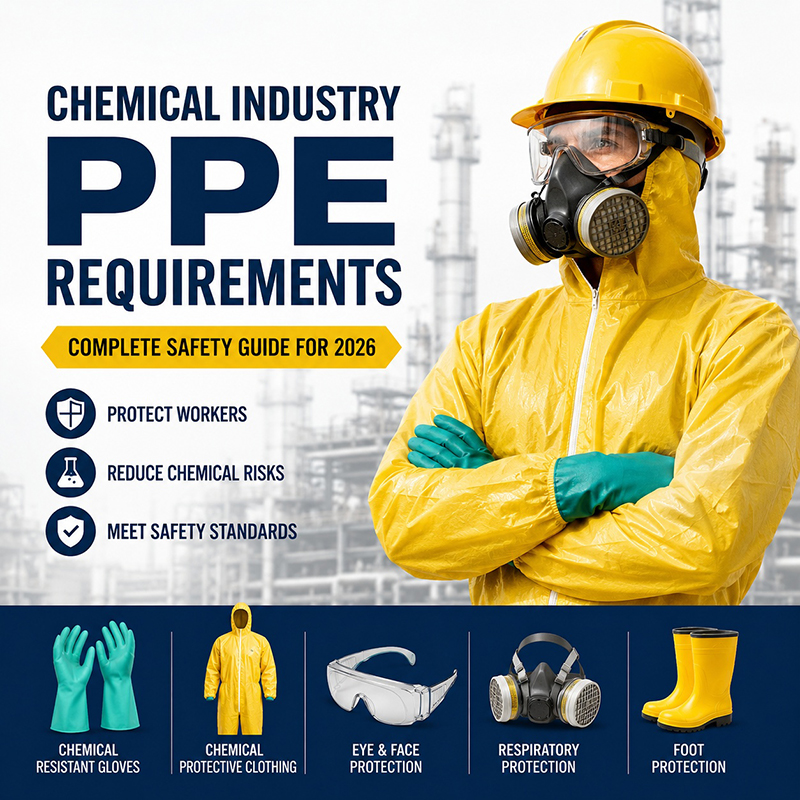
🧤 1. Hand Protection: Chemical-Resistant Gloves
Gloves are one of the most important PPE items in chemical handling.
Recommended materials:
- Nitrile (general chemical resistance)
- Neoprene (acid/alkali resistance)
- PVC (liquid chemical protection)
- Butyl rubber (gas/vapor protection)
Workers must choose gloves based on chemical compatibility, not appearance or comfort.
🧥 2. Body Protection: Chemical Protective Clothing
Protective suits prevent skin contact and contamination.
Types include:
- Chemical-resistant coveralls
- Acid-resistant suits
- Disposable hazmat suits (Type 3/4/5/6 standards)
Key requirement: seams must be sealed or taped to prevent leakage.
🥽 3. Eye & Face Protection
Chemical splashes can cause permanent eye damage within seconds.
Recommended PPE:
- Safety goggles (sealed type)
- Face shields for splash protection
- Anti-fog and chemical-resistant coatings
😷 4. Respiratory Protection
In chemical environments with fumes or vapors, respiratory protection is essential.
Options include:
- Half-mask respirators with chemical cartridges
- Full-face respirators
- Powered air-purifying respirators (PAPR)
Proper filter selection depends on gas type and concentration.
👢 5. Foot Protection
Chemical-resistant safety boots protect against spills and contaminated surfaces.
Features to consider:
- PVC or rubber material
- Slip-resistant soles
- Anti-penetration midsoles
- Waterproof sealing
4. PPE Selection Standards (Important for Compliance)
Chemical PPE should comply with international safety standards such as:
- EN 374 (Chemical protective gloves)
- EN 14605 (Liquid-tight suits)
- EN 166 (Eye protection)
- OSHA PPE regulations
- ISO 13982 (Particle protective clothing)
Compliance ensures both worker safety and legal protection for companies.
5. Common Mistakes in Chemical PPE Usage
Many workplace accidents happen due to incorrect PPE use:
- Using wrong glove material for chemicals
- Reusing disposable protective suits
- Poor sealing at cuffs and joints
- Ignoring respirator cartridge expiration
- Lack of PPE training for workers
Proper training is as important as the PPE itself.
6. Best Practices for Chemical Safety Management
To improve workplace safety:
- Conduct chemical risk assessments regularly
- Provide PPE compatibility charts
- Train workers before handling hazardous chemicals
- Replace PPE immediately after contamination
- Store PPE in clean, dry environments
7. Conclusion
Chemical industry safety depends heavily on correct PPE selection and proper usage. Employers must ensure workers are fully protected from chemical exposure through high-quality, standards-compliant protective equipment.
For companies operating in chemical manufacturing, storage, or transportation, investing in reliable PPE is not optional—it is essential for long-term safety and compliance.