In many workplaces, visibility is a critical safety factor. Workers operating near vehicles, heavy machinery, or in low-light environments need protective clothing that allows them to be easily seen by others.
High visibility clothing is designed to improve worker visibility by combining fluorescent materials and reflective strips.
The EN ISO 20471 standard defines the requirements for high visibility clothing used by workers exposed to visibility risks.
This guide explains:
- What EN ISO 20471 means
- Differences between Class 1, Class 2, and Class 3
- How to choose the right high visibility vest
- Applications for construction workers, road workers, and warehouse workers
What Is EN ISO 20471?
EN ISO 20471 is an international standard that specifies requirements for high visibility clothing used by workers in hazardous situations.
The standard evaluates clothing based on:
- Amount of fluorescent background material
- Amount of reflective material
- Visibility performance
High visibility clothing helps workers stand out from their surroundings, especially in:
- Poor lighting conditions
- Busy work areas
- Traffic environments
- Industrial workplaces
Common high visibility PPE includes:
- Safety vests
- High visibility jackets
- Reflective workwear
- High visibility coveralls
Why Is High Visibility Clothing Important?
Many workplace accidents happen because workers are not easily noticed by:
- Vehicle operators
- Machine operators
- Other workers
High visibility clothing helps reduce this risk by improving recognition and visibility.
It is especially important in environments involving:
- Moving vehicles
- Construction equipment
- Traffic areas
- Outdoor operations
- Low-light conditions
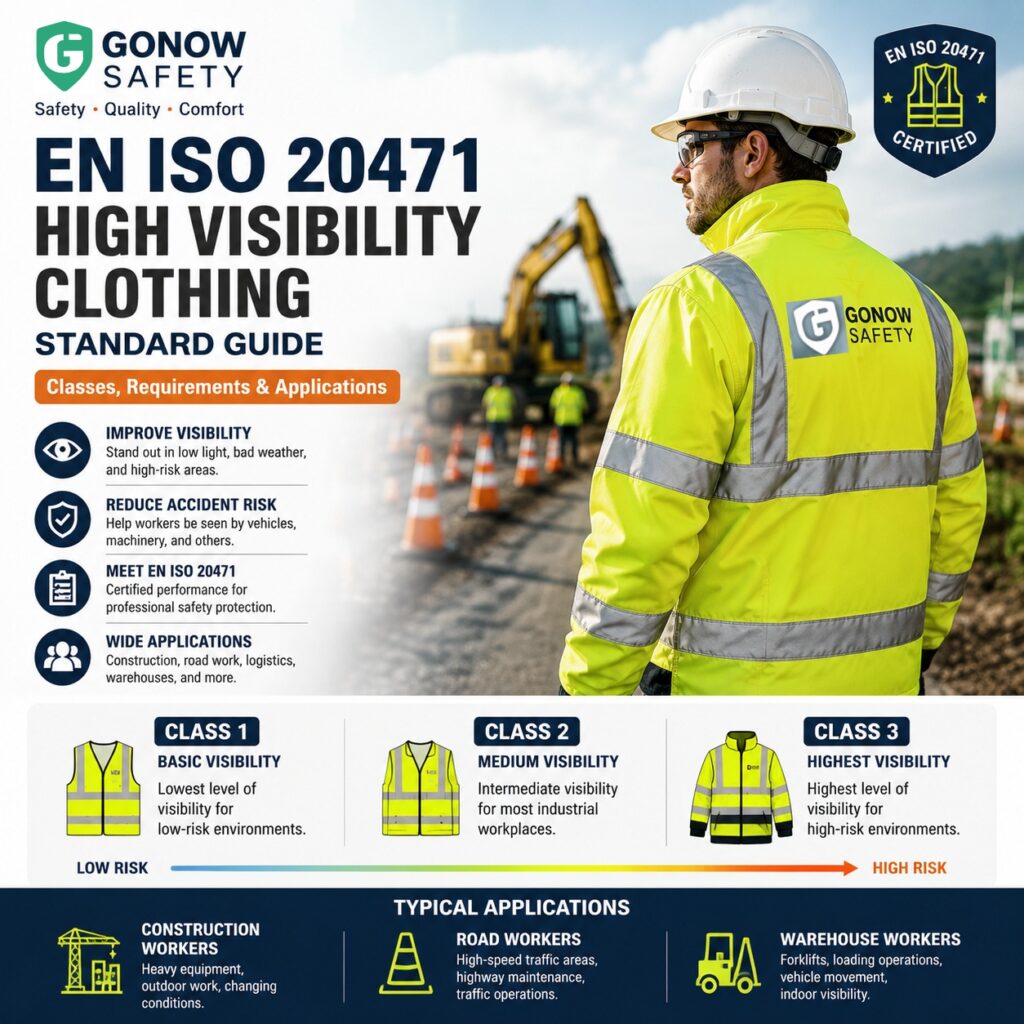
EN ISO 20471 Classification: Class 1, Class 2, Class 3
Under EN ISO 20471, high visibility garments are divided into three classes according to their level of visibility protection.
The higher the class, the greater the visible surface area and protection level.
| Class | Visibility Level | Typical Applications |
|---|---|---|
| Class 1 | Basic visibility | Low-risk environments |
| Class 2 | Intermediate visibility | Most industrial workplaces |
| Class 3 | Highest visibility | High-risk areas and traffic environments |
Class 1 High Visibility Clothing
Basic Visibility Protection
Class 1 provides the lowest level of visibility protection under EN ISO 20471.
It is designed for workplaces where:
- Traffic speed is low
- Workers are separated from vehicles
- Visibility risks are limited
Common products:
- Small reflective vests
- High visibility accessories
- Lightweight visibility garments
Applications:
- Warehouses
- Parking areas
- Private workplaces
Typical users:
- Warehouse workers
- Delivery personnel
- Maintenance workers
Class 1 clothing is usually not suitable for high-risk road environments.
Class 2 High Visibility Clothing
Medium Visibility Protection
Class 2 is one of the most commonly used levels of high visibility PPE.
It provides better visibility than Class 1 through:
- More fluorescent material
- More reflective strips
Applications:
- Construction sites
- Road maintenance
- Logistics operations
- Outdoor industrial work
Common products:
- High visibility vests
- Reflective jackets
- Safety shirts
Typical users:
- Construction workers
- Warehouse workers
- Utility workers
For many workplaces, Class 2 safety vests provide a good balance between visibility and comfort.
Class 3 High Visibility Clothing
Highest Visibility Protection
Class 3 provides the highest level of visibility protection under EN ISO 20471.
It requires the largest amount of:
- Fluorescent background material
- Reflective material
Designed for environments with higher risks, such as:
- High-speed traffic areas
- Highway construction
- Emergency operations
Common products:
- High visibility jackets
- High visibility coveralls
- Full-body reflective workwear
Typical users:
- Road workers
- Highway maintenance workers
- Emergency responders
EN ISO 20471 Class Comparison
| Feature | Class 1 | Class 2 | Class 3 |
|---|---|---|---|
| Visibility level | Basic | Medium | Highest |
| Reflective material | Lowest amount | Medium amount | Highest amount |
| Fluorescent material | Lowest area | Medium area | Largest area |
| Traffic exposure | Low | Medium | High |
| Recommended use | Controlled areas | Industrial workplaces | High-risk environments |
High Visibility Clothing for Different Industries
1. Construction Workers
Construction sites often involve:
- Heavy equipment
- Moving vehicles
- Outdoor operations
- Changing weather conditions
Recommended high visibility PPE:
✓ Class 2 safety vest
✓ Class 3 reflective jacket
✓ High visibility coveralls
Combined with:
- Safety helmet
- Safety boots
- Protective gloves
Construction workers need to remain visible to equipment operators and coworkers.
2. Road Workers
Road workers face some of the highest visibility risks because they work near moving vehicles.
Recommended PPE:
✓ Class 3 high visibility clothing
✓ Reflective jackets
✓ High visibility trousers
Benefits:
- Improves visibility from a distance
- Helps drivers identify workers
- Supports safer traffic operations
3. Warehouse Workers
Warehouses often include:
- Forklifts
- Loading operations
- Vehicle movement
Recommended PPE:
✓ Class 1 or Class 2 safety vests
✓ Reflective workwear
High visibility vests help forklift operators and coworkers quickly identify workers in busy areas.
How to Choose the Right High Visibility Vest?
When selecting a high visibility vest, consider:
1. Workplace Risk Level
Ask:
- Are workers near vehicles?
- Is the workplace outdoors?
- Are workers exposed to traffic?
- Is visibility limited?
Higher-risk environments require higher EN ISO 20471 classes.
2. Working Conditions
Consider:
- Weather conditions
- Temperature
- Working hours
- Required mobility
Examples:
Hot environments:
→ Lightweight safety vest
Cold environments:
→ Reflective jacket or thermal high visibility clothing
3. Comfort and Durability
Workers often wear high visibility clothing for long periods.
Important factors:
- Breathable fabric
- Comfortable fit
- Strong reflective tape
- Durable stitching
- Easy maintenance
Comfortable PPE improves worker compliance.
EN ISO 20471 vs Ordinary Reflective Clothing
Not all reflective clothing meets safety standards.
EN ISO 20471 certified garments are tested for:
- Visibility performance
- Material quality
- Reflective properties
Ordinary reflective clothing may improve visibility but may not provide certified workplace protection.
For professional applications, certified high visibility clothing is recommended.
How to Maintain High Visibility Clothing?
To maintain visibility performance:
✓ Follow washing instructions
✓ Avoid damaging reflective strips
✓ Inspect for fading or wear
✓ Replace damaged garments
Over time, fluorescent materials and reflective tapes may lose effectiveness.
Conclusion: Choosing the Right High Visibility Clothing
Understanding EN ISO 20471 helps companies select the correct high visibility PPE for their workers.
The main classes include:
- Class 1 – Basic visibility for low-risk environments
- Class 2 – Medium visibility for most industrial workplaces
- Class 3 – Highest visibility for high-risk environments
Whether protecting construction workers, road workers, or warehouse employees, choosing the right high visibility vest standard improves workplace safety and reduces visibility-related risks.
At GONOW SAFETY, we provide reliable high visibility clothing, safety vests, and industrial PPE solutions for construction, logistics, manufacturing, and workplace safety applications.
Safety, Quality, Comfort — keeping workers visible and protected.