Respiratory hazards are common in many workplaces, including construction sites, manufacturing facilities, laboratories, and industrial environments.
Dust, fumes, aerosols, and airborne particles can affect workers’ health if proper respiratory protection is not used.
However, not all disposable respirators provide the same level of protection.
The main categories of filtering facepiece respirators are:
- FFP1 masks
- FFP2 masks
- FFP3 masks
Understanding the difference between FFP1 vs FFP2 and FFP3 masks helps companies select the right respiratory protection according to workplace risks.
This guide explains:
- What FFP masks are
- Differences between FFP1, FFP2, and FFP3
- Filtration efficiency
- Industrial applications
- How to choose the right respirator
What Are FFP Masks?
FFP (Filtering Face Piece) respirators are disposable respiratory protective masks designed to filter airborne particles.
They are classified according to European standard:
EN 149: Respiratory protective devices – Filtering half masks to protect against particles
FFP masks help protect workers from:
- Dust
- Mist
- Aerosols
- Fine particles
- Workplace contaminants
They are commonly used in:
- Construction
- Manufacturing
- Healthcare
- Pharmaceutical production
- Industrial processing
FFP1 vs FFP2 vs FFP3: Key Differences
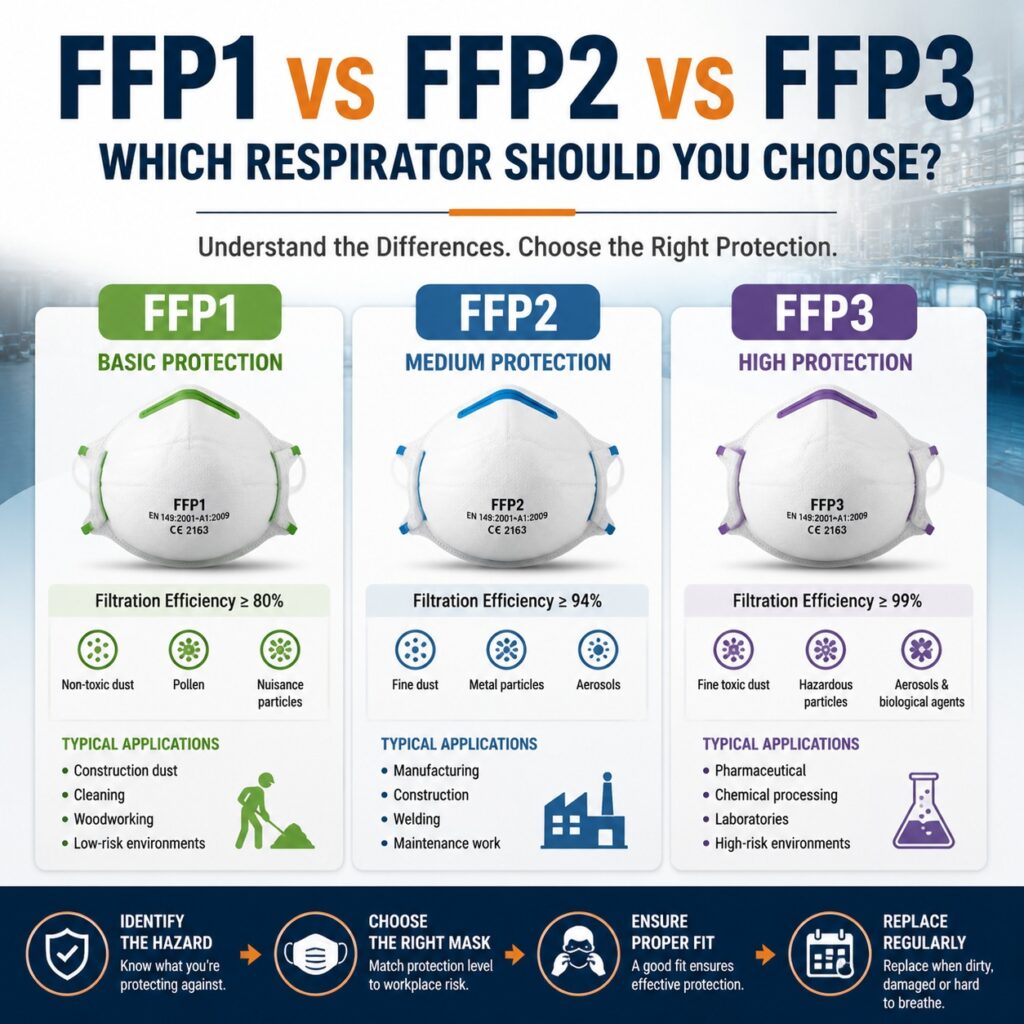
The main difference between FFP classes is their filtration performance and protection level.
| Type | Protection Level | Typical Application |
|---|---|---|
| FFP1 | Low-risk particles | Dust and basic industrial environments |
| FFP2 | Medium-risk particles | Manufacturing and general industrial use |
| FFP3 | High-risk particles | Hazardous dust and high-risk environments |
FFP1 Masks: Basic Particle Protection
Low-Level Respiratory Protection
FFP1 masks provide the lowest level of protection among the three categories.
They are designed for environments with:
- Low levels of non-toxic dust
- Basic airborne particles
- General workplace dust
Typical applications:
- Construction dust
- Cleaning operations
- Woodworking
- General industrial work
Examples of hazards:
- Sanding dust
- Non-hazardous particles
- General nuisance dust
FFP1 Mask Features
Advantages:
✓ Lightweight
✓ Comfortable for short-term use
✓ Suitable for low-risk environments
Limitations:
- Not suitable for toxic substances
- Limited protection against fine hazardous particles
FFP2 Masks: Medium-Level Protection
The Most Common Industrial Respirator
FFP2 masks provide a higher level of protection than FFP1.
They are widely used in industrial workplaces where workers may encounter:
- Fine dust
- Metal particles
- Aerosols
- Industrial contaminants
Common applications:
- Manufacturing
- Construction
- Welding operations
- Maintenance work
FFP2 Mask Applications
Examples:
Manufacturing
Protects workers from:
- Production dust
- Fine particles
- Grinding particles
Construction
Used for:
- Concrete dust
- Building materials
- General site dust
Industrial Maintenance
Used during:
- Cleaning
- Repair operations
- Equipment maintenance
FFP3 Masks: High-Level Respiratory Protection
Maximum Filtration Performance Among Disposable FFP Masks
FFP3 masks provide the highest level of filtration in the FFP category.
They are designed for environments involving:
- High concentrations of hazardous particles
- Fine toxic dust
- Dangerous aerosols
Applications:
- Pharmaceutical production
- Chemical processing
- Laboratory environments
- Hazardous material handling
FFP3 Mask Protection
FFP3 masks are commonly used where workers need enhanced protection against:
- Very fine particles
- Hazardous dust
- Biological aerosols
- High-risk contaminants
They are especially suitable when exposure levels are higher and stronger respiratory protection is required.
FFP1 vs FFP2 vs FFP3 Comparison Table
| Feature | FFP1 | FFP2 | FFP3 |
|---|---|---|---|
| Protection level | Low | Medium | High |
| Filtration efficiency | Basic | Higher | Highest |
| Suitable for dust | ✓ | ✓ | ✓ |
| Fine particles | Limited | Good | Excellent |
| Hazardous dust | ✕ | Limited | ✓ |
| Industrial applications | Basic work | General industry | High-risk industry |
How to Choose Between FFP1, FFP2, and FFP3?
Choosing the right respirator depends on:
- Type of hazard
- Particle concentration
- Workplace environment
- Required protection level
Step 1: Identify the Hazard
First determine what workers are exposed to.
Examples:
General Dust
Suitable:
→ FFP1 mask
Applications:
- Cleaning
- Basic woodworking
- Low-risk environments
Industrial Dust and Particles
Suitable:
→ FFP2 mask
Applications:
- Manufacturing
- Construction
- Grinding
Hazardous Fine Particles
Suitable:
→ FFP3 mask
Applications:
- Pharmaceutical industry
- Hazardous material handling
- High-risk industrial environments
Step 2: Consider Workplace Conditions
Different environments require different protection.
Construction Sites
Common hazards:
- Concrete dust
- Mineral particles
- Building material dust
Recommended:
→ FFP2 respirators for general construction dust
Manufacturing Facilities
Common hazards:
- Metal particles
- Production dust
- Aerosols
Recommended:
→ FFP2 or FFP3 depending on exposure level
Chemical and High-Risk Industries
Common hazards:
- Fine hazardous particles
- Toxic contaminants
Recommended:
→ FFP3 respirators or suitable reusable respiratory protection
FFP Masks with Valves vs Without Valves
Disposable respirators are available with or without exhalation valves.
Valved FFP Masks
Advantages:
- Easier breathing
- Reduced heat buildup
- Improved comfort during long use
Suitable for:
- Industrial environments
- Long working periods
Non-Valved FFP Masks
Advantages:
- Provide source control
- Suitable where both wearer and surrounding environment must be considered
Applications:
- Healthcare
- Clean environments
How to Ensure Proper Respirator Protection?
Even a high-filtration mask may not work effectively if it does not fit properly.
Important factors:
Proper Fit
The mask should:
✓ Cover nose and mouth completely
✓ Create a good seal
✓ Fit securely during movement
Correct Wearing Method
Workers should:
- Adjust nose clips
- Check mask position
- Replace damaged or contaminated masks
Replacement Frequency
Disposable respirators should be replaced when:
- Breathing resistance increases
- The mask becomes damaged
- It becomes dirty or contaminated
FFP Masks Standards
Before purchasing respirators, check compliance with relevant standards.
EN 149
Defines requirements for:
- Filtration efficiency
- Breathing resistance
- Leakage performance
FFP classification:
- FFP1
- FFP2
- FFP3
Common Applications of FFP Respirators
| Industry | Recommended Respirator |
|---|---|
| Construction | FFP1 / FFP2 |
| Manufacturing | FFP2 |
| Pharmaceutical | FFP3 |
| Chemical industry | FFP3 or specialized respirators |
| General maintenance | FFP1 / FFP2 |
Conclusion: Choosing the Right FFP Respirator
Understanding the difference between FFP1 vs FFP2 vs FFP3 masks helps businesses choose suitable respiratory protection for different workplace hazards.
Summary:
- FFP1 → Basic protection against low-risk dust
- FFP2 → Medium protection for industrial environments
- FFP3 → High protection for hazardous fine particles
The right respirator should always be selected based on workplace risks, exposure levels, and applicable safety standards.
At GONOW SAFETY, we provide professional respiratory protection solutions, including FFP masks, full face respirators, and industrial PPE for construction, manufacturing, chemical, and workplace safety applications.
Safety, Quality, Comfort — protecting every breath at work.