
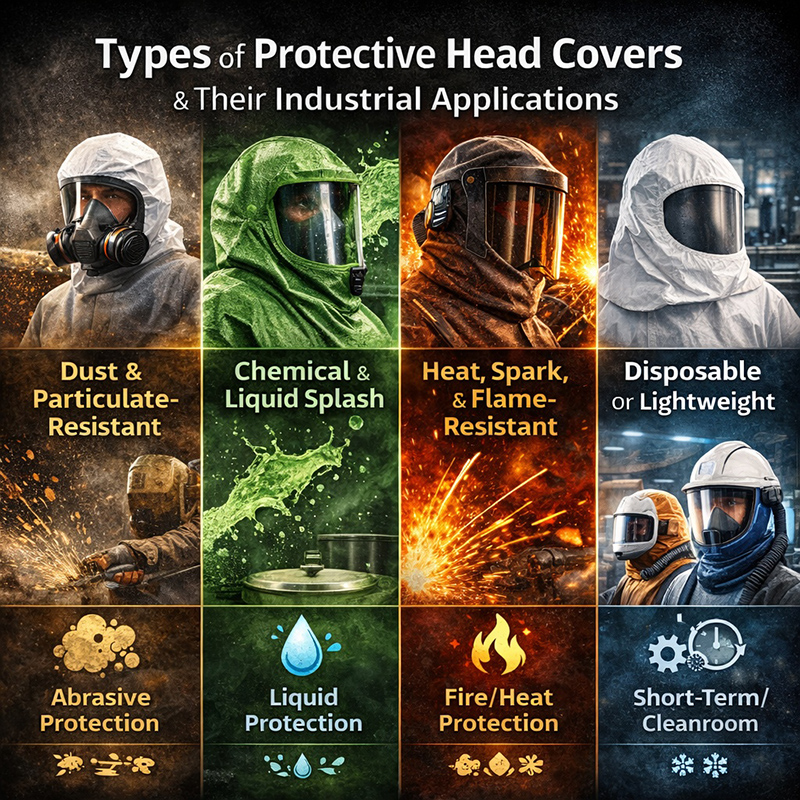
After understanding that head protection must be risk-based, it’s important to know the main types of protective head covers and their specific applications. Each type is designed to handle particular hazards, ensuring that workers are properly safeguarded in their environments.
1. Dust and Particulate-Resistant Hoods
Purpose: Protects against airborne dust, fine particles, and abrasive materials.
Common Industries: Grinding, sandblasting, mining, and dusty production areas.
Key Features:
-
High abrasion resistance
-
Full coverage for head and neck
-
Often used with respirators or dust masks
Materials: Heavy-duty fabric, reinforced stitching, or specialized polymer coatings.
2. Chemical and Liquid Splash Hoods
Purpose: Shields the head and neck from chemical splashes, liquid sprays, or paint overspray.
Common Industries: Painting, cleaning, chemical processing, laboratory work.
Key Features:
-
Smooth, non-absorbent surface
-
Sealed seams to prevent penetration
-
Often compatible with face shields or respirators
Materials: PVC, Tyvek®, coated fabrics, or laminated polymers.
3. Heat, Spark, and Flame-Resistant Hoods
Purpose: Provides protection in hot-work environments against sparks, flames, and radiant heat.
Common Industries: Welding, metal cutting, foundries, and thermal processing.
Key Features:
-
Flame and heat resistance
-
Maintains shape under high temperatures
-
Often worn under welding helmets or with fire-resistant suits
Materials: Aramid fibers (e.g., Nomex®), FR-treated cotton, or multilayer flame-resistant composites.
4. Disposable or Lightweight Hoods
Purpose: Offers short-term protection in low-risk or clean environments.
Common Industries: Food processing, pharmaceutical, and cleanroom operations.
Key Features:
-
Lightweight and breathable
-
Easy to put on and remove
-
Often designed for single use to maintain hygiene
Materials: Non-woven polypropylene, Tyvek®, or spunbond fabrics.
5. Specialized Head Covers
Some head covers are designed for combined hazards or very specific industrial needs:
-
Integrated hood-helmet systems for chemical plants
-
Powered air purifying respirator (PAPR) hoods for high-contamination zones
-
Cooling hoods for extreme heat environments
These advanced types focus not just on barrier protection but also worker comfort and system compatibility.
Conclusion:
Not all head covers are created equal. The right protective hood is determined by the type of hazard, not by comfort, habit, or cost. By understanding the different types of protective head covers and their intended applications, safety managers and workers can make informed decisions to maximize protection in real-world industrial settings.