
In electrical work environments, insulating gloves are one of the most important pieces of personal protective equipment (PPE). They are designed to protect workers from electric shock when working on or near energized equipment.
However, many users still ask practical questions such as:
-
Can insulating gloves protect against arc flash?
-
Are insulating gloves puncture resistant?
-
How can we protect insulating gloves to ensure safety and extend service life?
Understanding the answers to these questions helps workers choose the right protective solutions and maintain safety during electrical operations.
Do Insulating Gloves Protect Against Arc Flash?
The primary function of insulating gloves is to prevent electrical current from passing through the body by providing electrical insulation.
However, insulating gloves are not specifically designed to protect against arc flash.
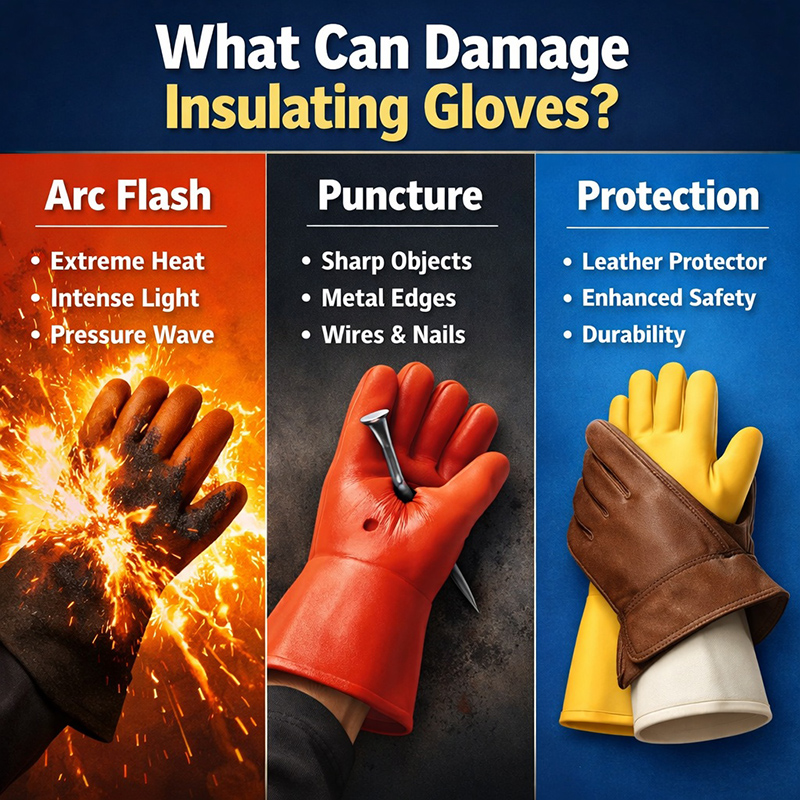
Arc flash hazards involve extremely high temperatures, intense light, and pressure waves. While rubber insulating gloves may provide limited thermal resistance, they are not a substitute for proper arc-rated PPE such as:
-
Arc-rated clothing
-
Face shields
-
Arc-rated gloves or leather protectors
For this reason, insulating gloves are usually worn together with leather protector gloves. Leather protectors help reduce mechanical damage and may provide additional protection from heat and sparks generated during electrical work.
In high arc-risk environments, workers should follow a complete arc flash protection system, not rely on insulating gloves alone.
Are Insulating Gloves Puncture Resistant?
Another common misunderstanding is that insulating gloves are puncture resistant.
In reality, rubber insulating gloves can be damaged by sharp objects such as:
-
Metal edges
-
Tools
-
Wires
-
Nails or debris
A small puncture or cut can compromise the insulating performance, which may create a serious safety risk.
This is why most electrical safety standards require leather protector gloves to be worn over insulating gloves. These protectors act as a mechanical barrier and help prevent:
-
Cuts
-
Abrasion
-
Punctures
Using protector gloves significantly extends the service life of insulating gloves while maintaining electrical safety.
How to Protect Insulating Gloves Properly?
Proper handling and maintenance are essential to keep insulating gloves safe and reliable. Here are several recommended practices:
1. Always Use Leather Protector Gloves
Leather protectors provide an extra layer of protection against mechanical damage. They help prevent punctures, abrasions, and cuts during daily work.
2. Inspect Gloves Before Each Use
Before wearing insulating gloves, workers should visually inspect them for:
-
Cracks
-
Holes
-
Cuts
-
Chemical damage
-
Signs of aging
Many users also perform an air inflation test to check for small leaks.
3. Store Gloves Correctly
Improper storage can damage rubber materials. Insulating gloves should be stored:
-
In a cool and dry place
-
Away from direct sunlight
-
Away from ozone sources or chemicals
They should never be folded or compressed for long periods.
4. Avoid Contact with Oils and Chemicals
Certain chemicals, oils, or solvents may degrade rubber materials and reduce insulation performance. Gloves should be kept clean and free from contamination.
5. Follow Regular Electrical Testing Requirements
Most standards require insulating gloves to undergo periodic dielectric testing to ensure they still provide proper electrical protection.
Routine testing ensures that the gloves continue to meet safety requirements for electrical work.
Final Thoughts
Insulating gloves play a critical role in protecting workers from electrical hazards, but it is important to understand their limitations.
They are designed to prevent electric shock, not to fully protect against arc flash or mechanical punctures. To ensure maximum safety, insulating gloves should always be used as part of a complete protective system, including leather protectors, proper inspection, and correct storage practices.
When properly selected, used, and maintained, insulating gloves provide reliable protection and help create a safer working environment for electrical professionals.