
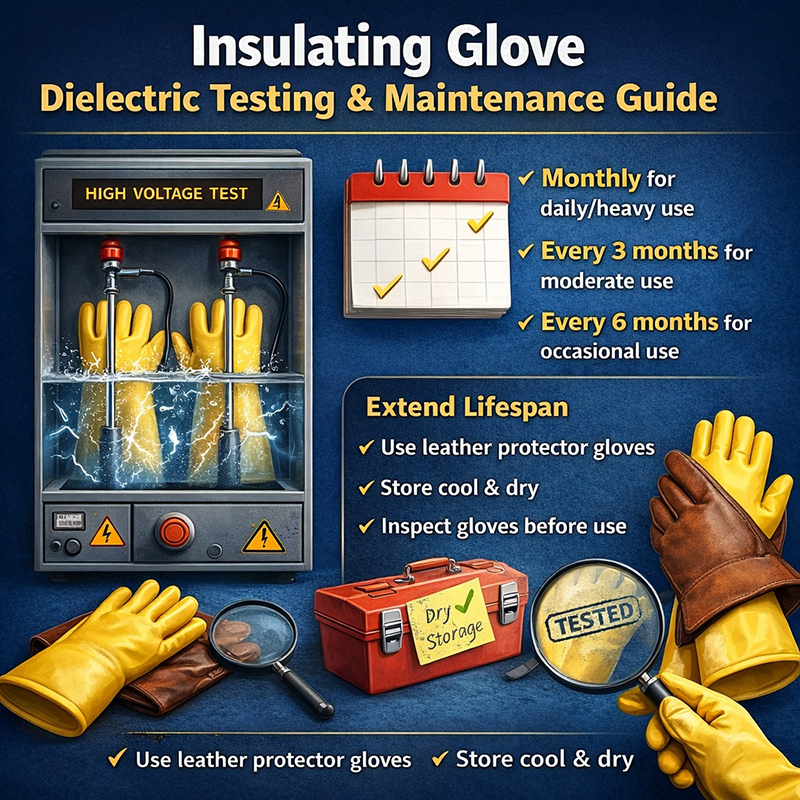
In electrical work, insulating gloves are essential personal protective equipment (PPE) that protect workers from electric shock. A common question among electricians and safety managers is:
How often should insulating gloves undergo dielectric (electrical) testing?
Understanding this is crucial not only for worker safety but also for maintaining glove longevity and meeting compliance requirements.
Why Dielectric Testing of Insulating Gloves Is Important
The primary function of insulating gloves is to prevent electric current from passing through the body. However, over time, gloves may develop:
-
Micro-cracks
-
Rubber aging or hardening
-
Chemical damage
-
Small punctures
Even minor damage can compromise the insulating performance, creating serious safety hazards.
Regular dielectric testing ensures that gloves remain safe and reliable for electrical work.
Recommended Testing Frequency
According to international standards such as ASTM D120 and IEC 60903, the testing frequency depends on how often gloves are used:
| Usage Frequency | Recommended Dielectric Test Interval |
|---|---|
| Daily or heavy use | Monthly |
| Moderate use (few times per week) | Every 3 months |
| Occasional use (monthly or less) | Every 6 months |
⚠️ Note: Gloves should be tested immediately if they are visibly damaged, contaminated, or exposed to harsh environments, regardless of the schedule.
How Dielectric Testing Is Performed
Dielectric testing is usually performed by trained personnel in a laboratory or controlled safety environment. Typical steps include:
-
Clean the gloves – Remove dust, oil, and chemical residues.
-
Visual and air inflation check – Inspect for cracks, holes, or leaks.
-
Dielectric test – Immerse gloves in water and apply high voltage to verify insulation performance.
-
Record and mark – Gloves that pass are labeled with the test date and class for easy tracking.
Tips to Extend Glove Lifespan
Besides regular testing, proper handling and storage can significantly prolong glove life:
-
Wear leather protector gloves over insulating gloves to prevent cuts and punctures
-
Store in a cool, dry place away from sunlight and chemicals
-
Avoid folding or compressing gloves for long periods
-
Always inspect for cracks, holes, or contamination before use
Conclusion
Dielectric testing of insulating gloves is not optional — it is essential for electrical safety.
-
Daily/heavy use gloves: Test monthly
-
Moderate use gloves: Test every 3 months
-
Occasional use gloves: Test every 6 months
-
Damaged or contaminated gloves: Test immediately
By combining regular testing, proper storage, and careful handling, insulating gloves provide reliable protection and help ensure safety for every electrical worker.