Spray painting is widely used in construction, manufacturing, automotive, and maintenance work. While it may look like a routine surface treatment process, it actually involves multiple hidden hazards that are often underestimated.
Understanding these risks is the first step toward improving workplace safety and ensuring proper PPE is used correctly.
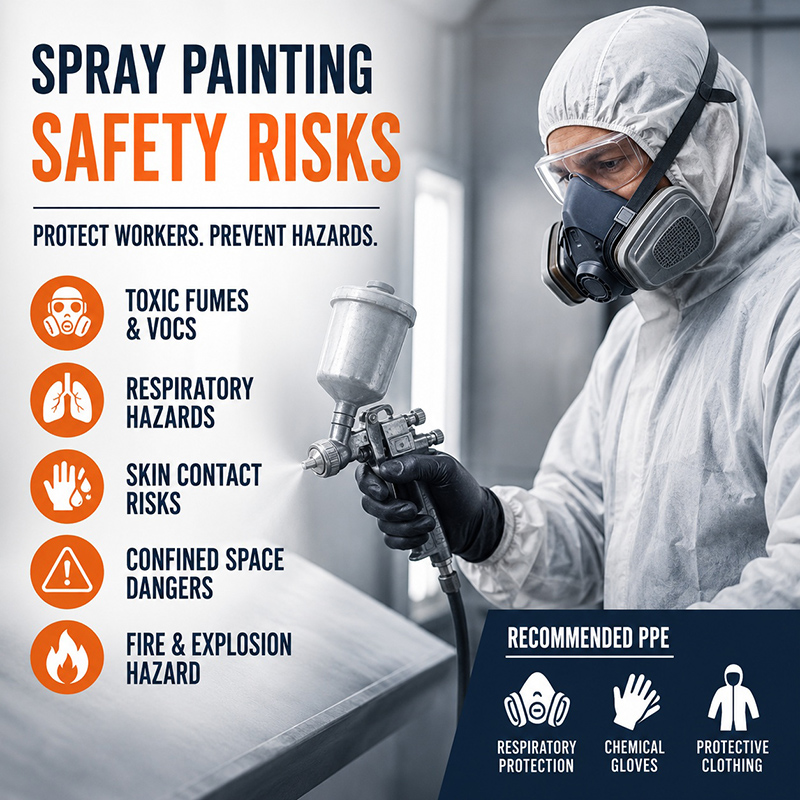
1. Toxic Gas and VOC Exposure
One of the most serious risks in spray painting is exposure to volatile organic compounds (VOCs) released from paints, coatings, and solvents.
These airborne chemicals can include:
- Toluene
- Xylene
- Acetone
- Other solvent-based fumes
Health impact:
- Dizziness and headaches
- Nausea
- Long-term liver and nervous system damage
- Chronic respiratory issues
Without proper respiratory protection, workers are continuously inhaling harmful substances without immediate warning signs.
2. Respiratory System Hazards
Spray painting produces extremely fine airborne particles that can easily enter the lungs.
These include:
- Paint mist droplets
- Aerosolized chemicals
- Dust mixed with coating materials
Risks include:
- Lung irritation
- Asthma development
- Reduced lung function over time
A simple dust mask is not sufficient in these environments. Proper respirators designed for chemical filtration are required.
3. Skin Contact and Chemical Absorption
Paint and solvent exposure is not only airborne—it also affects the skin.
Direct contact may occur during:
- Mixing paints
- Cleaning spray equipment
- Accidental splashes
- Handling coated surfaces
Health risks:
- Skin irritation and burns
- Allergic reactions
- Long-term chemical absorption through skin
Continuous exposure without protection can lead to cumulative health damage.
4. Confined Space Hazards
Spray painting is often performed in enclosed or poorly ventilated areas such as:
- Tanks
- Ship compartments
- Small rooms or cabins
- Industrial containers
Major risks:
- Oxygen deficiency
- High concentration of toxic fumes
- Rapid buildup of flammable vapors
In these environments, risks increase significantly due to limited air circulation.
5. Flammability and Explosion Risk
Many spray paints and solvents are highly flammable.
When combined with:
- Poor ventilation
- Electrical equipment
- Static discharge
It creates a serious fire and explosion hazard.
This makes spray painting not only a health risk but also a workplace safety risk for the entire site.
Recommended PPE for Spray Painting Safety
To reduce these risks effectively, proper PPE is essential:
1. Respiratory Protection
- Half-face or full-face respirators
- Organic vapor cartridges
- Powered air-purifying respirators (PAPR) for high-risk environments
2. Chemical Protective Gloves
- Nitrile or neoprene gloves
- Resistant to solvents and paint chemicals
- Prevent skin absorption and irritation
3. Protective Clothing
- Chemical-resistant coveralls
- Anti-splash and anti-permeation materials
- Full-body protection in high-exposure areas
Final Thoughts
Spray painting risks are often invisible but can have serious short-term and long-term health impacts. Workers may not feel the danger immediately, which makes protection even more important.
Understanding these hazards helps companies move from “basic compliance” to real workplace safety protection.
At GONOW SAFETY, we focus on providing PPE solutions that help workers stay protected in real working conditions—not just on paper.