Welding is one of the most high-risk industrial operations due to exposure to extreme heat, ultraviolet (UV) and infrared radiation, sparks, molten metal, and harmful fumes. Proper PPE is essential not only to prevent injuries but also to ensure long-term occupational health.
Below is a clear breakdown of the key PPE required for welding safety.
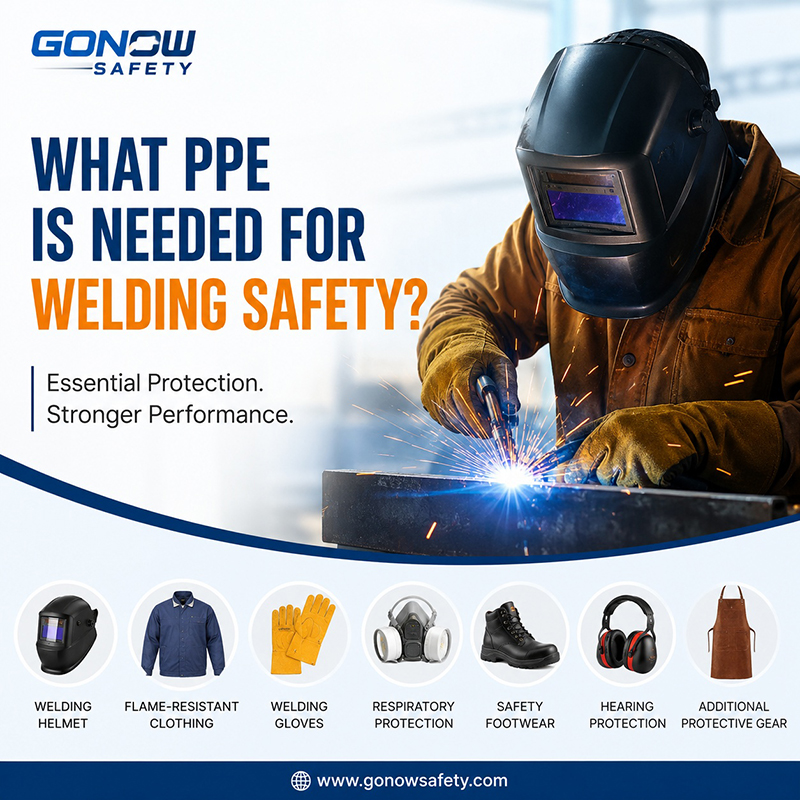
1. Welding Helmet with Proper Shade Lens
A welding helmet is the first line of defense for the face and eyes.
- Protects against UV/IR radiation
- Shields from sparks and flying debris
- Auto-darkening lenses improve visibility and safety
- Proper shade level depends on welding process (typically Shade 9–13)
2. Flame-Resistant (FR) Clothing
Regular clothing can ignite easily, so FR protection is essential.
- FR welding jacket or coveralls
- Long sleeves and high neck protection
- Made from treated cotton, leather, or aramid fibers
- Prevents burns from sparks and spatter
3. Welding Gloves
Hands are constantly exposed during welding.
- Heat-resistant leather gloves (cowhide or goatskin)
- Extended cuffs for wrist protection
- Reinforced stitching for durability
- Protection from heat, sparks, and sharp edges
4. Respiratory Protection
Welding fumes may contain harmful metal particles.
- Disposable respirators (for light welding)
- Half-mask or full-face respirators (for heavy exposure)
- P100 or equivalent filters recommended
- Required in poorly ventilated areas
5. Safety Footwear
Feet must be protected from falling metal and sparks.
- Steel toe or composite toe boots
- Heat-resistant soles
- Anti-slip design
- High ankle support
6. Hearing Protection (When Needed)
Some welding environments are extremely noisy.
- Earplugs or earmuffs
- Especially important in industrial fabrication and shipyards
7. Additional Protective Gear
Depending on the job environment:
- Welding sleeves for arm protection
- Leather aprons for heavy spatter work
- Safety goggles (when grinding or cutting before welding)
Conclusion
Welding safety depends on a complete PPE system, not a single product. Combining proper head, body, hand, respiratory, and foot protection significantly reduces workplace risks and improves productivity.