Head protection is one of the most important aspects of workplace safety. In industries such as construction, manufacturing, and engineering, workers may face risks from falling objects, impact hazards, and harsh environmental conditions.
A properly certified industrial safety helmet helps reduce the risk of serious head injuries.
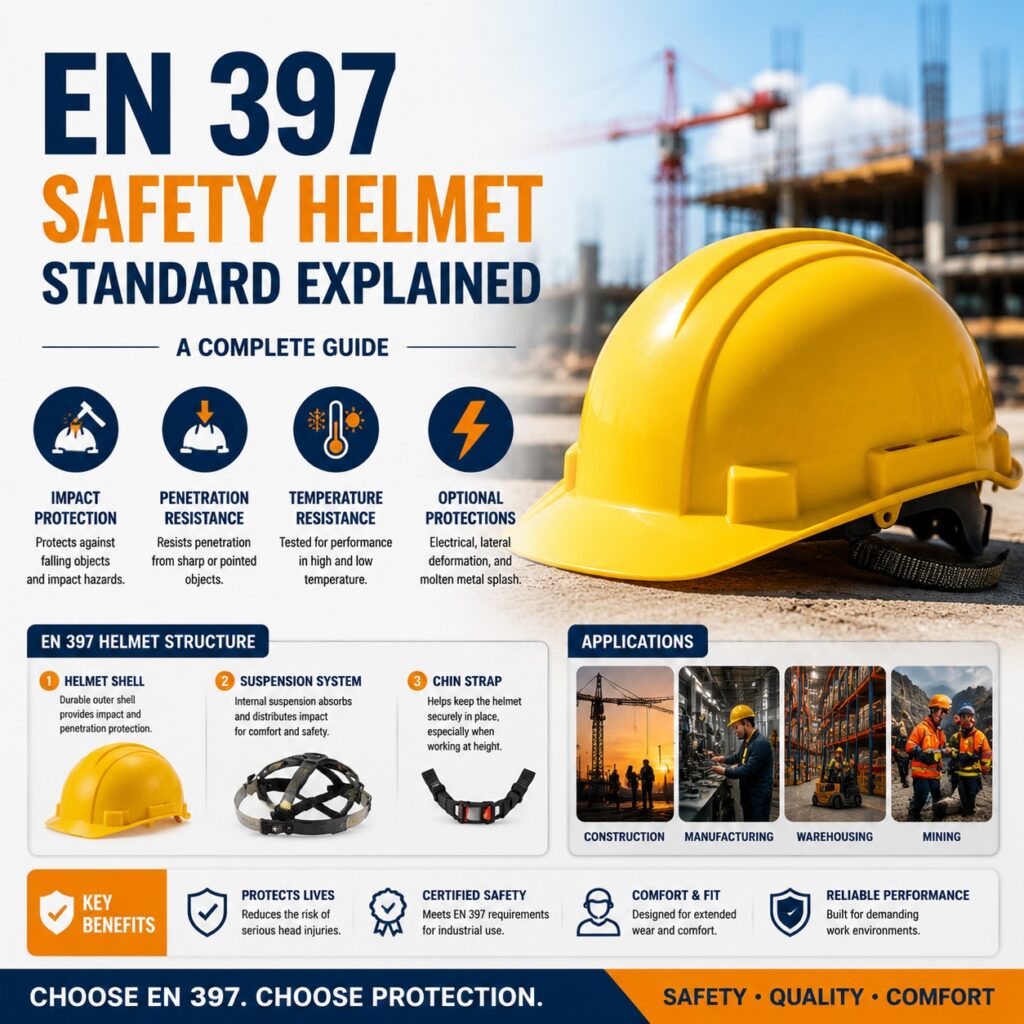
The EN 397 helmet standard defines the requirements and testing methods for industrial safety helmets used in workplaces.
This guide explains:
- What EN 397 means
- Key protection requirements
- Impact protection
- Penetration resistance
- Temperature resistance
- How to choose the right safety helmet
What Is EN 397?
EN 397 is a European standard that specifies the requirements for industrial safety helmets designed to protect workers from mechanical risks.
Safety helmets certified according to EN 397 are tested for:
- Shock absorption
- Resistance to penetration
- Additional optional protection features
EN 397 helmets are commonly used in:
- Construction sites
- Manufacturing facilities
- Warehouses
- Mining operations
- Industrial maintenance
Why Is the EN 397 Helmet Standard Important?
Workers in industrial environments may be exposed to hazards such as:
- Falling tools or materials
- Impact from machinery
- Flying objects
- Limited workplace space
- Extreme temperatures
A normal cap or non-certified helmet cannot provide reliable protection against these risks.
An EN 397 industrial safety helmet is designed and tested to help protect workers from workplace head hazards.
EN 397 Safety Helmet Requirements
EN 397 defines several key performance requirements, including:
- Impact protection
- Penetration resistance
- Flame resistance
- Temperature resistance (optional requirement)
- Electrical properties (optional requirement)
The exact protection level depends on the helmet design and additional certifications.
1. Impact Protection
Protection Against Falling Objects
Impact protection is one of the main requirements of EN 397.
During testing, helmets are evaluated for their ability to absorb impact energy from falling objects.
The helmet must reduce the force transmitted to the wearer’s head.
Impact protection helps protect workers from:
- Falling tools
- Construction materials
- Equipment parts
- Workplace debris
Common applications:
- Building construction
- Infrastructure projects
- Industrial sites
2. Penetration Resistance
Protection Against Sharp Objects
EN 397 helmets must also demonstrate resistance against penetration.
This means the helmet shell must resist penetration from sharp objects that may strike the helmet.
Examples of hazards:
- Falling metal pieces
- Tools
- Construction materials
Penetration resistance is especially important in:
- Construction
- Manufacturing
- Maintenance operations
3. Temperature Resistance
Protection Under Extreme Temperatures
Some EN 397 helmets include additional temperature resistance requirements.
Depending on the model, helmets may be tested for:
Low Temperature Resistance
Example:
-20°C or -30°C
Suitable for:
- Cold outdoor environments
- Winter construction sites
- Cold storage areas
High Temperature Resistance
Example:
+150°C
Suitable for:
- Industrial environments
- Manufacturing operations
- Heat-exposed workplaces
Optional EN 397 Helmet Requirements
Besides basic protection, some helmets can provide additional protection features.
Electrical Protection
Some industrial safety helmets may offer protection against electrical risks.
Examples:
440V AC Protection
Provides limited protection against accidental electrical contact.
Applications:
- Electrical maintenance
- Utility work
Lateral Deformation Resistance (LD)
Protects against side compression forces.
Useful for:
- Confined spaces
- Industrial environments
Molten Metal Splash Protection (MM)
Provides additional protection against molten metal splash.
Applications:
- Metal processing
- Foundries
- Welding-related environments
EN 397 Helmet Structure
An industrial safety helmet usually consists of several components:
1. Helmet Shell
The outer shell provides:
- Impact resistance
- Penetration protection
- Environmental protection
Common materials:
- HDPE (High Density Polyethylene)
- ABS
- Polycarbonate
2. Suspension System
The internal suspension absorbs and distributes impact forces.
Functions:
- Improves comfort
- Maintains helmet position
- Reduces impact energy transfer
Common features:
- Adjustable headband
- Sweatband
- Ratchet adjustment
3. Chin Strap
A chin strap helps prevent the helmet from falling off during:
- Movement
- Working at height
- Windy conditions
EN 397 vs ANSI Z89.1 Safety Helmet Standard
Both EN 397 and ANSI Z89.1 are widely recognized industrial helmet standards.
| Feature | EN 397 | ANSI Z89.1 |
|---|---|---|
| Region | Europe | USA |
| Impact protection | Yes | Yes |
| Penetration resistance | Yes | Yes |
| Electrical protection | Optional | Classified by type |
| Common applications | Industrial workplaces | Industrial workplaces |
Companies should select helmets according to the required market standard and workplace regulations.
How to Choose the Right Industrial Safety Helmet?
When selecting a safety helmet, consider:
1. Identify Workplace Hazards
Evaluate:
- Falling object risks
- Electrical hazards
- Temperature conditions
- Working environment
Example:
Construction site:
→ EN 397 safety helmet
Electrical work:
→ Helmet with suitable electrical protection
2. Check Safety Standards
Confirm that the helmet meets:
- EN 397
- Required additional protection options
Always check certification markings before purchasing.
3. Consider Comfort and Fit
Workers often wear helmets for long periods.
Important factors:
- Lightweight design
- Adjustable suspension
- Ventilation
- Comfortable headband
A comfortable helmet improves worker compliance.
4. Check Helmet Compatibility
Modern safety helmets may need to work with other PPE.
Common accessories:
- Safety visors
- Ear protection
- Headlamps
- Chin straps
A complete PPE system should work together effectively.
Applications of EN 397 Industrial Safety Helmets
Construction Industry
Common hazards:
- Falling materials
- Tools
- Structural work
Recommended PPE:
✓ EN 397 safety helmet
✓ High visibility vest
✓ Safety boots
✓ Protective gloves
Manufacturing Industry
Common hazards:
- Machinery
- Moving equipment
- Industrial materials
Recommended PPE:
✓ Industrial safety helmet
✓ Safety glasses
✓ Safety footwear
Warehouse Operations
Common hazards:
- Falling goods
- Storage systems
- Forklift operations
Recommended PPE:
✓ Safety helmet
✓ High visibility clothing
✓ Safety shoes
Safety Helmet Maintenance Tips
To maintain helmet performance:
✓ Inspect before use
✓ Replace damaged helmets
✓ Avoid modifying helmet shells
✓ Keep away from chemicals unless approved
✓ Replace suspension systems when worn
A helmet should be replaced if:
- Cracked
- Deformed
- Exposed to severe impact
- Showing signs of aging
Conclusion: Understanding EN 397 Safety Helmets
The EN 397 helmet standard provides important requirements for industrial head protection.
Key protection features include:
- Impact protection against falling objects
- Penetration resistance against sharp hazards
- Temperature resistance for challenging environments
Choosing the right industrial safety helmet helps companies protect workers and improve workplace safety.
At GONOW SAFETY, we provide reliable safety helmets and complete PPE solutions for construction, manufacturing, logistics, and industrial applications.
Safety, Quality, Comfort — protecting every worker from head to toe.