When purchasing protective clothing for industrial workers, many buyers focus on visible features such as fabric, color, design, and price. However, safety clothing must meet strict requirements to ensure proper protection, comfort, and usability in real working environments.
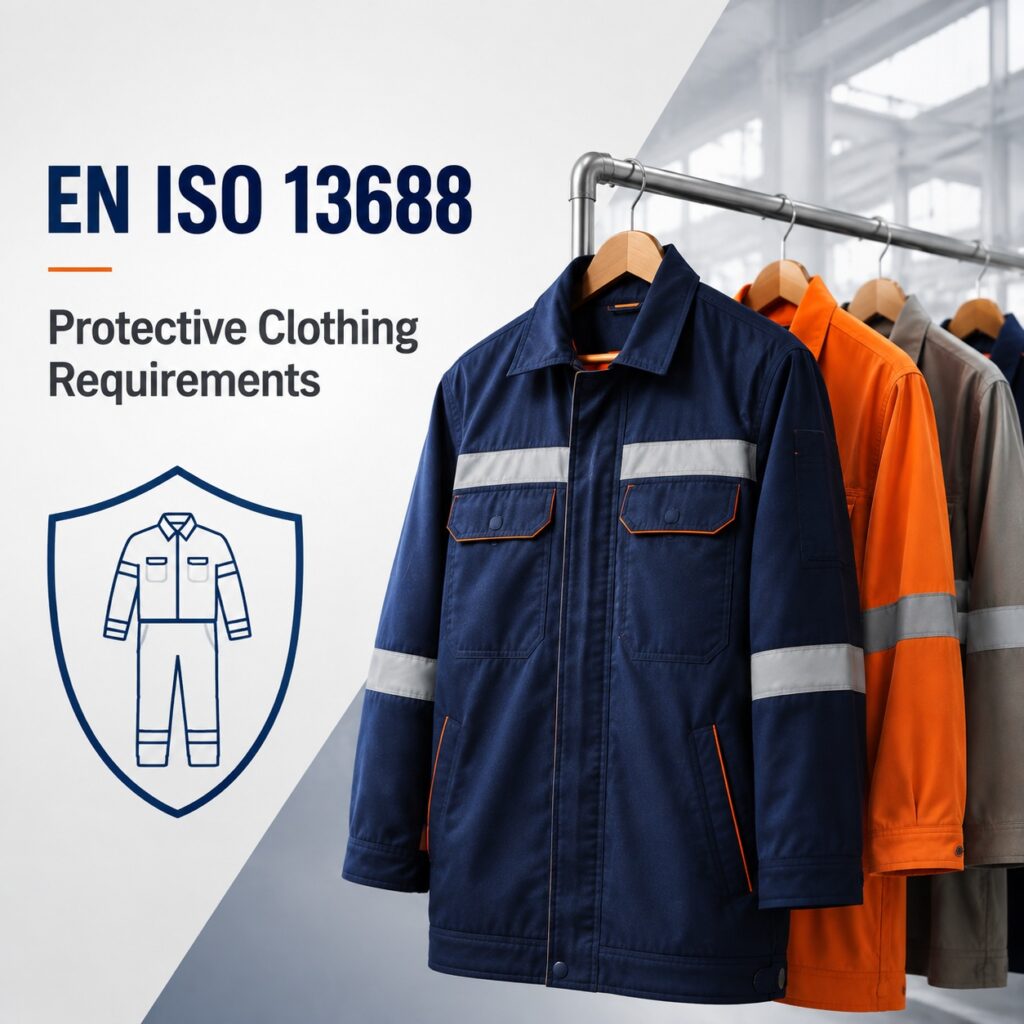
One important standard behind many types of protective clothing is EN ISO 13688, which defines the general requirements for protective clothing. This standard helps ensure that protective garments are designed with proper ergonomics, safety considerations, labeling, and user information.
Understanding EN ISO 13688 can help companies make better PPE purchasing decisions and select workwear that provides both protection and comfort.
What Is EN ISO 13688?
EN ISO 13688 (Protective Clothing — General Requirements) is a basic European standard that specifies general requirements for protective clothing, including:
- Ergonomic design
- Innocuousness of materials
- Size designation
- Ageing performance
- Compatibility with other PPE
- Marking and user information
It is important to note that EN ISO 13688 is not a standalone protection standard. It is normally used together with specific protective clothing standards that define performance against particular hazards.
For example:
| Protective Clothing Type | Related Standards |
|---|---|
| High Visibility Clothing | EN ISO 20471 |
| Flame Resistant Clothing | EN ISO 11612 |
| Welding Protective Clothing | EN ISO 11611 |
| Chemical Protective Clothing | EN 13034 / EN 14605 |
| Anti-static Clothing | EN 1149 |
EN ISO 13688 provides the foundation, while other standards define the specific protection level required.
Why Is EN ISO 13688 Important for PPE Buyers?
1. Ensures Better Garment Design and Comfort
Protective clothing is worn for many hours every day. Poorly designed garments can restrict movement, create discomfort, and reduce worker acceptance.
EN ISO 13688 considers ergonomic factors such as:
- Freedom of movement
- Proper sizing
- Wearability
- Compatibility with other PPE
A protective garment should not only protect workers but also allow them to perform tasks efficiently.
2. Controls Material Safety
Workers may wear protective clothing directly against their skin for extended periods.
EN ISO 13688 includes requirements related to the safety of materials, helping ensure that clothing does not create unnecessary risks during normal use.
Important considerations include:
- Avoiding harmful substances
- Skin-friendly materials
- Proper finishing processes
- Suitable fabric selection
3. Provides Clear Size and Marking Information
Incorrect sizing is one of the common problems when purchasing PPE internationally.
EN ISO 13688 requires protective clothing to include clear information about:
- Size designation
- Manufacturer information
- Protection standards
- Care instructions
- Usage limitations
Proper labeling helps users select and maintain PPE correctly.
4. Supports Compatibility With Other PPE
Workers often need multiple types of protection at the same time.
For example:
- Safety helmet
- Safety glasses
- Respirator
- Protective gloves
- Safety footwear
- Protective clothing
EN ISO 13688 considers compatibility requirements so protective garments can work effectively together with other PPE.
EN ISO 13688 vs Specific PPE Standards
A common misunderstanding among buyers is thinking EN ISO 13688 alone means a garment provides complete protection.
This is incorrect.
For example:
A work jacket certified only to EN ISO 13688 does not automatically provide:
- Flame protection
- Chemical resistance
- Arc flash protection
- High visibility performance
Additional standards are required depending on workplace hazards.
Example:
Electrical workers
Need:
- EN ISO 13688
- IEC 61482 / NFPA 70E related requirements
Welders
Need:
- EN ISO 13688
- EN ISO 11611
Construction workers
Need:
- EN ISO 13688
- EN ISO 20471 (if high visibility is required)
How to Choose Protective Clothing Based on EN ISO 13688
Before placing an order, PPE buyers should consider:
1. Identify Workplace Hazards
Ask:
- Is there heat exposure?
- Chemical splash risk?
- Electrical hazards?
- Visibility requirements?
- Mechanical hazards?
The hazard determines the required protective standard.
2. Check Certification Requirements
Confirm:
✔ Applicable EN standards
✔ Test reports
✔ CE compliance requirements
✔ Product labeling
3. Consider Worker Comfort
Protection is important, but comfort affects whether workers actually wear PPE.
Look for:
- Breathable fabrics
- Suitable weight
- Flexible designs
- Correct sizing
- Durable stitching
4. Choose a Reliable PPE Supplier
A professional PPE supplier should provide:
- Correct technical documentation
- Stable product quality
- Customization options
- Support for different market requirements
How GONOW SAFETY Supports Protective Clothing Solutions
At GONOW SAFETY, we understand that protective clothing must balance safety, functionality, and comfort.
We provide various protective clothing solutions, including:
- Workwear
- Coveralls
- High visibility clothing
- Flame resistant clothing
- Chemical protective suits
- Customized PPE garments
With experience supporting international PPE markets, GONOW SAFETY helps customers select suitable protective clothing based on workplace risks, industry requirements, and applicable safety standards.
Conclusion
EN ISO 13688 plays an important role as the foundation for protective clothing requirements. While it does not define specific hazard protection levels, it ensures that protective garments meet essential requirements for design, comfort, safety, and user information.
For companies purchasing industrial PPE, understanding EN ISO 13688 helps avoid incorrect selections and ensures workers receive protective clothing that is both reliable and comfortable.
Choosing the right PPE is not only about meeting standards — it is about creating safer workplaces.