1. Introduction
Electrical safety risks continue to rise in industrial environments, especially as workplaces become more dependent on high-voltage systems and complex electrical equipment.
In 2026, compliance with updated PPE standards is no longer optional—it is a critical responsibility for employers to protect workers from severe injuries caused by arc flash incidents.
Arc flash events can occur in milliseconds but result in life-threatening burns, equipment damage, and operational downtime. This makes proper selection of arc-rated PPE an essential part of workplace safety management.
2. What is Arc Flash Risk
An arc flash is a sudden release of electrical energy through the air when insulation or a conductor fails.
Definition
An arc flash produces extreme heat, intense light, pressure waves, and molten metal, which can cause severe burns and secondary injuries.
Typical Accident Scenarios
Arc flash risks commonly occur in:
- Electrical panel maintenance
- Switching operations
- Faulty or aging equipment
- Improperly maintained electrical systems
Even brief exposure without proper protection can result in serious injury or fatality.
3. NFPA 70E 2026 Requirements Overview
The NFPA 70E remains the key guideline for electrical safety and arc flash PPE selection in the workplace.
PPE Categories
NFPA 70E defines PPE requirements based on risk levels, including:
- Low-risk tasks: Basic arc-rated clothing
- Medium-risk tasks: Higher ATPV-rated garments
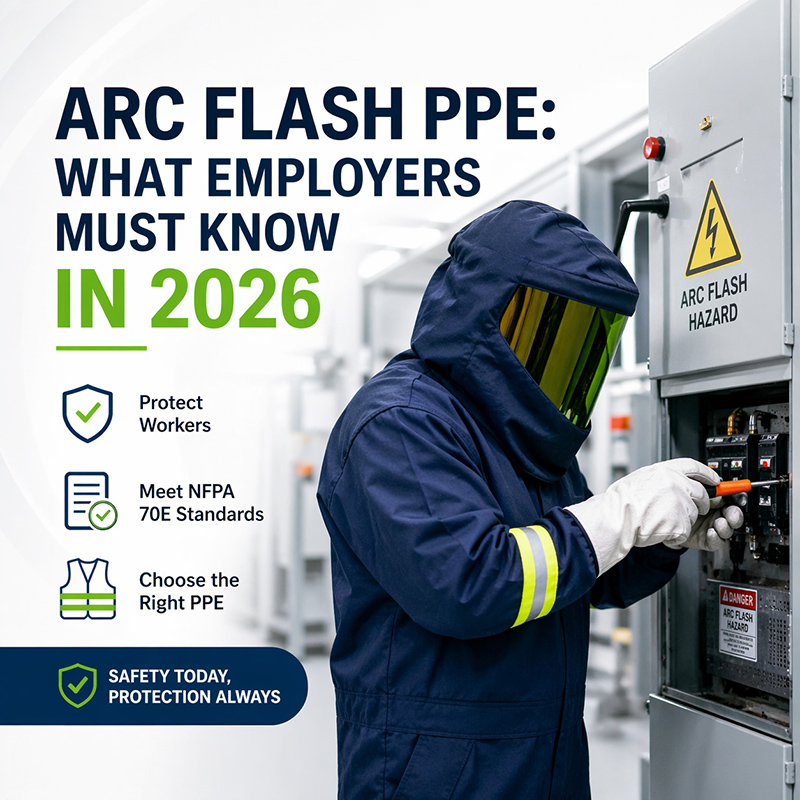
- High-risk tasks: Full arc flash suits with face and hand protection
ATPV Levels Explanation
ATPV (Arc Thermal Performance Value) indicates how much thermal energy a fabric can withstand before causing a second-degree burn.
Higher ATPV ratings = higher protection levels.
When comparing arc-rated clothing, buyers may also encounter the ELIM value, which provides additional information about the garment’s arc protection performance. For a detailed explanation, see our guide to ATPV vs ELIM.
Different markets may refer to different standards when evaluating arc flash protective clothing. IEC 61482 focuses on the performance of protective clothing against the thermal hazards of electric arcs, while NFPA 70E provides workplace electrical safety practices and PPE selection guidance. For a detailed comparison, see our guide to [IEC 61482 vs NFPA 70E].
For buyers sourcing arc-rated clothing for the North American market, ASTM F1506 is another important standard to understand. See our guide to [ASTM F1506 vs IEC 61482] for a comparison of the two standards.
Employers must ensure that PPE matches the incident energy analysis of the work environment. For a more detailed explanation, see our guide on how to meet NFPA 70E PPE requirements in electrical work.
4. How Employers Should Select PPE
Proper PPE selection is not only about compliance but also about preventing injuries effectively.
1. Risk Assessment
Conduct an arc flash hazard analysis to determine incident energy levels at different workstations.
2. Job Role Classification
Different roles require different protection levels:
- Electricians: Medium to high ATPV clothing
- Maintenance workers: Task-based arc-rated PPE
- Supervisors: Basic protective clothing for exposure scenarios
3. Clothing Layering
Layering can improve protection and help workers select appropriate garments for different exposure conditions.
- Base layer: Flame-resistant undergarments
- Mid layer: Arc-rated clothing
- Outer layer: Arc flash jacket or suit when required
Flame-resistant (FR) clothing and arc-rated clothing are related but are not interchangeable terms. Understanding the difference is important when selecting PPE for electrical work. Learn more in our guide to [FR Clothing vs Arc Rated Clothing].
Proper layering ensures both comfort and compliance.
5. Common Mistakes Employers Make
1. Using Incorrect ATPV Ratings
One of the most common mistakes is selecting PPE with insufficient ATPV levels for the actual hazard.
2. Ignoring Full Body Protection
Arc flash protection is not limited to clothing. Gloves, face shields, and balaclavas are equally important.
3. Overlooking PPE Maintenance
Damaged or contaminated arc-rated clothing loses its protective performance over time.
Regular inspection and replacement are essential.
6. Conclusion
Arc flash safety is a critical part of electrical workplace management in 2026. Compliance with NFPA 70E is not just about meeting regulations—it is about protecting lives.
Employers must take a proactive approach by:
- Conducting proper risk assessments
- Selecting correct arc-rated PPE
- Ensuring full-body protection coverage
- Maintaining PPE in good condition
CTA
Need help selecting arc flash PPE for your project? Contact our team for professional recommendation and quotation.