1. What is NFPA 70E
The NFPA 70E is a widely recognized electrical safety standard that defines safe work practices and personal protective equipment (PPE) requirements for workers exposed to electrical hazards.
It is designed to reduce the risk of electrical injuries such as arc flash and shock in workplaces where energized equipment is present.
For a broader overview of arc flash risks and PPE selection, see our guide on [Arc Flash PPE: What Employers Must Know in 2026].
NFPA 70E is not just a guideline—it is widely adopted as a compliance benchmark in industrial electrical safety programs.
2. Why NFPA 70E Matters
Electrical accidents often happen suddenly and with severe consequences. Compliance with NFPA 70E helps employers:
- Reduce arc flash and electrical shock risks
- Protect workers from severe burns and injuries
- Meet legal and safety compliance obligations
- Improve workplace safety culture
For employers, following NFPA 70E is both a legal responsibility and a practical safety strategy.
3. PPE Categories Explained
NFPA 70E defines PPE requirements based on the level of electrical hazard exposure.
Category-Based Protection Levels
- Category 1–2: Basic arc-rated clothing for low-energy tasks
- Category 3: Medium-risk environments requiring higher ATPV-rated garments
- Category 4: High-risk tasks requiring full arc flash suits
Each category is determined based on incident energy analysis at the worksite.
ATPV Rating Concept
ATPV (Arc Thermal Performance Value) measures the level of protection fabric provides against arc flash energy. Higher ATPV = higher protection level.
When evaluating arc-rated clothing, buyers may also encounter the ELIM value. Understanding the difference between ATPV and ELIM can help employers make more informed PPE selections. For a detailed explanation, see our guide to [ATPV vs ELIM].
4. Required Clothing & Accessories
NFPA 70E compliant PPE typically includes more than just clothing.
Essential PPE Components:
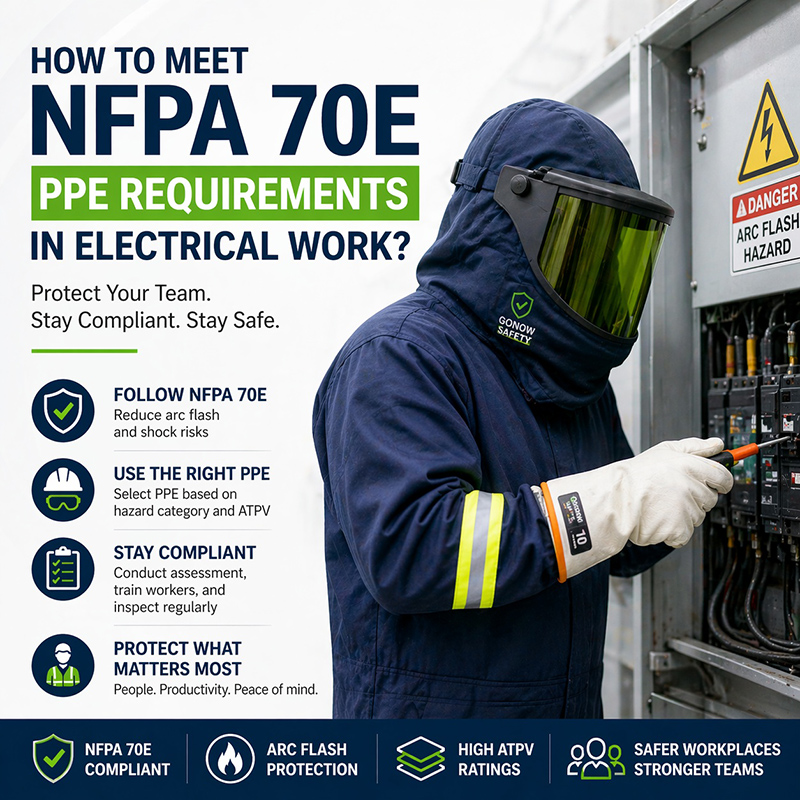
- Arc-rated shirt and pants or coveralls
- Arc flash jacket or suit (for high-risk tasks)
- Flame-resistant base layers
- Insulated gloves (voltage-rated)
- Arc-rated face shield or hood
- Safety glasses and hearing protection
- Electrical-rated safety footwear
Each component works together to provide full-body protection against arc flash hazards.
5. NFPA 70E Compliance Checklist
Employers should ensure the following steps are completed:
✔ Conduct arc flash risk assessment
✔ Determine incident energy levels for work tasks
✔ Select PPE based on correct NFPA 70E category
✔ Ensure garments meet appropriate ATPV ratings
✔ Provide full PPE (not only clothing)
✔ Train workers on proper PPE usage
✔ Inspect PPE regularly for damage or wear
✔ Replace outdated or damaged equipment
Compliance is an ongoing process, not a one-time purchase.
6. Practical Selection Tips
When selecting NFPA 70E compliant PPE, employers should focus on:
1. Task-Based Protection
Match PPE to actual job tasks rather than choosing a “one-level-fits-all” solution.
2. Comfort and Wearability
If PPE is uncomfortable, workers are less likely to wear it properly. Lightweight arc-rated fabrics improve compliance.
3. Layering Strategy
Proper layering improves both flexibility and protection:
- Base layer: FR underwear
- Mid layer: arc-rated shirt/pants
- Outer layer: arc flash jacket when needed
FR clothing and arc-rated clothing are related but are not interchangeable terms. Understanding the difference can help employers select the appropriate protection for electrical work. For more details, see our guide to [FR Clothing vs Arc Rated Clothing].
4. Certification Verification
Always ensure PPE is tested and certified according to recognized arc flash standards aligned with NFPA 70E. IEC 61482 is an important standard for evaluating the performance of protective clothing against electric arc hazards. For a detailed comparison, see our guide to IEC 61482 vs NFPA 70E.
For North American applications, ASTM F1506 is another important standard for arc-rated protective clothing. To understand how ASTM F1506 compares with IEC 61482, see our guide to [ASTM F1506 vs IEC 61482].
7. Conclusion
Meeting NFPA 70E requirements is essential for any workplace involving electrical systems. Proper PPE selection significantly reduces the risk of arc flash injuries and ensures compliance with recognized safety standards.
Employers who prioritize correct PPE implementation not only protect workers but also improve operational safety and reliability.
CTA
Contact us for NFPA 70E compliant PPE solutions for your team.