1. What OSHA Requires
The Occupational Safety and Health Administration (OSHA) sets clear regulations to protect construction workers from workplace hazards.
Under OSHA standards, employers must:
- Identify workplace hazards
- Provide appropriate PPE at no cost to employees
- Ensure PPE is properly used and maintained
- Train workers on correct PPE usage
These requirements form the foundation of construction site safety compliance in the United States.
2. Mandatory PPE Types
Depending on the job and site conditions, OSHA requires several types of PPE for construction workers.
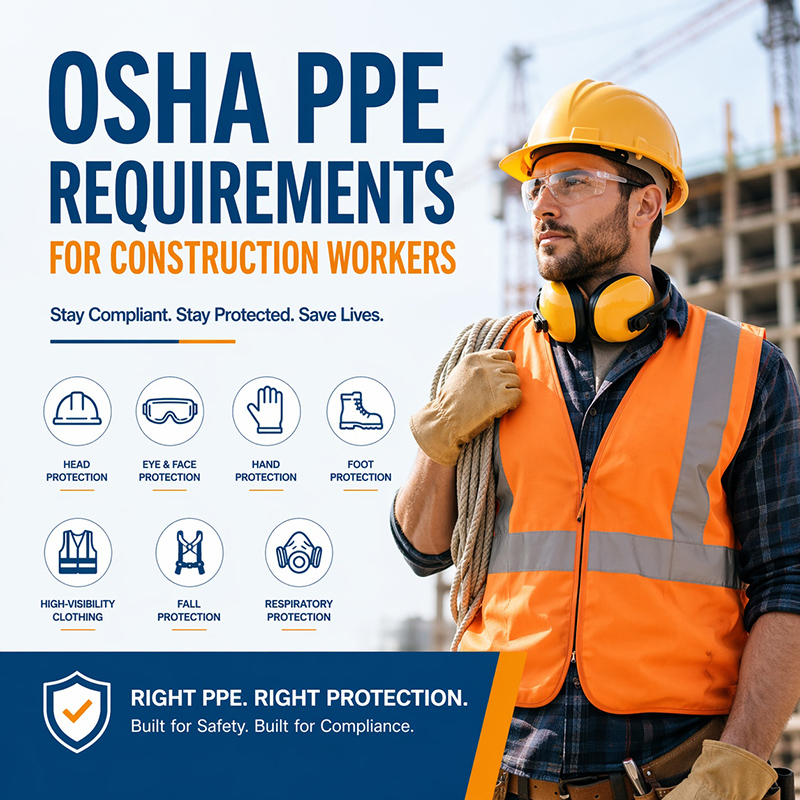
Head Protection
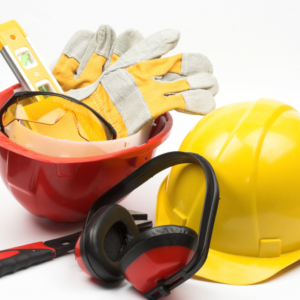
- Safety helmets or hard hats to protect against falling objects
Eye and Face Protection
- Safety glasses, goggles, or face shields for debris and chemical exposure
Hand Protection
- Work gloves suitable for cuts, abrasion, or chemical handling
Foot Protection
- Safety footwear with slip-resistant soles and toe protection
High-Visibility Clothing
- Reflective vests or garments for workers exposed to traffic or moving equipment
Fall Protection Equipment
- Harnesses, lanyards, and lifelines for work at height
Respiratory Protection
- Masks or respirators when exposed to dust, fumes, or hazardous substances
Each type of PPE must meet applicable safety standards and be appropriate for the specific hazard.
3. Construction Site Risks
Construction sites are among the most hazardous work environments.
Common risks include:
- Falling objects
- Slips, trips, and falls
- Electrical hazards
- Exposure to dust and harmful substances
- Machinery and equipment accidents
Proper PPE significantly reduces the likelihood and severity of injuries caused by these hazards.
4. Employer Responsibilities
Employers play a critical role in ensuring PPE compliance.
Key responsibilities include:
Hazard Assessment
Evaluate the worksite to identify potential dangers.
PPE Selection
Choose PPE that matches the level and type of risk.
Training
Ensure workers understand:
- When PPE is required
- How to wear and adjust it
- Limitations of the equipment
Maintenance
Regularly inspect PPE and replace damaged or worn items.
Failure to meet these responsibilities can result in serious safety risks and regulatory penalties.
5. OSHA Compliance Checklist
To stay compliant, employers should follow this checklist:
✔ Conduct workplace hazard assessment
✔ Provide appropriate PPE for all workers
✔ Ensure PPE meets OSHA standards
✔ Train employees on correct usage
✔ Enforce PPE usage on site
✔ Inspect PPE regularly
✔ Replace defective equipment promptly
✔ Maintain documentation of safety procedures
Consistency is key—compliance must be maintained daily.
6. Best Practices for PPE Implementation
Beyond basic compliance, effective PPE programs include:
1. Job-Specific PPE Planning
Different roles require different protection levels.
2. Comfort and Fit
Properly fitting PPE improves worker acceptance and safety performance.
3. Layered Protection
Combine multiple PPE items for comprehensive safety coverage.
4. Clear Safety Policies
Establish and enforce clear PPE rules on site.
5. Continuous Improvement
Regularly review safety procedures and update PPE as needed.
7. Conclusion
Meeting OSHA PPE requirements is essential for protecting construction workers and ensuring a safe work environment. By selecting the right equipment, training employees, and maintaining compliance, employers can significantly reduce workplace risks.
A proactive approach to PPE is not just about meeting regulations—it is about preventing accidents and protecting lives.
CTA
Get OSHA-compliant PPE solutions tailored for your project.