1. Challenges of Hot Working Environments
In many regions—especially across South America, the Middle East, and parts of Africa—workers face extreme temperatures combined with physically demanding tasks.
Hot climate conditions create unique challenges:
- High ambient temperatures
- Strong sunlight exposure
- High humidity levels
- Long working hours outdoors
In these environments, standard PPE may become uncomfortable, leading to reduced usage and increased safety risks.
2. Heat Stress Risks
Heat stress is one of the most overlooked workplace hazards in hot climates.
Common Risks Include:
- Dehydration
- Heat exhaustion
- Heat stroke
- Reduced concentration leading to accidents
When PPE is heavy or poorly ventilated, it can trap heat and worsen these risks.
Employers must balance protection with thermal comfort to ensure workers remain safe and productive.
3. PPE Material Selection
Material choice is critical for PPE used in hot environments.
Recommended Materials:
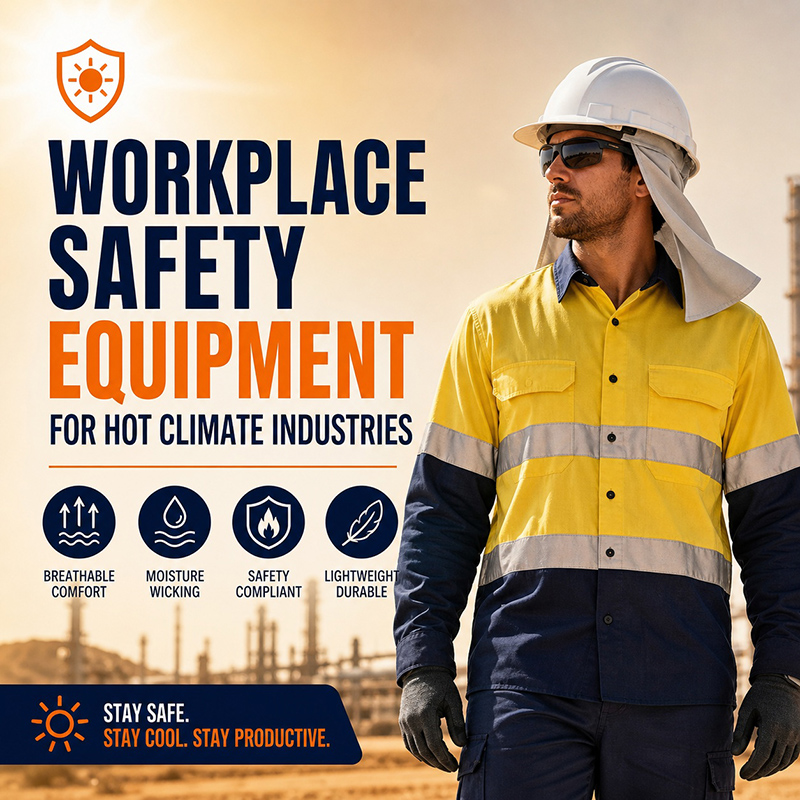
- Lightweight cotton blends
- Moisture-wicking fabrics
- Breathable flame-resistant materials
- Advanced technical fabrics designed for heat dissipation
For electrical or high-risk environments, materials must still comply with safety standards such as NFPA 70E while maintaining breathability.
4. Breathability and Comfort Design
Good PPE design can significantly improve worker acceptance.
Key Features to Look For:
- Ventilation panels or mesh zones
- Lightweight fabric construction
- Ergonomic fit for mobility
- Sweat absorption and quick-dry performance
Comfort is not just a preference—it directly impacts whether workers consistently wear PPE.
5. Industry Applications
Hot climate PPE is essential across multiple industries:
Construction
Outdoor work under direct sunlight requires breathable and high-visibility clothing.
Oil & Gas / Energy
Flame-resistant and arc-rated clothing must be optimized for heat conditions.
Mining
Workers require durable yet lightweight PPE for long shifts.
Manufacturing
Indoor environments with poor ventilation can also create heat stress risks.
Each industry requires tailored PPE solutions based on specific hazards.
6. Best Practices for Hot Climate PPE
To improve safety and comfort, employers should implement the following:
1. Choose Climate-Appropriate PPE
Avoid heavy, non-breathable materials whenever possible.
2. Use Layering Strategically
Lightweight base layers can help wick moisture and improve comfort.
3. Schedule Work Smartly
Reduce exposure during peak heat hours when possible.
4. Provide Hydration Support
Ensure workers have easy access to water and rest breaks.
5. Train Workers
Educate teams on recognizing signs of heat stress and proper PPE usage.
7. Conclusion
Selecting PPE for hot climates requires a different approach than standard environments. Employers must consider both protection and comfort to ensure workers stay safe without compromising productivity.
Breathable, lightweight, and compliant PPE solutions are key to achieving this balance.
CTA
Looking for PPE suitable for hot environments? Contact us for solutions.