1. Introduction
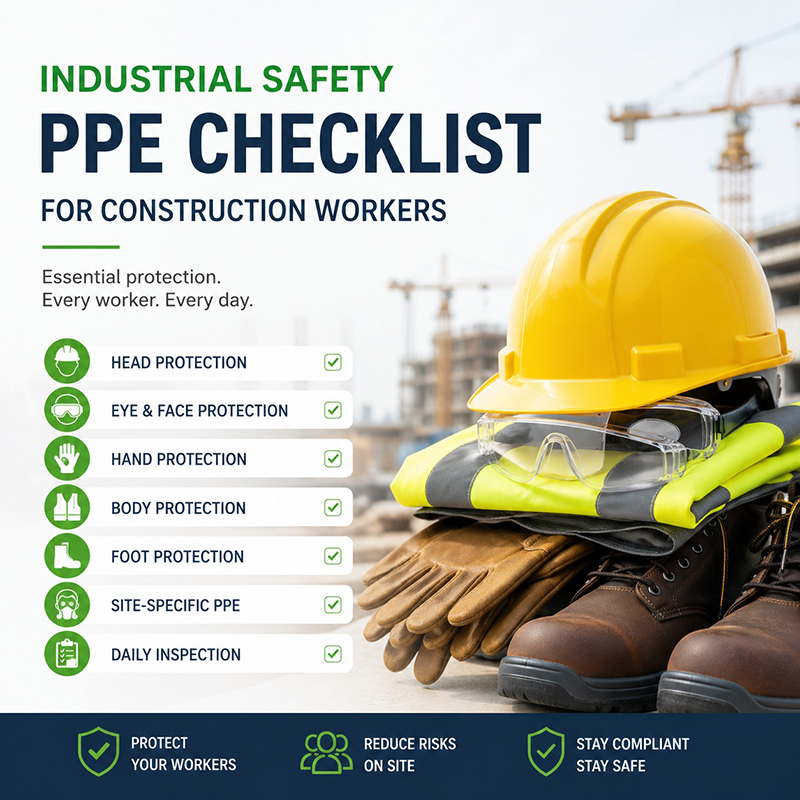
Construction sites involve multiple hazards—from falling objects to electrical risks and exposure to dust or chemicals. A clear and practical PPE checklist helps ensure workers are consistently protected and safety standards are maintained.
This guide provides a complete PPE checklist to support daily operations and improve on-site safety compliance.
2. Head Protection
Head injuries are common on construction sites, making proper protection essential.
Checklist:
✔ Safety helmet (hard hat)
✔ Chin strap (for work at height or windy conditions)
✔ Regular inspection for cracks or damage
Head protection should always comply with relevant safety standards such as those guided by Occupational Safety and Health Administration.
3. Eye and Face Protection
Flying debris, dust, and chemical splashes pose serious risks to eyes and face.
Checklist:
✔ Safety glasses (basic protection)
✔ Goggles (for dust or chemical exposure)
✔ Face shield (for cutting, grinding, or high-risk tasks)
Ensure lenses are clean and free from scratches to maintain visibility.
4. Hand Protection
Hands are frequently exposed to cuts, abrasion, and hazardous materials.
Checklist:
✔ General work gloves (for handling materials)
✔ Cut-resistant gloves (for sharp objects)
✔ Chemical-resistant gloves (for hazardous substances)
✔ Insulated gloves (for electrical work)
Selecting the correct glove type is critical for both safety and efficiency.
5. Body Protection
Body protection varies depending on job tasks and site risks.
Checklist:
✔ High-visibility vest or clothing
✔ Protective workwear (durable and comfortable)
✔ Flame-resistant or arc-rated clothing (for electrical tasks)
✔ Weather-appropriate outerwear
For electrical environments, PPE should align with standards such as NFPA 70E.
6. Foot Protection
Foot injuries can occur from heavy objects, sharp materials, or slippery surfaces.
Checklist:
✔ Safety shoes with toe protection
✔ Slip-resistant soles
✔ Puncture-resistant midsoles (if required)
✔ Electrical hazard (EH) rated footwear (for electrical work)
Proper footwear improves both safety and comfort during long working hours.
7. Site-Specific PPE Checklist
In addition to standard PPE, some job sites require extra protection based on specific risks.
Additional PPE:
✔ Respirators or masks (dust, fumes, or chemicals)
✔ Hearing protection (earplugs or earmuffs)
✔ Fall protection (harness, lanyard, lifeline)
✔ Arc flash PPE (for electrical work zones)
Employers should conduct site-specific risk assessments to determine additional PPE requirements.
8. Daily PPE Inspection Checklist
To maintain effectiveness, PPE should be checked regularly.
Quick Daily Check:
✔ No visible damage or wear
✔ Proper fit and adjustment
✔ Clean and ready for use
✔ Stored correctly after use
Routine inspection helps prevent equipment failure and ensures consistent protection.
9. Conclusion
A structured PPE checklist helps construction teams stay organized, compliant, and safe. By ensuring all essential protective equipment is available and properly used, employers can significantly reduce workplace risks.
Consistency in PPE usage is the key to effective safety management.
CTA
Download full PPE checklist or contact us for project supply.