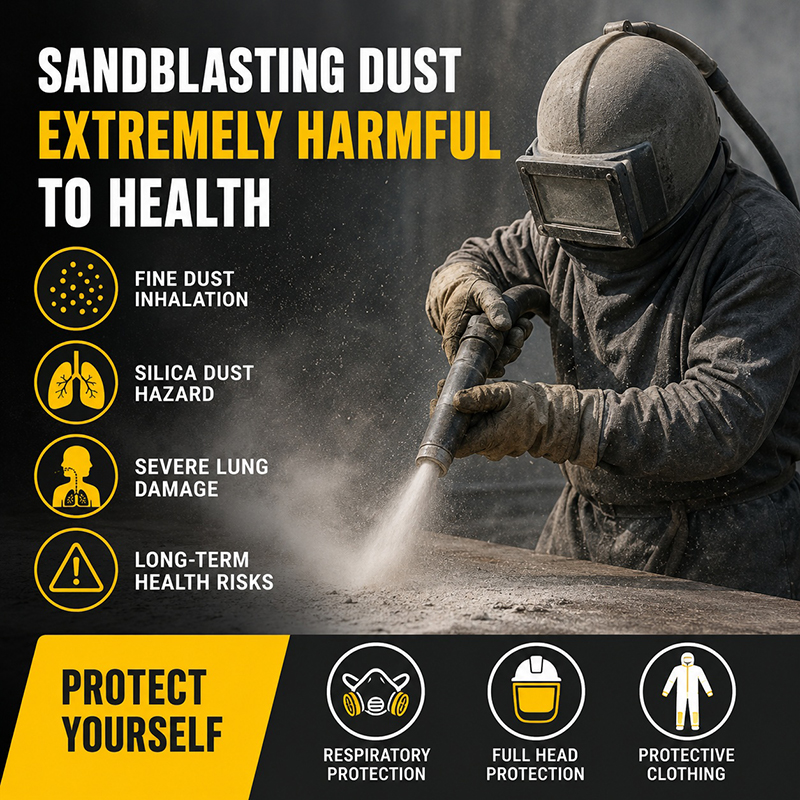
Sandblasting (abrasive blasting) is widely used for surface cleaning, rust removal, and coating preparation. However, it generates extremely fine dust particles that pose serious health risks to workers—especially when proper respiratory protection is not used.
Unlike visible dust, many of these particles are microscopic and can remain airborne for long periods, making them easy to inhale without immediate awareness.
1. Dust Inhalation Risk
During sandblasting, large amounts of fine abrasive particles are released into the air.
These particles can:
- Stay suspended for a long time
- Enter deep into the lungs
- Bypass basic dust masks
Once inhaled, they cannot be easily removed by the body’s natural defense system.
2. Silica Dust Hazard
One of the most dangerous components in sandblasting dust is crystalline silica.
Health risks include:
- Silicosis (irreversible lung scarring)
- Chronic respiratory disease
- Reduced lung capacity
- Increased risk of lung cancer
Even short-term exposure at high levels can cause long-term health damage.
3. Severe Lung Damage
Fine abrasive dust particles penetrate deep into the alveoli (air sacs in the lungs).
Over time, this can lead to:
- Permanent lung inflammation
- Reduced oxygen intake efficiency
- Chronic coughing and breathing difficulty
- Progressive loss of lung function
These conditions are often irreversible once developed.
4. Long-Term Occupational Diseases
Sandblasting exposure is strongly linked to occupational lung diseases that develop gradually over years.
Workers may initially feel normal, but continuous exposure can result in:
- Progressive respiratory decline
- Chronic fatigue
- Increased vulnerability to infections
- Long-term disability in severe cases
This makes prevention far more important than treatment.
Recommended PPE for Sandblasting Protection
To effectively reduce these risks, proper respiratory and full-body protection is essential:
1. Respiratory Protection
- P3 / P100 high-efficiency respirators
- Full-face or powered air-purifying respirators (PAPR)
- Supplied air systems for high-risk environments
2. Full Head Protection
- Sandblasting helmets
- Integrated airflow systems
- Impact and dust protection combined
3. Protective Clothing
- Abrasion-resistant blasting suits
- Full-body coverage to prevent dust penetration
- Durable materials designed for harsh environments
Final Thoughts
Sandblasting dust exposure is not just a short-term irritation—it is a serious occupational health risk that can cause permanent lung damage.
Understanding these hazards is essential for improving safety standards and ensuring proper PPE is selected and used correctly.
At GONOW SAFETY, we focus on delivering respiratory protection and blasting safety solutions designed for real working environments where risk cannot be ignored.