Industrial surface preparation plays a critical role in construction, marine maintenance, steel fabrication, infrastructure projects, and industrial coating applications. Before painting, coating, or welding can begin, surfaces often need to be cleaned, blasted, ground, or treated to remove rust, old coatings, dust, grease, or corrosion.
These processes can generate airborne dust, flying particles, chemical exposure, excessive noise, and impact hazards. Without proper personal protective equipment (PPE), workers may face serious health and safety risks.
Choosing the right PPE for surface preparation is not only about compliance — it also helps improve productivity, reduce injuries, and create a safer working environment.
Common Hazards During Surface Preparation
Different surface preparation methods create different risks. Some of the most common hazards include:
- Dust from grinding and sanding
- Abrasive particles from blasting operations
- Paint residue and coating contamination
- Chemical splashes from cleaning agents
- Eye injuries from flying debris
- High noise exposure
- Hand injuries from rough materials and tools
- Slippery surfaces and falling hazards
Because many industrial projects combine several preparation methods together, PPE requirements often need to cover multiple hazards at the same time.
Essential PPE for Industrial Surface Preparation
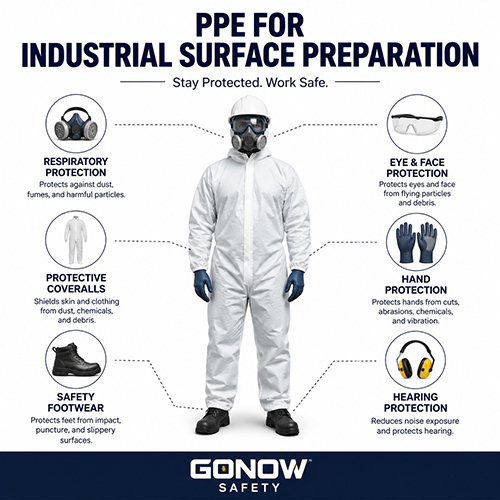
1. Respiratory Protection
Respiratory protection is one of the most important parts of surface preparation safety.
Grinding, sanding, and abrasive blasting can release large amounts of dust and airborne particles. In some environments, workers may also encounter hazardous fumes, silica dust, or chemical vapors.
Common respiratory protection options include:
- Disposable dust masks
- Half-face respirators
- Full-face respirators
- Powered air-purifying respirators (PAPR)
The correct solution depends on:
- Dust concentration
- Ventilation conditions
- Exposure duration
- Type of material being processed
For blasting operations or environments with heavy airborne contamination, full-face respiratory protection is often preferred because it protects both breathing and eye areas simultaneously.
2. Eye and Face Protection
Surface preparation activities frequently produce high-speed particles that can cause serious eye injuries.
Workers commonly use:
- Safety goggles
- Face shields
- Full-face blasting helmets
- Anti-fog protective eyewear
Eye protection becomes especially important during:
- Abrasive blasting
- Metal grinding
- Surface scaling
- Wire brushing
- High-pressure cleaning
Proper sealing and anti-impact performance are important factors when selecting eye protection equipment.
3. Protective Coveralls
Dust, paint residue, and abrasive materials can quickly contaminate normal work clothing. Disposable or reusable protective coveralls help reduce skin exposure and keep workers cleaner during operations.
Protective clothing may provide:
- Dust resistance
- Limited chemical splash protection
- Abrasion resistance
- Improved worker visibility
Disposable coveralls are widely used in:
- Sandblasting
- Industrial painting
- Surface cleaning
- Maintenance shutdown projects
In heavy blasting environments, reinforced blasting suits may also be required for additional durability and protection.
4. Hand Protection
Surface preparation work often involves sharp edges, rough materials, vibrating tools, and chemical exposure.
Common glove types include:
- Cut-resistant gloves
- Leather work gloves
- Chemical-resistant gloves
- Impact-resistant gloves
The right glove depends on the work process. For example:
- Grinding work may require cut resistance
- Chemical cleaning may require chemical protection
- Abrasive blasting may require heavy-duty abrasion resistance
Comfort and grip are also important because workers often handle tools continuously for long periods.
5. Hearing Protection
Grinding equipment, blasting systems, and industrial cleaning machinery can create extremely high noise levels.
Long-term exposure to excessive noise may lead to permanent hearing damage.
Common hearing protection includes:
- Foam earplugs
- Earmuffs
- Dual hearing protection systems
Hearing protection is especially important in enclosed blasting rooms or large industrial maintenance sites where noise can accumulate.
6. Safety Footwear
Industrial surface preparation areas often contain:
- Sharp debris
- Heavy tools
- Slippery surfaces
- Metal materials
- Uneven flooring
Safety footwear helps reduce foot injuries and improve stability.
Important features may include:
- Steel toe protection
- Slip resistance
- Puncture-resistant soles
- Oil resistance
- Anti-static properties
The work environment should always determine the footwear specification required.
Why PPE Selection Matters in Surface Preparation
Using incorrect PPE can create serious problems, including:
- Reduced worker comfort
- Poor productivity
- Increased injury risk
- Heat stress
- Poor visibility
- Respiratory exposure
Many contractors now focus on balancing protection, comfort, and durability to improve worker compliance on long projects.
Proper PPE management also helps reduce replacement costs and minimize operational downtime.
PPE Requirements May Differ by Industry
Surface preparation is used across many industries, including:
- Construction
- Shipyards
- Oil & gas maintenance
- Steel fabrication
- Infrastructure repair
- Manufacturing facilities
- Industrial coating projects
Each industry may require different PPE combinations depending on regulations, materials, and working conditions.
For this reason, many contractors prefer working with PPE suppliers that can provide multiple protection categories through a single sourcing channel.
Final Thoughts
Industrial surface preparation creates multiple workplace hazards that require carefully selected PPE solutions. Respiratory protection, eye protection, protective clothing, gloves, hearing protection, and safety footwear all play important roles in reducing risk during blasting, grinding, sanding, and cleaning operations.
Selecting suitable PPE not only improves worker safety but also supports better efficiency and long-term project performance.
As industrial safety standards continue evolving, companies are placing greater attention on reliable PPE systems that combine protection, comfort, and operational practicality.