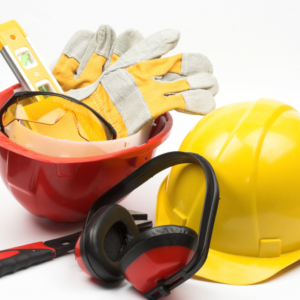
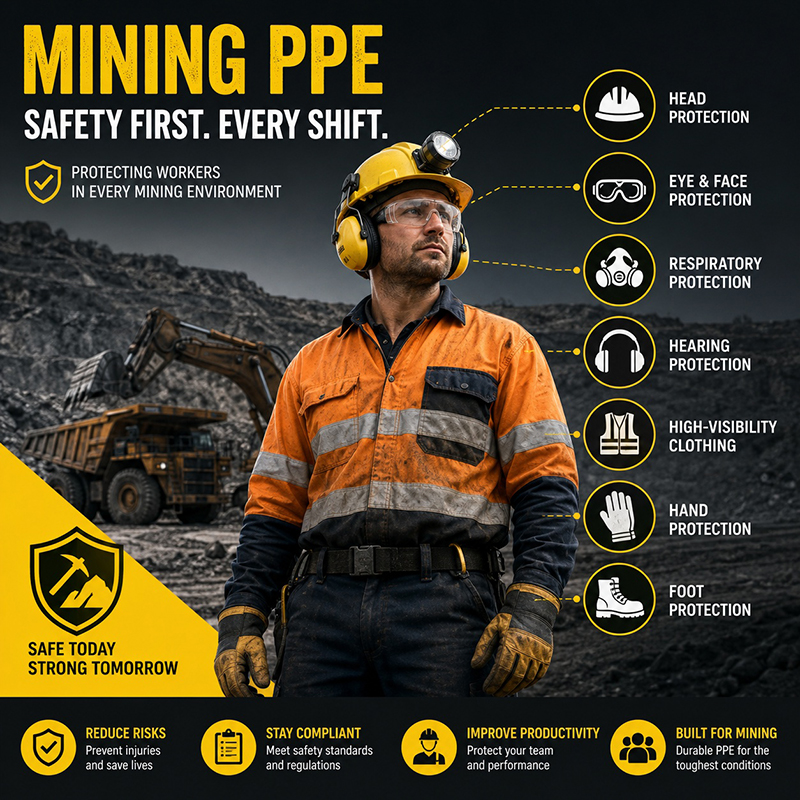
Mining is one of the most hazardous industries in the world. Workers are exposed to risks such as falling rocks, dust inhalation, heavy machinery accidents, toxic gases, extreme noise, and low-visibility environments. Because of these dangers, Personal Protective Equipment (PPE) is not optional—it is a critical safety barrier that protects workers’ lives.
This article explains the key mining PPE safety requirements and provides a complete equipment list for mine workers.
Why PPE is Critical in Mining Operations
Mining environments are unpredictable and high-risk. Without proper PPE, workers may face:
- Head injuries from falling objects
- Lung damage from silica dust and chemicals
- Hearing loss from continuous machinery noise
- Eye injuries from flying debris and dust
- Foot injuries from heavy equipment or falling materials
- Reduced visibility accidents in underground mines
Proper PPE reduces these risks and ensures compliance with international safety standards such as OSHA and ISO regulations.
Core PPE Requirements in Mining Sites
To ensure safety compliance, mining PPE must meet the following requirements:
1. Impact and Penetration Protection
Equipment must protect against falling rocks, tools, and structural collapse risks.
2. Dust and Respiratory Protection
Mining PPE must filter harmful particles like silica dust and chemical fumes.
3. High Visibility Standards
Workers must remain visible in low-light or underground environments.
4. Heat and Weather Resistance
For open-pit mining, PPE must withstand heat, UV exposure, rain, and wind.
5. Durability and Comfort
Mining shifts are long—PPE must be strong, breathable, and comfortable for extended wear.
Complete Mining PPE Equipment List
Below is the essential PPE required for mining workers:
1. Head Protection
- Hard hats with chin straps
- Impact-resistant helmets with optional lamp holders
- Electrical insulated helmets for underground mining
2. Eye and Face Protection
- Safety goggles (anti-dust, anti-fog)
- Face shields for grinding and drilling operations
- UV-protection visors
3. Respiratory Protection
- Dust masks (P1/P2/P3 filters)
- Half-face respirators
- Full-face respirators for toxic gas environments
4. Hearing Protection
- Earplugs
- Noise-reduction earmuffs (NRR-rated)
5. Body Protection
- Flame-resistant (FR) coveralls
- High-visibility reflective workwear
- Chemical-resistant protective suits (for specific mining processes)
6. Hand Protection
- Heavy-duty anti-cut gloves
- Heat-resistant gloves
- Chemical-resistant gloves
7. Foot Protection
- Steel-toe safety boots
- Slip-resistant mining boots
- Puncture-proof soles
8. Fall Protection (for elevated mining work)
- Safety harnesses
- Lanyards and lifelines
- Anchor points
PPE Selection Tips for Mining Companies
When choosing mining PPE, consider:
- Type of mining (underground vs open-pit)
- Exposure level to dust, noise, and chemicals
- Climate conditions
- Compliance with safety certifications (CE, ANSI, ISO)
- Worker comfort and mobility
Conclusion
Mining PPE is essential for reducing workplace injuries and ensuring operational safety. A complete PPE system—covering head, respiratory, eye, hearing, body, hand, and foot protection—can significantly reduce risks in mining environments.
For mining companies, investing in high-quality PPE is not just a compliance requirement, but a long-term commitment to worker safety and productivity.