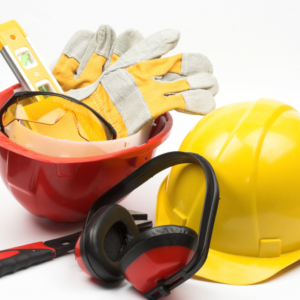
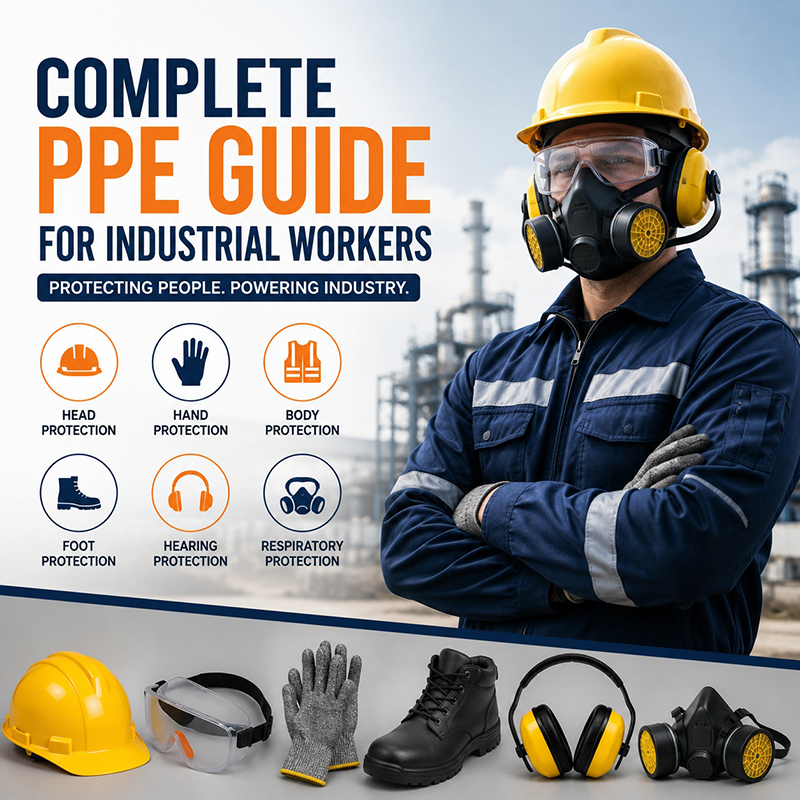
Industrial workers operate in environments filled with mechanical hazards, chemicals, noise, heat, and airborne particles. A complete PPE (Personal Protective Equipment) system is essential to reduce risks, prevent injuries, and ensure compliance with safety standards.
1. Understanding Industrial Workplace Hazards

Industrial environments expose workers to multiple risks:
- Mechanical injuries from moving machinery
- Sharp tools and cutting equipment
- Chemical exposure from industrial materials
- Noise-induced hearing damage
- Heat, sparks, and welding hazards
- Dust and airborne contaminants
A proper PPE strategy starts with identifying these risks accurately.
2. Head Protection Equipment

- Safety helmets for impact protection
- Face shields for chemical and spark hazards
- Safety goggles for dust and debris protection
Proper certification and fit ensure maximum safety.
3. Hand Protection for Industrial Work

Hands are one of the most exposed body parts:
- Cut-resistant gloves for sharp materials
- Heat-resistant gloves for welding tasks
- Chemical-resistant gloves for hazardous substances
- General-purpose gloves for assembly work
Each task requires specific glove selection.
4. Body Protection and Workwear

Protective clothing includes:
- Industrial coveralls for general protection
- Flame-resistant clothing for welding operations
- High-visibility vests for machine-heavy environments
- Chemical protective suits for hazardous exposure areas
Comfort and durability are essential for long shifts.
5. Foot Protection in Industrial Sites

Safety footwear protects against:
- Heavy object impact
- Slips and falls on wet surfaces
- Chemical exposure
- Electrical and static hazards
Steel-toe or composite toe shoes are standard in most industries.
6. Hearing Protection in Industrial Noise

Noise protection options:s
- Earplugs for moderate noise levels
- Earmuffs for high-noise machinery
- Dual protection for extreme environments
Continuous exposure without protection may lead to permanent hearing loss.
7. Respiratory Protection Systems

- Disposable masks for dust protection
- Half-face respirators for chemical vapors
- Full-face respirators for high-risk exposure
- PAPR systems for advanced industrial environments
Proper sealing and fit testing are critical.
8. PPE Management and Safety Compliance


Effective PPE systems require:
- Regular inspection and replacement
- Worker safety training programs
- Compliance with OSHA / EN standards
- Continuous hazard assessment
A strong safety culture reduces workplace incidents significantly.
Conclusion
A complete PPE system is essential for protecting industrial workers from mechanical, chemical, thermal, and environmental hazards. Proper selection, correct usage, and consistent management of PPE ensure safer and more productive industrial operations.