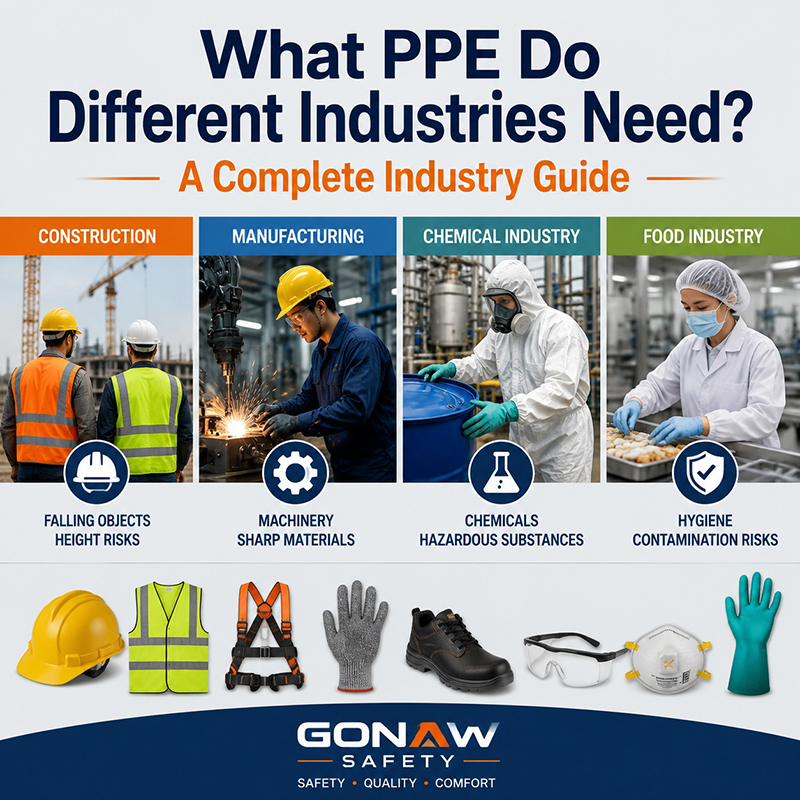
Every industry has unique workplace hazards. Construction workers face falling objects and height risks, manufacturing employees deal with machinery and sharp materials, chemical workers handle hazardous substances, and food industry employees must maintain strict hygiene standards.
Choosing the right [Personal Protective Equipment (PPE)] is essential to protect workers, reduce workplace accidents, and comply with safety requirements.
This industry guide explains the essential industrial safety equipment required for different workplaces, including:
- PPE for construction
- PPE for manufacturing
- PPE for chemical industries
- PPE for food industries
Why Different Industries Need Different PPE
PPE selection should always be based on workplace hazards.
A construction site and a food processing factory may both require protective clothing, but the purpose and protection level are completely different.
Common workplace hazards include:
- Falling objects
- Mechanical impact
- Sharp edges
- Dust and particles
- Chemicals
- Heat and flames
- Biological contamination
- Electrical risks
- Slips and falls
A proper PPE system helps ensure workers have the right protection for their specific environment.
PPE for Construction Industry
Construction is one of the industries with the highest workplace risks. Workers may be exposed to falling objects, heavy machinery, dust, noise, sharp materials, and working at heights.
The essential PPE for construction includes:
1. Safety Helmets
Safety helmets are one of the most important pieces of construction PPE.
They protect workers from:
- Falling objects
- Impact injuries
- Flying debris
- Electrical hazards (depending on helmet type)
Common applications:
- Building construction
- Infrastructure projects
- Road construction
- Mining operations
Common standards:
- EN 397 Industrial Safety Helmets
- ANSI Z89.1 Industrial Head Protection
A properly fitted helmet should be worn whenever workers are exposed to head injury risks.
2. Safety Vests / High Visibility Clothing
Construction sites often involve vehicles, cranes, and heavy equipment. High visibility clothing improves worker visibility, especially in low-light conditions.
Safety vests help protect workers by making them easier to identify.
Common features:
- Reflective strips
- Fluorescent materials
- Lightweight design
Applications:
- Road construction
- Traffic control
- Warehouses
- Outdoor projects
Common standard:
- EN ISO 20471 High Visibility Clothing
3. Safety Harnesses
Workers operating at height require fall protection equipment.
Safety harnesses help prevent serious injuries caused by falls.
Common applications:
- High-rise construction
- Roof work
- Tower maintenance
- Industrial installation
Fall protection systems usually include:
- Full body harness
- Lanyard
- Anchorage point
- Shock absorber
4. Construction Safety Gloves
Construction workers use their hands for cutting, lifting, assembling, and handling materials.
Different tasks require different gloves:
Cut Resistant Gloves
Protect against:
- Sharp metal
- Glass
- Cutting tools
Impact Resistant Gloves
Protect against:
- Crushing hazards
- Mechanical impact
General Work Gloves
Used for:
- Material handling
- Assembly work
- General construction tasks
5. Safety Shoes
Construction sites involve risks from heavy objects, nails, uneven surfaces, and slippery areas.
Safety shoes provide:
- Toe protection
- Slip resistance
- Puncture resistance
- Electrical protection (depending on design)
Common standards:
- EN ISO 20345
- ASTM F2413
PPE for Manufacturing Industry
Manufacturing environments include factories, workshops, and production facilities where workers operate machinery, handle materials, and work with industrial processes.
The right PPE for manufacturing helps reduce injuries caused by mechanical hazards, particles, chemicals, and noise.
1. Cut Resistant Gloves
Hands are one of the most vulnerable body parts in manufacturing.
Cut-resistant gloves are widely used in:
- Metal fabrication
- Automotive manufacturing
- Glass handling
- Assembly operations
Protection levels depend on:
- Blade cut resistance
- Material strength
- Work environment
Common materials:
- HPPE fiber
- Kevlar fiber
- Nylon blends
2. Safety Glasses
Manufacturing workers may be exposed to:
- Flying particles
- Metal fragments
- Dust
- Chemical splashes
Safety glasses provide protection against eye injuries.
Common applications:
- Machine operation
- Grinding
- Drilling
- Assembly lines
Features include:
- Impact-resistant lenses
- Anti-fog coating
- UV protection
3. Respirators
Industrial production may generate:
- Dust
- Fumes
- Aerosols
- Fine particles
Respiratory protection helps prevent workers from inhaling harmful substances.
Common options:
Disposable Respirators
Examples:
- FFP1
- FFP2
- FFP3
- N95
Reusable Respirators
Used with replaceable filters or cartridges.
Applications:
- Welding
- Painting
- Manufacturing processes
PPE for Chemical Industry
Chemical industries involve higher risks due to exposure to hazardous substances, corrosive chemicals, toxic gases, and chemical splashes.
The essential PPE includes:
1. Chemical Protective Suits
Chemical suits provide a protective barrier between workers and hazardous substances.
They help protect against:
- Chemical splashes
- Liquid contamination
- Hazardous materials
Applications:
- Chemical manufacturing
- Laboratory operations
- Emergency response
Types include:
- Disposable chemical suits
- Reusable chemical protective clothing
2. Gas Masks and Respiratory Protection
Some chemical environments may contain:
- Toxic gases
- Chemical vapors
- Harmful particles
Gas masks with suitable filters help protect workers’ respiratory systems.
Applications:
- Chemical processing
- Industrial cleaning
- Hazardous material handling
Correct filter selection is critical because different chemicals require different protection.
3. Chemical Resistant Gloves
Chemical gloves protect hands from harmful substances.
Common materials:
- Nitrile
- Neoprene
- PVC
- Butyl rubber
Selection depends on:
- Chemical type
- Exposure time
- Required protection level
PPE for Food Industry
Food processing requires PPE that protects both workers and products.
The main focus is:
- Hygiene
- Contamination prevention
- Worker safety
1. Disposable Gloves
Disposable gloves are widely used in:
- Food processing
- Catering
- Packaging
Common materials:
- Nitrile
- Latex
- Vinyl
Benefits:
- Reduce contamination risks
- Maintain hygiene standards
- Protect hands during food handling
2. Masks
Food industry masks help reduce contamination from:
- Respiratory droplets
- Dust particles
- Workplace contaminants
Common applications:
- Food production lines
- Food packaging
- Clean environments
3. Protective Clothing
Food protective clothing helps maintain hygiene and worker safety.
Common products:
- Disposable coveralls
- Aprons
- Protective gowns
- Sleeve covers
Applications:
- Meat processing
- Beverage production
- Food packaging facilities
How to Choose the Right PPE for Your Industry?
Before selecting PPE, companies should consider:
1. Identify Workplace Hazards
Evaluate:
- Type of hazard
- Exposure level
- Working conditions
2. Select PPE According to Standards
Ensure products meet relevant safety standards:
- EN Standards
- ANSI Standards
- ISO Standards
- ASTM Standards
3. Consider Worker Comfort
Workers are more likely to wear PPE correctly when it is:
- Comfortable
- Lightweight
- Breathable
- Properly fitted
4. Provide Training
Employees should understand:
- How to use PPE
- When to replace PPE
- How to maintain equipment
Industry PPE Selection Guide
| Industry | Common Hazards | Recommended PPE |
|---|---|---|
| Construction | Falling objects, height risks, dust | Helmet, safety vest, harness, gloves, safety shoes |
| Manufacturing | Machinery, sharp materials, particles | Cut resistant gloves, safety glasses, respirators |
| Chemical Industry | Chemicals, gases, hazardous substances | Chemical suits, gas masks, chemical gloves |
| Food Industry | Contamination, hygiene risks | Disposable gloves, masks, protective clothing |
Conclusion: Choosing the Right Industrial Safety Equipment
Different industries require different PPE solutions. From construction sites and manufacturing plants to chemical facilities and food production environments, selecting the correct protective equipment is essential for worker safety.
Understanding industry-specific risks helps companies choose effective industrial safety equipment and create safer workplaces.
At GONOW SAFETY, we provide professional PPE solutions for construction, manufacturing, chemical, food, healthcare, and industrial applications.
Safety, Quality, Comfort — protecting workers in every industry.