Welding operations involve various hazards, including sparks, molten metal droplets, intense heat, and ultraviolet radiation. Without suitable protective clothing, workers may suffer from burns, skin injuries, or other serious workplace accidents.
Choosing the right welding PPE is essential for protecting workers and maintaining compliance with workplace safety requirements.
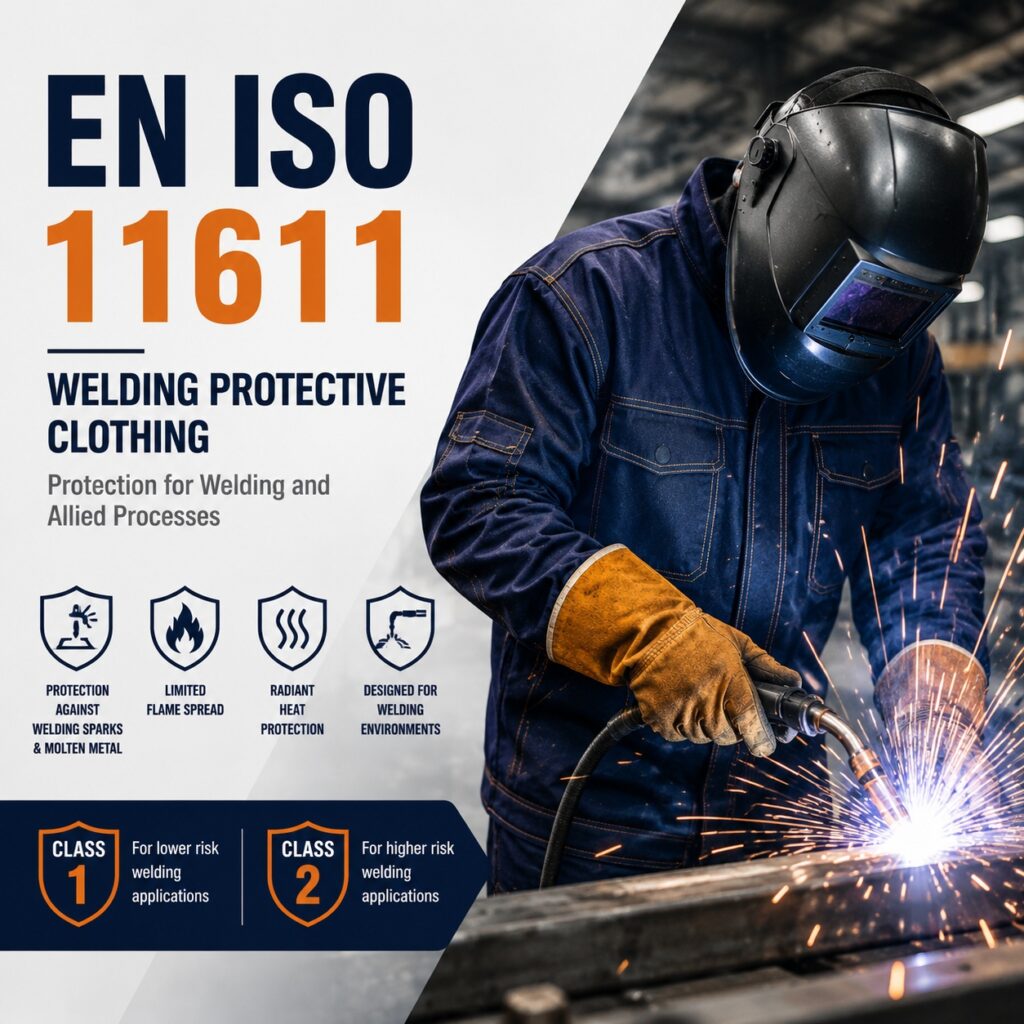
EN ISO 11611 is a key international standard that specifies requirements for protective clothing used during welding and related processes.
This guide explains what EN ISO 11611 means, what protection it provides, and how buyers can choose suitable welding protective clothing.
What Is EN ISO 11611?
EN ISO 11611 Protective clothing for use in welding and allied processes defines the requirements for protective garments designed to protect workers from hazards during welding activities.
The standard evaluates clothing performance against risks such as:
- Small molten metal splashes
- Short-term flame exposure
- Radiant heat from welding arcs
- Contact with hot surfaces
- Electrical risks under normal welding conditions
EN ISO 11611 certified clothing helps reduce injuries caused by welding sparks, heat, and molten metal.
Why Is EN ISO 11611 Important for Welders?
1. Protection Against Welding Sparks and Molten Metal
During welding, small droplets of molten metal can reach extremely high temperatures.
Standard workwear may:
- Catch fire easily
- Allow heat penetration
- Melt or shrink when exposed to sparks
EN ISO 11611 welding clothing is designed with:
- Flame-resistant fabrics
- Protective construction
- Suitable seams and closures
to provide better protection during welding operations.
2. Protection Against Heat Exposure
Welding generates intense heat and radiation.
EN ISO 11611 garments help reduce exposure from:
- Welding arcs
- Hot metal surfaces
- Thermal radiation
This makes them suitable for workers in:
- Welding workshops
- Shipbuilding
- Metal fabrication
- Industrial manufacturing
3. Designed for Welding Work Conditions
Unlike ordinary protective clothing, welding garments consider the actual working environment.
Important design features include:
- Durable materials
- Comfortable movement
- Covered closures
- Reinforced areas
- Long-lasting performance
Good welding PPE should protect workers without limiting productivity.
Understanding EN ISO 11611 Classification
EN ISO 11611 has two protection classes:
Class 1
Designed for lower-risk welding operations.
Suitable for:
- Occasional welding
- Short welding periods
- Low-intensity processes
Protection against:
- Lower levels of sparks
- Small molten metal droplets
Class 2
Designed for higher-risk welding environments.
Suitable for:
- Heavy welding operations
- Longer welding periods
- More intense heat exposure
Provides higher protection against:
- Greater molten metal splash
- More severe welding hazards
EN ISO 11611 vs EN ISO 11612: What Is the Difference?
Many buyers confuse these two standards.
| Standard | Main Purpose |
|---|---|
| EN ISO 11611 | Protection during welding and related processes |
| EN ISO 11612 | Protection against heat and flame hazards |
Simply:
EN ISO 11611 = Welding protection
EN ISO 11612 = Heat and flame protection
In some applications, garments may comply with both standards to provide broader protection.
Example:
A welding coverall used in a metal factory may require:
- EN ISO 11611 for welding sparks
- EN ISO 11612 for heat and flame exposure
What Industries Need EN ISO 11611 Clothing?
Welding and Metal Fabrication
Workers face:
- Sparks
- Molten metal
- Heat radiation
Common PPE:
- Welding jackets
- Welding trousers
- Welding coveralls
Shipbuilding and Repair
Welding activities require durable protective clothing suitable for long working hours.
Recommended:
- Flame-resistant welding suits
- Heavy-duty protective garments
Manufacturing and Construction
Workers involved in:
- Cutting
- Grinding
- Welding
may require EN ISO 11611 certified clothing.
How to Choose EN ISO 11611 Welding Clothing?
1. Select the Correct Protection Class
Evaluate:
- Welding method
- Working frequency
- Heat intensity
- Exposure time
Choose Class 1 or Class 2 according to workplace risks.
2. Check Fabric Performance
Important factors include:
- Flame resistance
- Heat protection
- Abrasion resistance
- Washing durability
The fabric should maintain protection after repeated use.
3. Consider Comfort and Mobility
Welders often work long shifts.
Look for:
- Ergonomic design
- Breathable fabric
- Proper sizing
- Flexible movement
Comfort encourages workers to wear PPE consistently.
4. Verify Compliance Documentation
Before purchasing, confirm:
✔ EN ISO 11611 certification
✔ Test reports
✔ Product labels
✔ Manufacturer information
How GONOW SAFETY Supports Welding Protection Solutions
At GONOW SAFETY, we provide reliable PPE solutions for welding and industrial applications.
Our protective clothing solutions include:
- Welding jackets
- Welding coveralls
- Flame-resistant workwear
- Heat-resistant protective clothing
We help customers select suitable PPE based on workplace hazards, industry requirements, and international safety standards.
With professional sourcing capabilities and customized solutions, GONOW SAFETY supports companies seeking reliable welding protection worldwide.
Conclusion
EN ISO 11611 is an important standard for welding protective clothing, helping workers stay protected from sparks, molten metal, heat, and welding-related hazards.
Selecting the right welding PPE requires understanding workplace risks, protection levels, material performance, and comfort.
The right protective clothing does more than meet standards — it helps create safer and more efficient workplaces.