
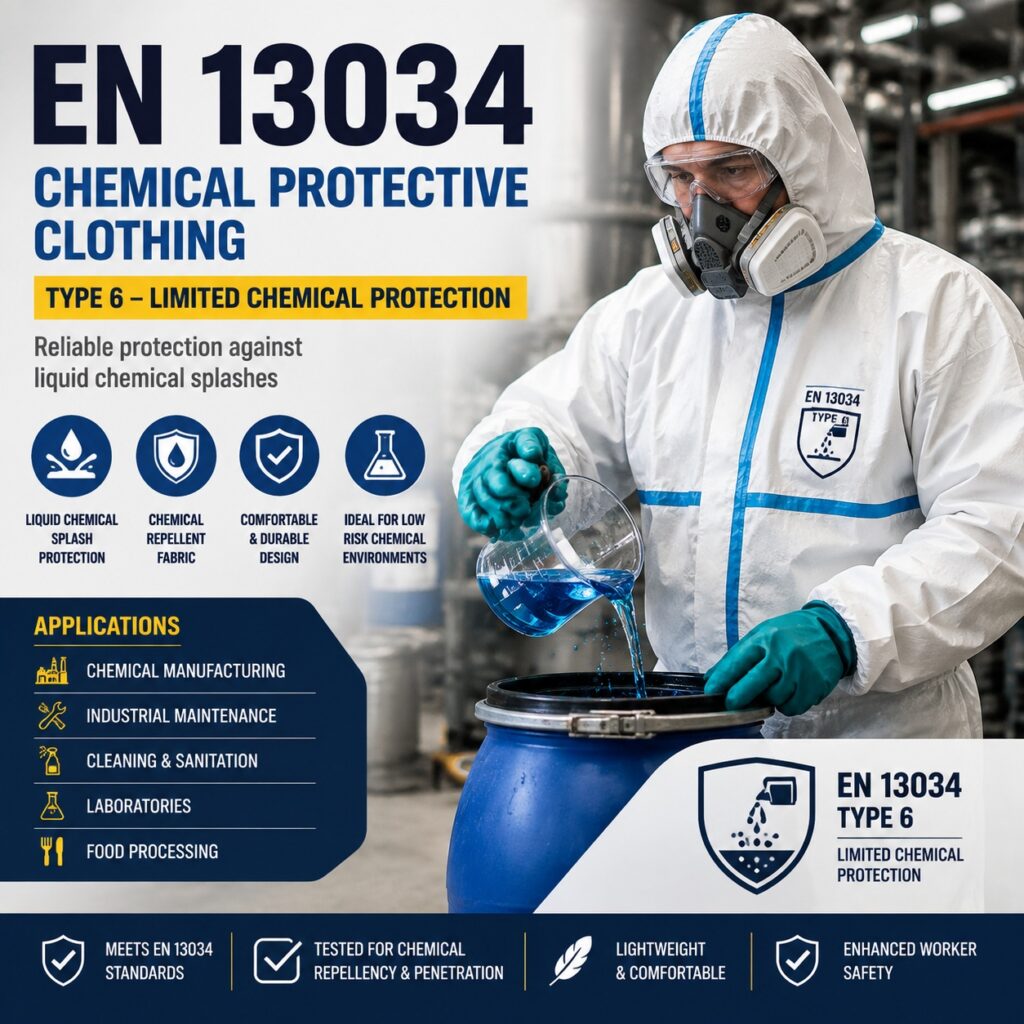
Workers in chemical handling, industrial manufacturing, maintenance, and cleaning operations may face risks from hazardous liquid chemicals. Even short-term contact with chemical splashes can cause skin irritation, burns, or serious injuries.
Choosing suitable chemical protective clothing is essential for reducing exposure risks and improving workplace safety.
EN 13034 is an important European standard that defines requirements for protective clothing against limited protection from liquid chemicals.
This guide explains what EN 13034 means, what protection it provides, and how companies can select suitable chemical protective clothing.
What Is EN 13034?
EN 13034, also known as Type 6 chemical protective clothing, specifies the minimum requirements for protective clothing that provides limited protection against liquid chemicals.
It is designed for situations where:
- Full chemical protection is not required
- Exposure risks are relatively low
- Workers may encounter accidental splashes or sprays
EN 13034 protective clothing is commonly used together with other PPE to provide workplace protection.
What Protection Does EN 13034 Provide?
EN 13034 garments are tested against:
- Limited liquid chemical splashes
- Chemical penetration
- Chemical repellency
- Fabric resistance to liquid chemicals
The purpose is to reduce the amount of chemical contact reaching the worker’s skin.
However, EN 13034 is designed for limited exposure situations and is not intended for heavy chemical immersion or high-risk chemical environments.
Understanding EN 13034 Type 6 and Type 6B
EN 13034 is generally classified as:
Type 6 — Limited Chemical Protection
Provides protection against:
- Accidental chemical splashes
- Low-pressure liquid sprays
- Short-term chemical exposure
Typical products:
- Chemical protective coveralls
- Chemical resistant jackets
- Protective suits
Type 6B — Biological and Chemical Protection
Type 6B protective clothing provides additional requirements related to biological protection and is commonly used in environments where workers may encounter biological contaminants combined with limited chemical exposure.
EN 13034 vs Other Chemical Protection Standards
Many buyers confuse different chemical protective clothing standards.
Understanding the differences helps select the correct PPE.
| Standard | Protection Level | Application |
|---|---|---|
| EN 13034 Type 6 | Limited chemical splash protection | Low-risk chemical handling |
| EN 14605 Type 3/4 | Liquid chemical protection | Higher chemical exposure |
| EN ISO 13982 Type 5 | Dry particle protection | Dust and hazardous particles |
EN 13034 vs EN 14605
EN 13034
Suitable for:
- Occasional splashes
- Chemical maintenance work
- Cleaning operations
Example:
A worker handling diluted chemicals in a manufacturing facility.
EN 14605
Suitable for:
- More hazardous liquid chemicals
- Higher exposure risk
- Pressurized chemical sprays
Example:
Industrial chemical processing.
Where Is EN 13034 Chemical Protective Clothing Used?
1. Chemical Manufacturing
Workers may encounter:
- Cleaning chemicals
- Chemical solutions
- Liquid splashes
Recommended PPE:
- Chemical protective coveralls
- Chemical resistant gloves
- Face protection
2. Industrial Maintenance
Maintenance workers may handle:
- Lubricants
- Solvents
- Cleaning agents
EN 13034 clothing provides additional protection during routine tasks.
3. Food Processing and Cleaning
Workers may use:
- Disinfectants
- Cleaning chemicals
- Sanitizing products
Chemical protective clothing helps reduce skin exposure.
4. Laboratories and Research Facilities
Workers handling small quantities of chemicals may require limited splash protection depending on the risk assessment.
Key Features of EN 13034 Protective Clothing
1. Chemical Repellent Fabric
The fabric should help prevent liquids from quickly penetrating the garment surface.
2. Secure Clothing Design
Important design features include:
- Covered zippers
- Elastic cuffs
- Protective seams
- Full body coverage
3. Lightweight and Comfortable
Because EN 13034 garments are often worn during long working periods, comfort is important.
Good chemical protective clothing should provide:
- Easy movement
- Breathability
- Low weight
- Proper sizing
How to Choose EN 13034 Chemical Protective Clothing?
Step 1: Identify Chemical Risks
Before purchasing, evaluate:
- Chemical type
- Exposure duration
- Splash possibility
- Working environment
Different chemicals require different protection levels.
Step 2: Check Certification Requirements
Confirm:
✔ EN 13034 compliance
✔ Test reports
✔ Product labeling
✔ User instructions
Step 3: Select the Right PPE Combination
Chemical protection usually requires multiple PPE products.
A complete solution may include:
- Chemical protective coveralls
- Chemical resistant gloves
- Safety goggles
- Respiratory protection
- Safety footwear
Common Mistakes When Buying Chemical Protective Clothing
Mistake 1: Assuming All Chemical Suits Provide the Same Protection
Different standards provide different protection levels.
EN 13034 is for limited chemical splash protection, not full chemical isolation.
Mistake 2: Ignoring Chemical Compatibility
Protective clothing should be selected according to:
- Chemical concentration
- Contact time
- Temperature
- Workplace conditions
Mistake 3: Choosing Protection Without Considering Comfort
Workers are more likely to wear PPE correctly when it is comfortable and practical.
How GONOW SAFETY Supports Chemical Protection Solutions
At GONOW SAFETY, we provide protective clothing solutions designed for different industrial environments.
Our chemical protection range includes:
- Chemical protective coveralls
- Disposable protective clothing
- Industrial protective garments
- Customized PPE solutions
We help customers select suitable protective clothing based on:
- Workplace hazards
- Industry requirements
- International safety standards
From limited chemical splash protection to specialized PPE solutions, GONOW SAFETY supports companies in creating safer workplaces.
Conclusion
EN 13034 plays an important role in protecting workers against limited liquid chemical exposure.
It provides a practical solution for industries where workers may encounter accidental chemical splashes but do not require heavy-duty chemical protection.
Selecting the right chemical protective clothing requires understanding workplace risks, chemical hazards, certification standards, and worker comfort.
The right PPE helps protect workers while maintaining productivity and safety.