Chemical exposure is a serious workplace hazard in industries such as chemical processing, manufacturing, maintenance, agriculture, and cleaning operations.
Choosing the correct chemical protective clothing is not only about selecting a certified product — it requires understanding the level of protection needed for the actual working environment.
Two commonly referenced standards are:
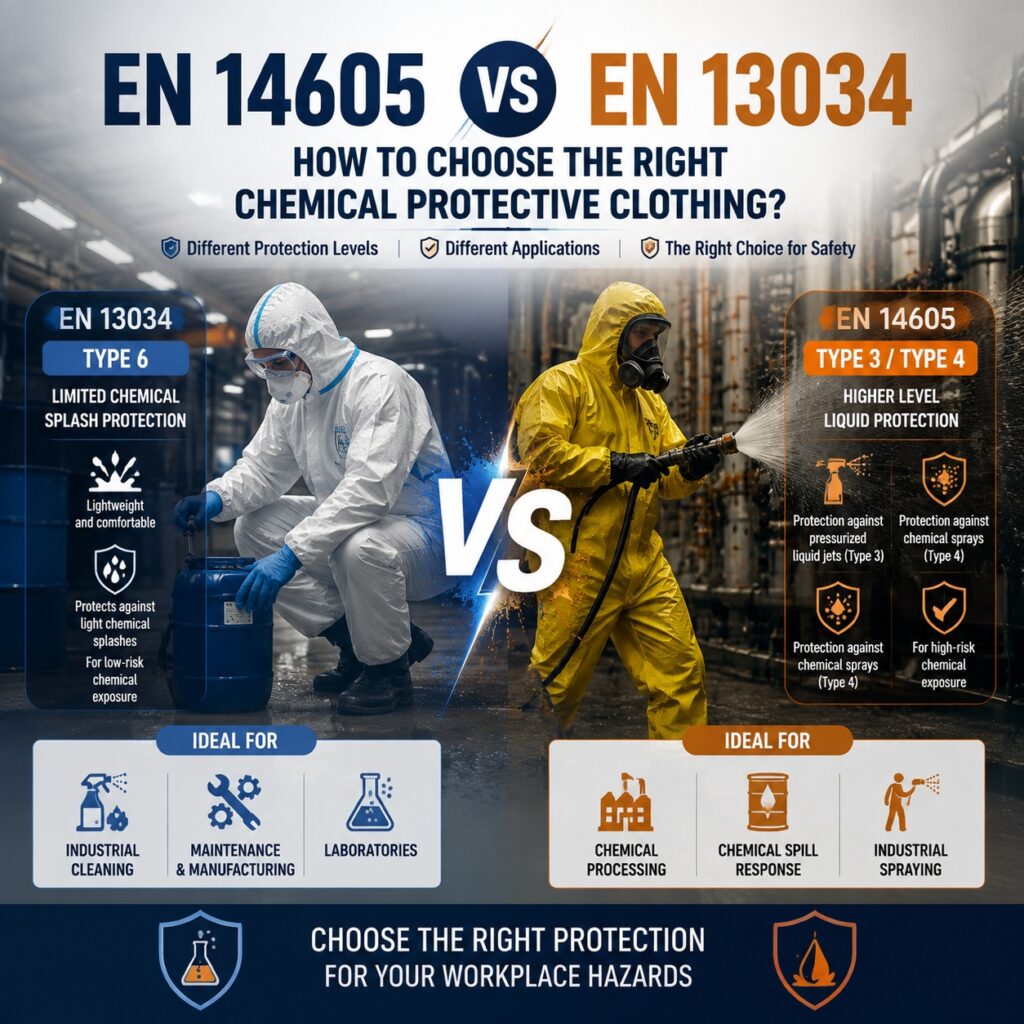
- EN 13034 — Type 6 Limited Chemical Splash Protection
- EN 14605 — Type 3 and Type 4 Liquid Chemical Protection
Although both standards relate to liquid chemical protection, they are designed for different levels of exposure.
This guide explains the differences between EN 14605 and EN 13034 and helps companies choose the right chemical protective clothing.
What Is EN 13034?
EN 13034 Type 6: Limited Chemical Splash Protection
EN 13034 specifies requirements for protective clothing that provides limited protection against liquid chemicals.
It is designed for environments where workers may experience:
- Accidental chemical splashes
- Low-pressure sprays
- Short-term exposure
EN 13034 clothing helps reduce the risk of chemical liquids reaching the skin but is not designed for heavy chemical exposure.
Common Applications of EN 13034
Typical industries include:
Industrial Cleaning
Workers may handle:
- Cleaning agents
- Detergents
- Sanitizing chemicals
Manufacturing
Applications include:
- Equipment maintenance
- Chemical handling
- Routine production tasks
Laboratories
Suitable for:
- Low-risk chemical operations
- Sample handling
What Is EN 14605?
EN 14605 Type 3 and Type 4: Higher-Level Liquid Chemical Protection
EN 14605 provides higher protection against liquid chemical hazards.
It includes:
Type 3 — Liquid-Tight Protection
Designed for protection against:
- Pressurized liquid chemicals
- Chemical jets
- High-risk exposure situations
Type 4 — Spray-Tight Protection
Designed for protection against:
- Chemical sprays
- Liquid mist
- Continuous spraying environments
Common Applications of EN 14605
Typical industries include:
Chemical Processing
Workers may face:
- Acids
- Solvents
- Industrial chemicals
Emergency Response
Applications include:
- Chemical spill response
- Hazardous material handling
Industrial Spraying
Examples:
- Chemical cleaning
- Agricultural spraying
- Surface treatment
EN 14605 vs EN 13034: Key Differences
| Feature | EN 13034 | EN 14605 |
|---|---|---|
| Protection Type | Type 6 | Type 3 / Type 4 |
| Chemical Exposure | Limited splashes | Higher liquid exposure |
| Protection Level | Basic chemical splash protection | Advanced liquid protection |
| Liquid Pressure | Low pressure | Liquid jets / sprays |
| Typical Use | Routine chemical handling | High-risk chemical operations |
| Garment Design | Limited-use coveralls | More protective chemical suits |
Type 6 vs Type 3/4: Which One Should You Choose?
Choose EN 13034 Type 6 When:
✔ Chemical exposure is occasional
✔ Only minor splashes are expected
✔ Chemicals are handled in controlled conditions
Examples:
- Cleaning operations
- Laboratory work
- General maintenance
Choose EN 14605 Type 3/4 When:
✔ Workers may experience direct liquid contact
✔ Chemicals may be sprayed or pressurized
✔ Higher protection is required
Examples:
- Chemical plants
- Industrial spraying
- Emergency response
Why Choosing the Correct Standard Matters
Selecting the wrong chemical protective clothing can create safety risks.
Too Low Protection
Using EN 13034 clothing in a high-risk chemical environment may not provide sufficient protection.
Too High Protection
Using heavy chemical suits for low-risk work may:
- Reduce comfort
- Increase worker fatigue
- Reduce productivity
The best PPE choice balances:
Protection + Comfort + Workplace Requirements
How to Select Chemical Protective Clothing?
1. Identify Chemical Hazards
Before purchasing, evaluate:
- Chemical type
- Concentration
- Exposure duration
- Contact method
2. Understand Exposure Conditions
Ask:
- Is it a splash or spray?
- Is the chemical pressurized?
- Is exposure continuous or occasional?
3. Check Certification
Always verify:
✔ Correct EN standard
✔ Test reports
✔ Product labeling
✔ Manufacturer documentation
Can One Garment Meet Both Standards?
Yes.
Some chemical protective garments may combine multiple protection standards.
For example:
EN 13034 + EN 14605
may provide broader chemical protection depending on garment design and certification.
However, companies should always select PPE based on actual workplace hazards.
EN 14605 and EN 13034 with Other PPE Standards
Chemical protection is often combined with other PPE requirements.
Examples:
| Hazard | Related Standard |
|---|---|
| Solid particles | EN ISO 13982-1 |
| Biological hazards | EN 14126 |
| General protective clothing | EN ISO 13688 |
| Heat and flame | EN ISO 11612 |
A complete PPE system should address all workplace risks.
How GONOW SAFETY Supports Chemical Protection Solutions
At GONOW SAFETY, we provide chemical protective clothing solutions for different industrial applications.
Our PPE solutions include:
- Chemical protective coveralls
- Disposable protective clothing
- Liquid-resistant protective suits
- Customized PPE solutions
We help customers choose suitable protection based on:
- Workplace hazards
- Industry requirements
- International PPE standards
From limited chemical splash protection to high-level chemical protection, GONOW SAFETY supports safer workplaces worldwide.
Conclusion
EN 13034 and EN 14605 both provide chemical protection, but they are designed for different exposure levels.
- EN 13034 Type 6 → Limited chemical splash protection for lower-risk environments
- EN 14605 Type 3/4 → Higher-level protection against liquid jets and chemical sprays
Understanding the difference helps companies select the right protective clothing, improve worker safety, and avoid unnecessary PPE costs.
Choosing the correct standard means choosing the right protection for the real workplace.