
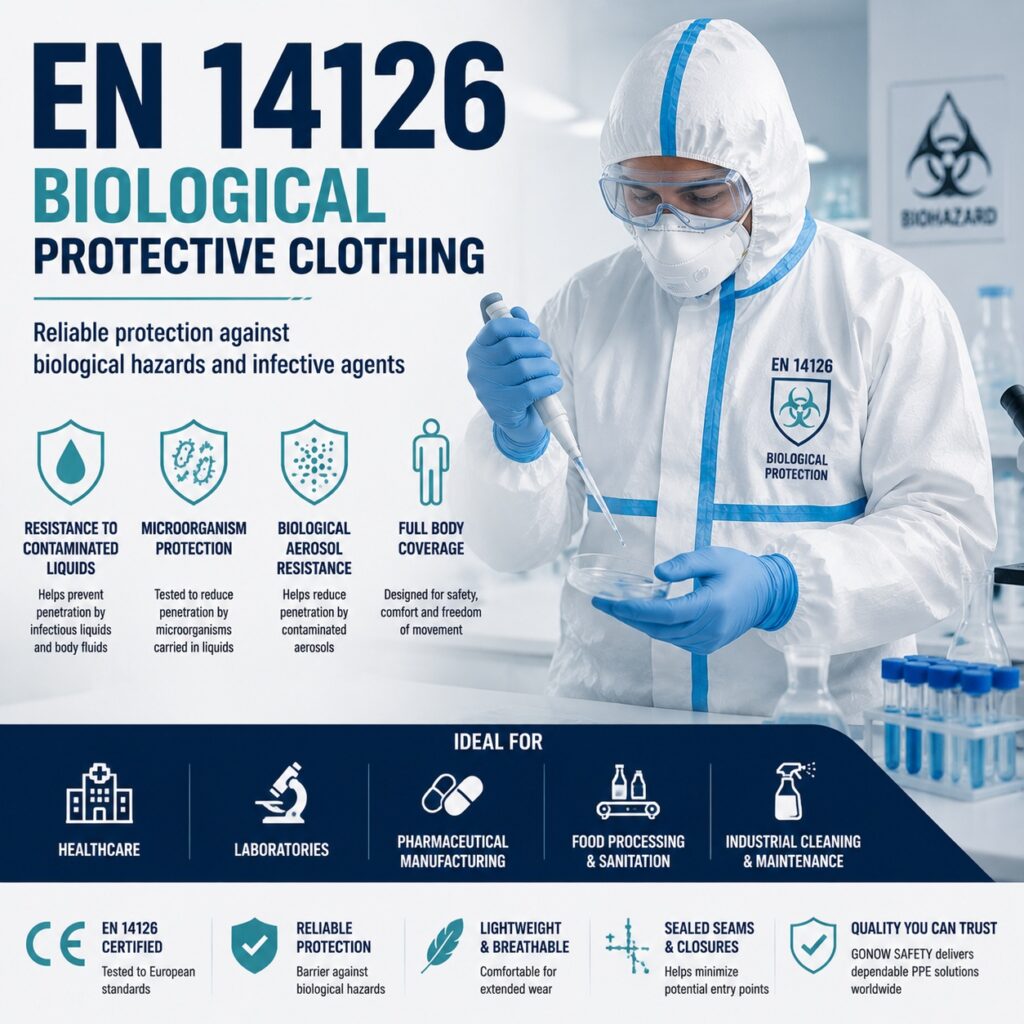
Workers in healthcare, laboratories, pharmaceutical manufacturing, food processing, and industrial cleaning environments may face exposure to biological hazards such as microorganisms, contaminated liquids, and infectious materials.
Ordinary workwear cannot provide sufficient protection against biological risks. Selecting suitable protective clothing is essential to reduce contamination and protect workers during high-risk operations.
EN 14126 is an important standard that defines requirements for protective clothing against biological hazards.
This guide explains what EN 14126 means, how biological protective clothing works, and how companies can select suitable PPE for biological risk environments.
What Is EN 14126?
EN 14126 Protective clothing — Performance requirements and tests for protective clothing against infective agents specifies requirements for clothing designed to protect workers against biological hazards.
Unlike general protective clothing standards, EN 14126 focuses on the ability of garments to prevent the penetration of biological contaminants.
It evaluates protection against:
- Contaminated liquids
- Biological fluids
- Microorganisms
- Infectious particles
EN 14126 is commonly used together with other protective clothing standards, such as:
- EN ISO 13688 — General protective clothing requirements
- EN 13034 — Limited chemical splash protection
- EN ISO 13982-1 — Particle protection
What Hazards Does EN 14126 Protect Against?
Biological hazards may exist in many workplaces, including:
1. Infectious Liquids
Workers may come into contact with:
- Blood
- Body fluids
- Contaminated liquids
- Biological samples
Protective clothing helps reduce liquid penetration risks.
2. Microorganisms
Biological contamination may involve:
- Bacteria
- Viruses
- Fungi
- Other microorganisms
EN 14126 clothing provides a protective barrier against microorganism penetration.
3. Contaminated Particles
Some environments may contain airborne biological contaminants.
Protective clothing helps reduce contamination transfer between workers and the surrounding environment.
EN 14126 Protection Tests Explained
EN 14126 includes several performance tests that evaluate biological protection.
1. Resistance to Penetration by Contaminated Liquids
This evaluates whether contaminated liquids can pass through the protective material.
Important for:
- Healthcare environments
- Laboratory operations
- Cleaning procedures
2. Resistance to Microbial Penetration
This tests protection against microorganisms carried by liquids.
The garment must provide an effective barrier to reduce contamination risks.
3. Resistance to Biological Aerosols
Some biological hazards may become airborne.
This evaluates the garment’s ability to reduce penetration from contaminated aerosols.
EN 14126 vs Other Protective Clothing Standards
Many buyers confuse EN 14126 with chemical or particle protection standards.
| Standard | Main Protection | Typical Application |
|---|---|---|
| EN 14126 | Biological hazards | Healthcare, laboratories, contaminated environments |
| EN 13034 Type 6 | Limited chemical splashes | Low-level chemical handling |
| EN ISO 13982-1 Type 5 | Solid particles | Dust and powder environments |
| EN 14605 Type 3/4 | Liquid chemicals | High chemical exposure |
EN 14126 vs EN 14605: What Is the Difference?
Although both standards involve liquid protection, they focus on different hazards.
EN 14126
Focus:
Biological contamination protection
Examples:
- Infectious materials
- Biological fluids
- Microorganisms
EN 14605
Focus:
Chemical liquid protection
Examples:
- Acids
- Solvents
- Industrial chemicals
In some workplaces, both risks may exist.
For example:
A pharmaceutical facility may require protection against:
- Chemical cleaning agents
- Biological contamination
The appropriate PPE should be selected according to the actual risk assessment.
Where Is EN 14126 Protective Clothing Used?
1. Healthcare and Medical Environments
Applications:
- Medical facilities
- Isolation areas
- Laboratory testing
Common PPE:
- Protective coveralls
- Disposable gowns
- Face protection
2. Pharmaceutical Manufacturing
Workers may handle:
- Biological materials
- Laboratory samples
- Production processes requiring contamination control
3. Laboratory and Research Facilities
Biological protective clothing helps reduce contamination risks during:
- Sample handling
- Testing procedures
- Research activities
4. Food Processing and Sanitation
Workers may encounter:
- Biological contaminants
- Cleaning processes
- Contaminated materials
Protective clothing supports hygiene and worker safety.
Key Features of EN 14126 Protective Clothing
1. Effective Barrier Materials
Protective fabrics should provide resistance against:
- Liquid penetration
- Microorganism transfer
- Contamination risks
2. Secure Garment Design
Important design features include:
- Sealed seams
- Elastic cuffs
- Hooded design
- Covered zippers
These features help minimize potential entry points.
3. Comfortable Long-Term Wear
Many biological protection tasks require extended use.
Important factors include:
- Lightweight materials
- Breathability
- Freedom of movement
- Proper sizing
How to Choose EN 14126 Biological Protective Clothing?
Step 1: Identify Biological Risks
Consider:
- Type of biological hazard
- Exposure possibility
- Contact method
- Working duration
Step 2: Check Certification Requirements
Before purchasing, confirm:
✔ EN 14126 compliance
✔ Test reports
✔ CE marking requirements
✔ Product labeling
Step 3: Select Complete PPE Protection
Biological protective clothing is often combined with:
- Respirators
- Protective gloves
- Safety goggles
- Protective footwear
A complete PPE system provides better protection.
Common Mistakes When Buying Biological Protective Clothing
Mistake 1: Assuming All Disposable Coveralls Provide Biological Protection
Not every disposable suit protects against biological hazards.
Always check EN 14126 certification.
Mistake 2: Ignoring Seam Protection
Even high-performance materials require proper garment construction.
Seams and closures are critical for maintaining protection.
Mistake 3: Choosing PPE Without Risk Assessment
The correct protective clothing depends on:
- Workplace environment
- Exposure level
- Hazard type
How GONOW SAFETY Supports Biological Protection Solutions
At GONOW SAFETY, we provide protective clothing solutions designed for demanding workplace environments.
Our protective clothing solutions include:
- Biological protective coveralls
- Disposable protective clothing
- Chemical protective garments
- Industrial PPE solutions
We help customers select suitable PPE based on:
- Workplace hazards
- Industry requirements
- International safety standards
From contamination control to chemical and particle protection, GONOW SAFETY supports safer workplaces worldwide.
Conclusion
EN 14126 is an important standard for protective clothing designed against biological hazards.
For industries involving microorganisms, contaminated liquids, and biological materials, selecting certified biological protective clothing helps reduce exposure risks and improve workplace safety.
Understanding the difference between EN 14126 and other protective clothing standards allows companies to choose PPE that matches their actual working environment.
The right protective clothing provides more than compliance — it provides reliable protection when workers need it most.