
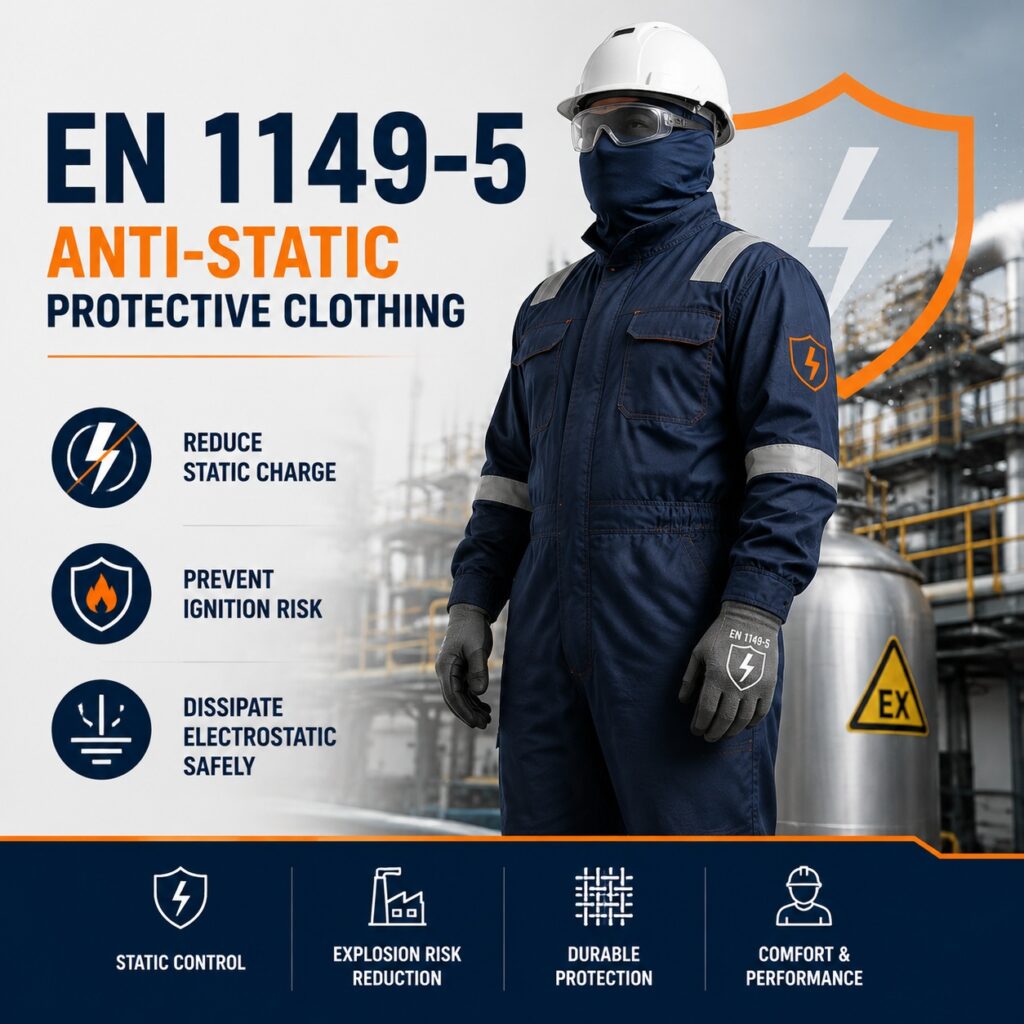
In many industrial environments, static electricity can create serious safety risks.
A small electrostatic discharge may cause:
- Ignition of flammable substances
- Explosion hazards
- Damage to sensitive electronic components
- Safety risks for workers
To reduce these risks, protective clothing with electrostatic properties is often required.
EN 1149-5 is an important European standard that specifies performance requirements for electrostatic protective clothing used in hazardous environments.
This guide explains what EN 1149-5 means, how anti-static clothing works, and how companies can select suitable protective garments.
What Is EN 1149-5?
EN 1149-5: Protective Clothing — Electrostatic Properties
EN 1149-5 specifies requirements for protective clothing designed to reduce electrostatic charge accumulation.
It defines requirements for garments that are part of an electrostatic control system.
The standard focuses on:
- Electrostatic dissipation
- Charge control
- Protection against electrostatic ignition risks
Why Is Anti-Static Clothing Important?
Static electricity is generated when different materials come into contact and separate.
In normal environments, static discharge may only cause discomfort.
However, in hazardous workplaces, it can create dangerous situations.
Common Risks Include:
Fire and Explosion Hazards
Static sparks may ignite:
- Flammable gases
- Solvents
- Fuels
- Dust clouds
Industries with these risks require effective electrostatic control.
Electronic Damage
Electrostatic discharge can damage:
- Electronic components
- Precision equipment
- Sensitive devices
How Does EN 1149-5 Protective Clothing Work?
Anti-static garments are designed with conductive or dissipative materials.
They help:
- Reduce charge accumulation
- Allow static electricity to safely dissipate
- Minimize spark generation
The clothing works as part of a complete safety system that may include:
- Grounding
- Conductive footwear
- Controlled working procedures
EN 1149-5 Related Standards
EN 1149 includes several test methods.
EN 1149-1
Measures:
- Surface resistance
Used to evaluate electrostatic properties of materials.
EN 1149-3
Measures:
- Charge decay performance
It evaluates how quickly electrostatic charges disappear.
EN 1149-5
Defines:
- Performance requirements for garments
It combines material performance requirements with garment design considerations.
Applications of EN 1149-5 Protective Clothing
Chemical Industry
Workers handling:
- Flammable chemicals
- Solvents
- Hazardous liquids
may require anti-static protective clothing.
Petrochemical and Energy Industries
Applications include:
- Fuel processing
- Storage facilities
- Industrial maintenance
Anti-static clothing helps reduce ignition risks.
Electronics Manufacturing
Used in environments requiring:
- Static control
- Component protection
- Clean manufacturing processes
Pharmaceutical and Laboratory Environments
Static control may be important for:
- Sensitive processes
- Controlled environments
EN 1149-5 vs Flame Resistant Clothing
These two standards are often confused.
They protect against different hazards.
| Standard | Protection Focus |
|---|---|
| EN 1149-5 | Electrostatic discharge control |
| EN ISO 11612 | Heat and flame protection |
However, some protective garments combine multiple certifications.
For example:
A protective coverall may meet:
- EN ISO 11612
- EN 1149-5
- IEC 61482
providing:
- Flame protection
- Anti-static performance
- Arc flash protection
EN 1149-5 vs EN 13034
Both may appear on chemical protective clothing.
However:
EN 1149-5
Focuses on:
Preventing electrostatic charge accumulation.
EN 13034
Focuses on:
Protection against limited chemical liquid exposure.
A garment used in chemical environments may require both standards.
How to Choose EN 1149-5 Protective Clothing?
1. Identify Workplace Risks
Evaluate:
- Flammable materials
- Static electricity hazards
- Explosion risks
- Work environment
2. Check Required Standards
Depending on the application, workers may need garments certified to:
- EN 1149-5
- EN ISO 11612
- IEC 61482
- EN 13034
3. Consider Complete Protection
Anti-static clothing works best together with:
- Conductive footwear
- Proper grounding
- Workplace safety procedures
Common Mistakes When Selecting Anti-Static Clothing
Mistake 1: Assuming All Workwear Is Anti-Static
Normal clothing can accumulate static electricity.
Mistake 2: Confusing Anti-Static With Flame Protection
Anti-static clothing controls electrical charge.
It does not automatically provide flame protection.
Mistake 3: Ignoring Other Safety Requirements
Hazardous environments may require multiple protections.
How GONOW SAFETY Supports Anti-Static Protection Solutions
At GONOW SAFETY, we provide protective clothing solutions designed for industrial environments where safety and reliability are essential.
Our solutions include:
- Anti-static workwear
- Flame-resistant clothing
- Chemical protective garments
- Customized protective clothing
We help customers select suitable PPE based on:
- Workplace hazards
- Industry requirements
- International standards
From static control to combined protective solutions, GONOW SAFETY supports safer workplaces with reliable PPE.
Conclusion
EN 1149-5 is an important standard for protective clothing used in environments where electrostatic risks exist.
In simple terms:
- EN 1149-5 helps control electrostatic charge accumulation
- It reduces ignition risks caused by static discharge
- It is often combined with other protective standards for complete safety
Selecting the right anti-static clothing helps companies improve workplace safety and protect workers in hazardous environments.