1. Basic Definitions
In workplace safety, flame resistant clothing and arc rated clothing are often confused, but they are not the same.
Flame Resistant (FR) Clothing
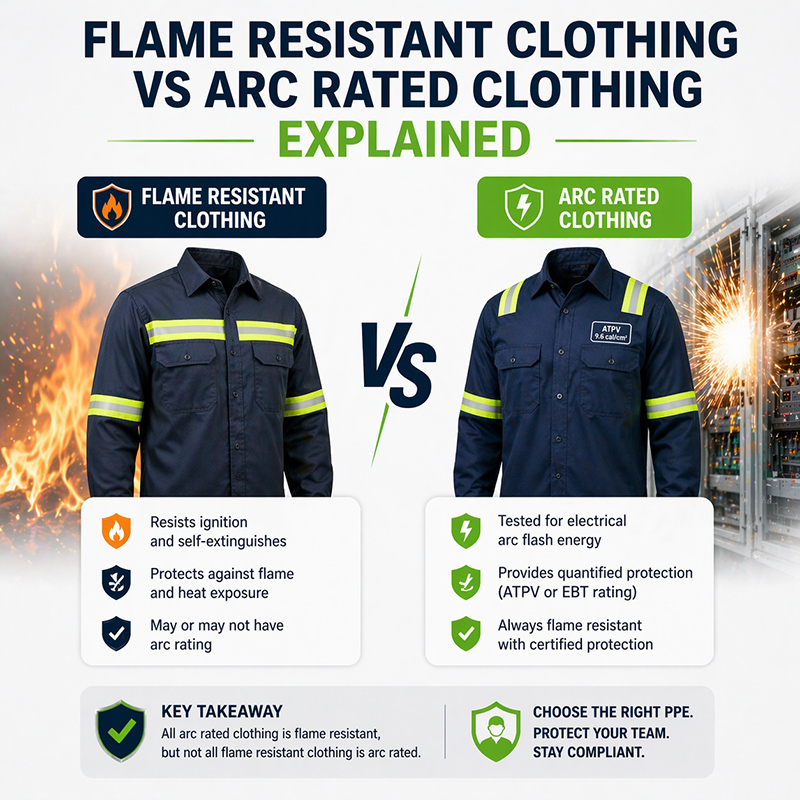
Flame resistant clothing is designed to resist ignition and self-extinguish when exposed to fire. It helps reduce burn injuries caused by flames or heat exposure.
Arc Rated (AR) Clothing
Arc rated clothing is specifically tested and certified to protect against arc flash energy. It provides a measured level of thermal protection based on ATPV or EBT ratings.
The key difference lies in how the protection level is tested and certified.
2. Key Differences
Although both types of clothing are designed for thermal protection, their standards and performance expectations differ.
- FR clothing focuses on flame exposure resistance
- Arc rated clothing focuses on electrical arc flash energy protection
- FR clothing may or may not have an arc rating
- Arc rated clothing is always flame resistant, but with certified energy protection levels
In simple terms: all arc rated clothing is flame resistant, but not all flame resistant clothing is arc rated.
3. Protection Level Comparison
Arc rated clothing provides a quantified level of protection measured in ATPV (Arc Thermal Performance Value).
ATPV (Arc Thermal Performance Value) is a key rating used to indicate how much arc flash energy a garment can withstand before the wearer is likely to experience the onset of a second-degree burn.
Higher ATPV values indicate a higher level of protection against arc flash energy.
Comparison Overview:
- FR Clothing: Basic flame resistance, no guaranteed arc flash rating
- Arc Rated Clothing: Tested for electrical arc exposure with defined protection levels
For electrical work, arc rated clothing is the preferred and often required option under safety standards such as NFPA 70E.
4. Use Cases
Flame Resistant Clothing is commonly used in:
- Welding operations
- Oil and gas environments
- Fire-prone industrial areas
Arc Rated Clothing is required for:
- Electrical maintenance work
- High-voltage switching operations
- Power distribution and utility work
- Arc flash risk environments
Choosing the right type depends on the hazard present in the workplace.
5. Common Misconceptions
1. “FR clothing is enough for electrical work”
Not always true. FR clothing without arc rating may not provide sufficient protection against arc flash energy.
2. “Arc rated clothing is just thicker FR clothing”
Incorrect. Arc rated clothing is tested under specific electrical arc conditions and certified based on energy exposure levels.
3. “All PPE offers the same protection”
Protection levels vary significantly depending on testing standards and ATPV rating.
Understanding these differences is critical for workplace safety compliance.
6. How to Choose Correctly
When selecting between FR and arc rated clothing, employers should consider:
1. Work environment risk level
Electrical exposure requires arc rated PPE.
2. Incident energy analysis
Determine the energy level before selecting PPE category.
3. Compliance requirements
Follow safety standards such as NFPA 70E for electrical safety work practices.
4. Comfort and usability
Workers are more likely to wear PPE correctly if it is comfortable and suitable for daily tasks.
5. Full protection system
Combine clothing with gloves, face shields, and insulated accessories when needed.
7. Conclusion
Understanding the difference between flame resistant clothing and arc rated clothing is essential for workplace safety. While both provide protection against heat and flame, arc rated clothing offers a defined and tested level of protection specifically for electrical arc flash hazards.
For electrical environments, arc rated PPE should always be the priority.
CTA
Not sure which PPE you need? Contact us for guidance.