
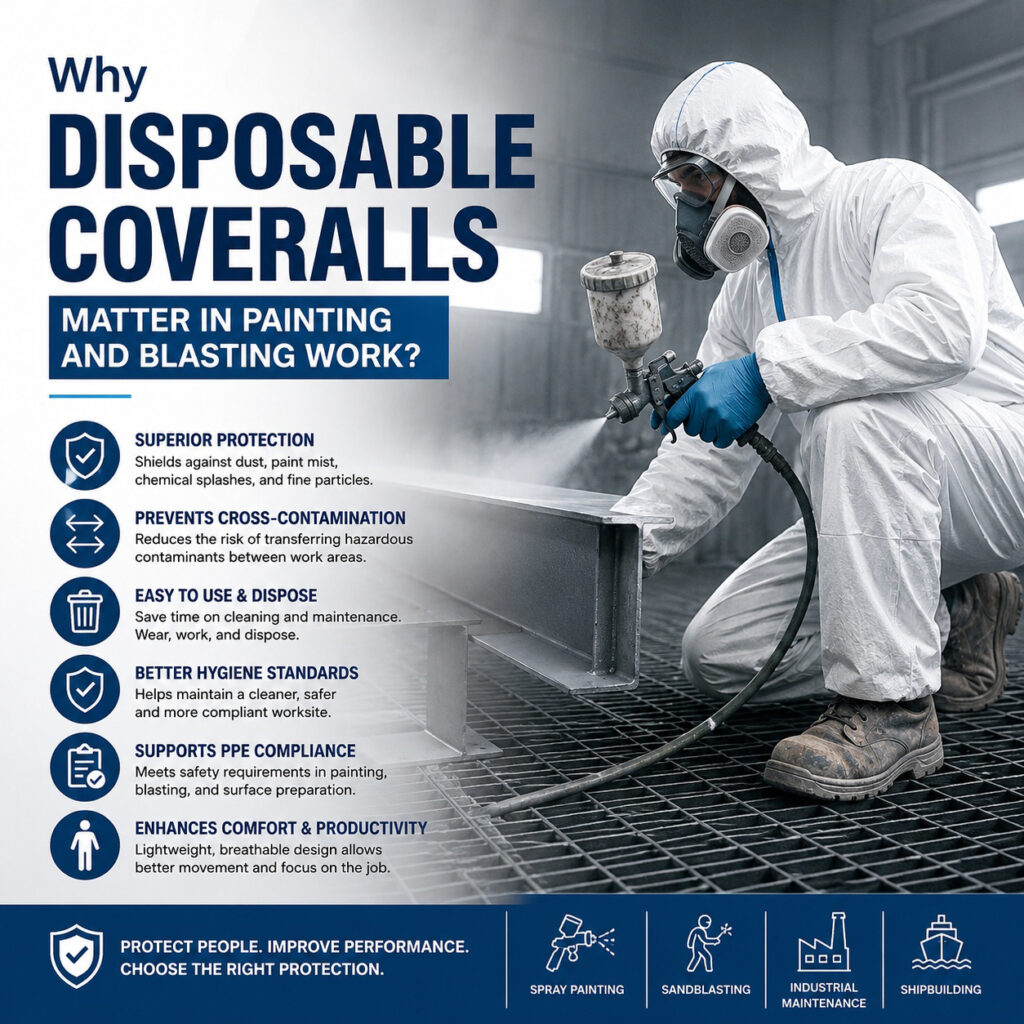
Painting and blasting operations—especially industrial spray painting, sandblasting, and surface preparation—expose workers to fine particles, hazardous dust, chemical mist, and overspray. In these environments, disposable coveralls are not just a convenience item; they are a critical layer of protection that supports both safety and operational efficiency.
1. Protection Against Fine Particles and Chemical Exposure
During blasting and spray painting, airborne particles can easily penetrate regular workwear. Abrasive media, paint mist, and chemical residues may cause skin irritation or long-term health risks.
Disposable coveralls act as a barrier between the worker and these contaminants. Designed with microporous or non-woven materials, they help reduce direct exposure while maintaining breathability for long working hours.
2. Preventing Cross-Contamination Between Work Areas
In many industrial projects, workers move between different zones—such as preparation areas, blasting rooms, and painting booths. Without proper protective clothing, contaminants can be carried from one area to another.
Disposable coveralls help eliminate this risk. After use, they are simply removed and disposed of, preventing the transfer of hazardous dust or paint particles to clean zones, equipment, or vehicles.
3. Improving Efficiency in Cleaning and Maintenance
Reusable protective clothing requires washing, inspection, and storage, which adds operational workload and cost. In high-dust environments like blasting sites, garments often become heavily contaminated after a single shift.
Disposable coveralls remove this burden. Workers can discard used suits immediately, reducing downtime and simplifying site management—especially on large-scale or short-term projects.
4. Ensuring Consistent Hygiene Standards on Site
Worksite conditions can vary significantly depending on weather, material type, and project stage. Disposable coveralls help maintain a consistent hygiene and safety standard regardless of these changes.
Each worker starts with a clean, uncontaminated suit, which improves overall site discipline and supports compliance with safety protocols.
5. Supporting Compliance with PPE Requirements
Many industrial safety guidelines recommend or require protective clothing when handling hazardous coatings, abrasive materials, or chemical agents. Disposable coveralls are commonly used to meet these PPE requirements, especially in:
- Sandblasting operations
- Spray painting workshops
- Industrial maintenance projects
- Shipbuilding and heavy equipment manufacturing
By using appropriate coveralls, contractors reduce the risk of non-compliance and improve workplace safety audits.
6. Enhancing Worker Comfort and Productivity
Modern disposable coveralls are designed to balance protection with comfort. Lightweight fabrics, elastic cuffs, and ergonomic cuts allow better movement during physically demanding tasks.
When workers feel less restricted and better protected, they can maintain focus and productivity throughout long shifts.
Conclusion
Disposable coveralls play a vital role in painting and blasting environments by providing reliable protection, improving hygiene control, and simplifying site operations. For contractors and procurement teams, choosing the right type of coverall is not just about cost—it directly impacts safety performance and workflow efficiency.