Procurement of PPE in construction projects is not just about buying safety products—it directly impacts worker protection, compliance, project efficiency, and cost control. A structured checklist helps ensure nothing critical is missed during sourcing and approval.
Below is a practical PPE procurement checklist designed for construction projects.
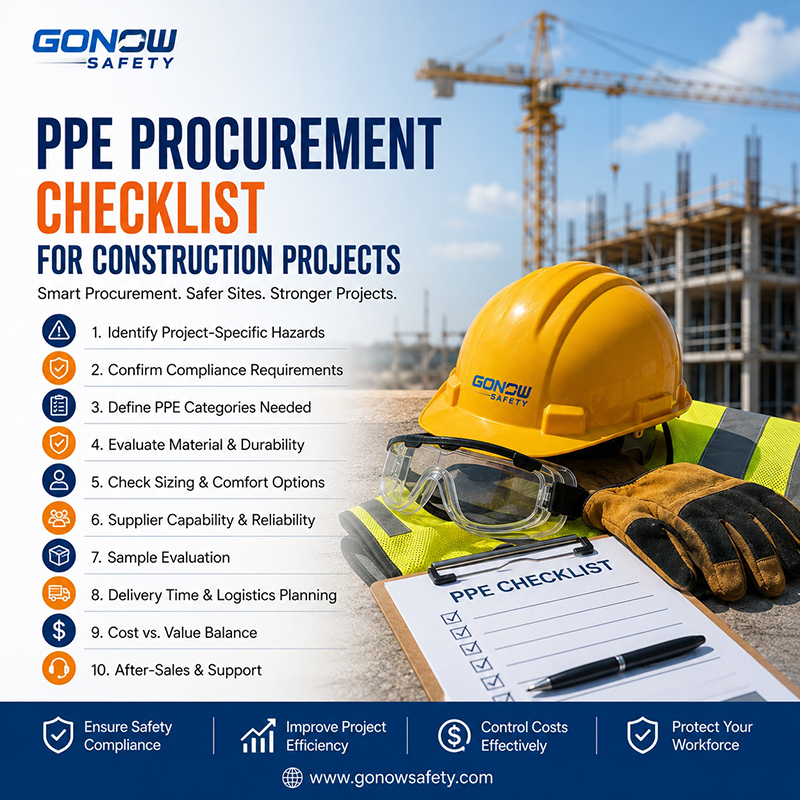
1. Identify Project-Specific Hazards
Start by understanding the site risks before selecting PPE.
- Working at height
- Heavy lifting and machinery
- Dust, chemicals, and fumes
- Noise exposure
- Electrical risks
Different risks require different PPE combinations.
2. Confirm Regulatory and Compliance Requirements
Ensure PPE meets required safety standards.
- ANSI / OSHA (US projects)
- CE certification (EU projects)
- EN standards for gloves, helmets, footwear
- Project owner or contractor safety specs
Compliance is mandatory for site approval.
3. Define PPE Categories Needed
Break down PPE requirements by protection type:
- Head protection (safety helmets)
- Eye & face protection (goggles, face shields)
- Hand protection (work gloves, cut-resistant gloves)
- Body protection (reflective vests, coveralls)
- Foot protection (safety boots)
- Respiratory protection (masks, respirators)
- Fall protection (harness systems)
4. Evaluate Material and Durability
Construction environments are harsh, so quality matters.
- Tear-resistant fabrics
- Impact-resistant helmet shells
- Anti-slip and oil-resistant soles
- Reinforced stitching in gloves and clothing
Avoid low-durability PPE that leads to frequent replacement.
5. Check Sizing and Comfort Options
Poor fit reduces safety compliance.
- Full size range availability
- Adjustable designs (straps, cuffs, waist)
- Breathable materials for hot climates
- Ergonomic design for long working hours
Comfort improves daily usage rates.
6. Supplier Capability and Reliability
Assess supplier strength before placing orders.
- Stable production capacity
- Experience with construction projects
- Consistent quality control system
- Ability to handle bulk and mixed orders
7. Sample Evaluation Before Bulk Order
Never skip sample testing.
- Fit and comfort check
- Real jobsite trial
- Material strength testing
- Packaging and labeling review
8. Delivery Time and Logistics Planning
Construction projects depend on timelines.
- Confirm lead time in advance
- Check shipping methods and reliability
- Ensure buffer stock planning
- Avoid site delays due to PPE shortage
9. Cost vs. Value Balance
Don’t only focus on lowest price.
- Durability vs replacement frequency
- Compliance risks vs cost savings
- Total lifecycle cost of PPE
10. After-Sales and Support
Good suppliers support long-term cooperation.
- Replacement policy for defective items
- Technical support for PPE selection
- Consistent re-order availability
Conclusion
A structured PPE procurement checklist helps construction projects reduce risk, improve safety compliance, and ensure smooth site operations. The goal is not only purchasing PPE, but building a reliable safety system for workers.