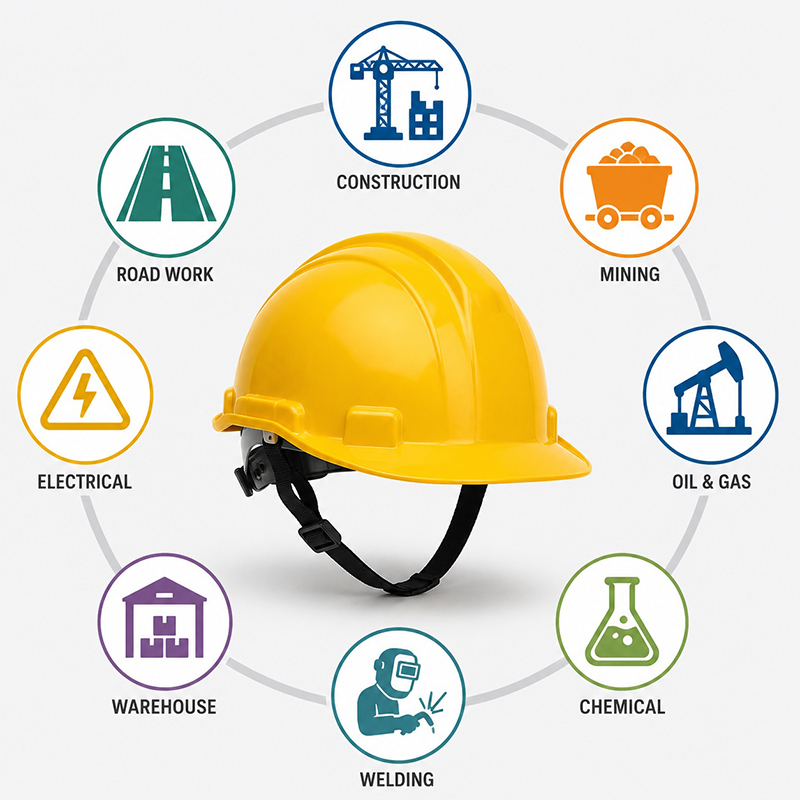
Selecting a safety helmet is not a one-size-fits-all decision. Different industries expose workers to different hazards—impact, falling objects, electrical risks, chemical exposure, extreme temperatures, or confined spaces. Below is a practical guide to help you match the right helmet type to each working environment.
1. Construction Industry
Construction sites are one of the most common environments requiring head protection. Workers face risks from falling tools, debris, scaffolding work, and moving machinery.
Recommended helmet features:
- High-impact ABS or HDPE shell
- Chin strap for stability at height
- Ventilation for long working hours
- Optional full brim for sun and rain protection
Key considerations:
- Must meet ANSI Z89.1 (Type I or II) or EN397 standards
- Type II helmets are preferred for side impact protection on complex sites
2. Road Construction & Infrastructure Projects
Road workers are exposed to traffic hazards, heat stress, and low visibility conditions.
Recommended helmet features:
- High-visibility colors (orange, yellow, fluorescent green)
- Reflective strips for night work
- Lightweight design for heat reduction
- Compatibility with ear protection and face shields
Key considerations:
- Heat resistance is critical for hot climates
- Must integrate with PPE like earmuffs and high-vis clothing
3. Mining Industry
Mining environments involve rock falls, confined spaces, dust, and sometimes explosive atmospheres.
Recommended helmet features:
- Strong reinforced shell with high penetration resistance
- Built-in lamp bracket for headlamps
- Enhanced chin strap retention system
- Dust-resistant design
Key considerations:
- Helmets must be certified for industrial mining standards
- Electrical insulation may be required in some underground operations
4. Oil & Gas Industry
Oil refineries, drilling platforms, and petrochemical plants require helmets that perform in high-risk and often explosive environments.
Recommended helmet features:
- Anti-static and flame-resistant materials
- Compatibility with gas masks and face shields
- Secure retention system for windy offshore conditions
- Chemical splash resistance
Key considerations:
- Must comply with flame-retardant safety standards
- Anti-static performance is essential to reduce ignition risk
5. Electrical Industry
Electricians and utility workers face the risk of electric shock, arc flashes, and high-voltage exposure.
Recommended helmet features:
- Dielectric (electrically insulated) helmets
- No metal components
- High arc flash rating compatibility
- Full face shield integration option
Key considerations:
- Must meet electrical safety classifications (ANSI Type E or equivalent)
- Regular inspection is required to ensure insulation integrity
6. Chemical Industry
Chemical plants involve corrosive liquids, toxic gases, and splash hazards.
Recommended helmet features:
- Chemical-resistant outer shell coating
- Compatibility with full-face respirators
- Sealed design to prevent liquid penetration
- Lightweight structure for long shifts
Key considerations:
- Must be resistant to corrosion and chemical degradation
- Integration with respiratory PPE is often required
7. Welding & Fabrication Industry
Welders face heat, sparks, molten metal, and intense UV/IR radiation.
Recommended helmet features:
- Heat-resistant shell material
- Integration with welding face shields or helmets
- High thermal stability
- Neck protection compatibility
Key considerations:
- Helmets must withstand extreme radiant heat
- Often used together with welding masks rather than standalone hard hats
8. Logistics & Warehousing
Warehouse environments involve forklift traffic, low-height impacts, and overhead storage risks.
Recommended helmet features:
- Lightweight bump caps or industrial helmets
- Comfortable padding for long wear
- Good ventilation
- Optional visor for eye protection
Key considerations:
- Bump caps may be sufficient in low-impact environments
- Full hard hats required if overhead hazards exist
9. Key Safety Standards to Know
When choosing a safety helmet, always check compliance with recognized standards:
- ANSI Z89.1 (USA) – Classifies impact and electrical protection
- EN 397 (Europe) – Industrial safety helmet requirements
- EN 12492 – Mountaineering-style helmets used in climbing/height work
- CSA Z94.1 (Canada) – Head protection standard
Understanding these standards ensures the helmet is tested for real working conditions, not just appearance or comfort.
Final Thoughts
Choosing the right safety helmet is about matching protection level to real workplace risks. A construction worker, electrician, and oil rig technician all need completely different protection features—even though they all “wear a helmet.”
A well-selected helmet should balance:
- Safety certification
- Industry-specific hazard protection
- Comfort for long working hours
- Compatibility with other PPE