Selecting the right Personal Protective Equipment (PPE) is essential for creating a safe working environment. However, with hundreds of PPE products available, choosing the correct equipment can be challenging.
Different workplaces have different hazards. A construction worker, chemical operator, and food processing employee may require completely different types of protection.
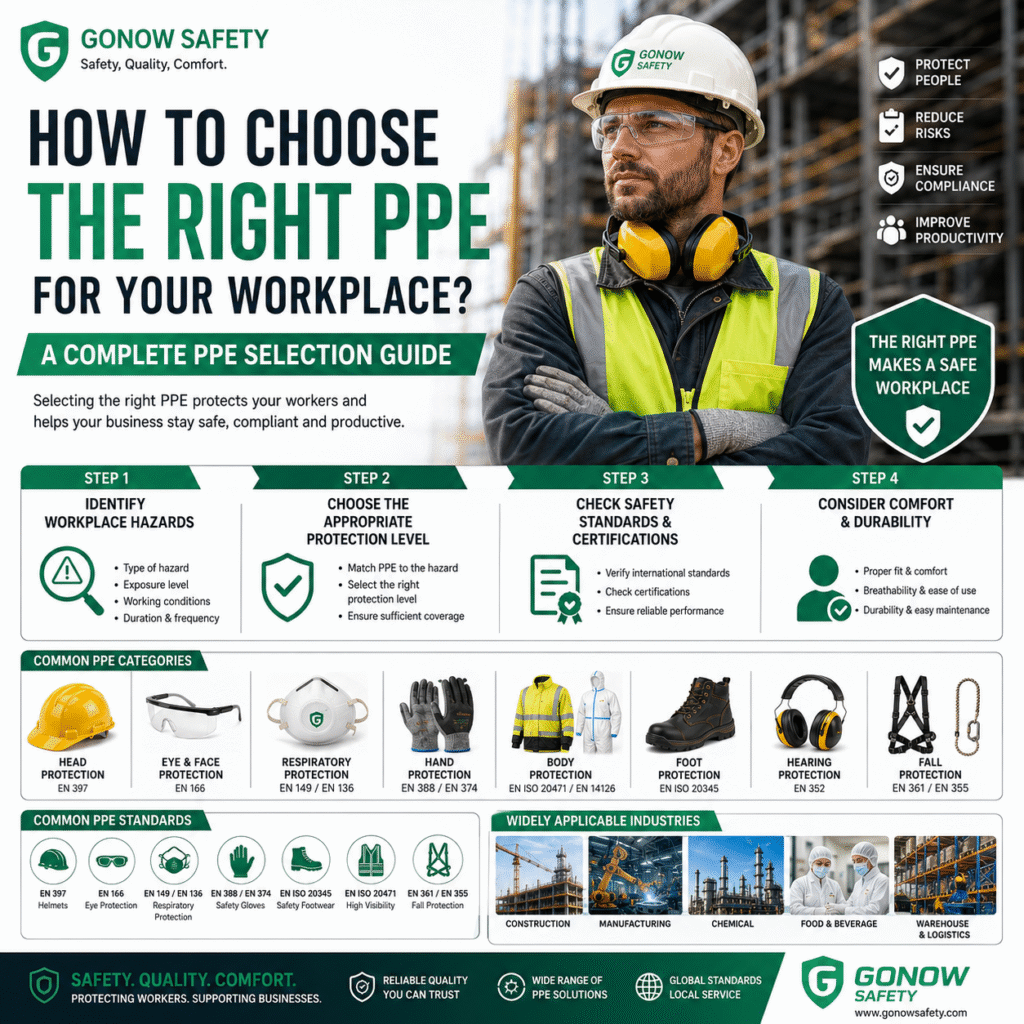
This PPE selection guide explains how to choose PPE based on four important steps:
- Identify workplace hazards
- Choose the appropriate protection level
- Check safety standards and certifications
- Consider comfort and durability
By following these steps, companies can select PPE that provides effective protection while improving worker safety and compliance.
Why Is Proper PPE Selection Important?
PPE is the last line of defense between workers and workplace hazards.
Using unsuitable PPE may lead to:
- Insufficient protection
- Increased risk of injury
- Reduced worker compliance
- Higher replacement costs
For example:
- A dust mask cannot replace a chemical respirator.
- General work gloves cannot replace cut-resistant gloves.
- Ordinary footwear cannot replace safety shoes with toe protection.
Choosing PPE correctly requires understanding the working environment, potential risks, and required protection levels.
Step 1: Identify Workplace Hazards
The first step in selecting PPE is understanding what hazards workers may encounter.
A proper hazard assessment should identify:
- Type of hazard
- Exposure level
- Working conditions
- Duration of exposure
- Frequency of risk
Common workplace hazards include:
Mechanical Hazards
Examples:
- Sharp edges
- Moving machinery
- Falling objects
- Impact risks
Recommended PPE:
- Safety helmets
- Cut-resistant gloves
- Safety glasses
- Safety shoes
Common industries:
- Construction
- Manufacturing
- Metalworking
Chemical Hazards
Examples:
- Chemical splashes
- Toxic substances
- Hazardous liquids
- Chemical vapors
Recommended PPE:
- Chemical protective suits
- Chemical-resistant gloves
- Full face respirators
- Gas masks
Common industries:
- Chemical processing
- Laboratories
- Industrial cleaning
Airborne Hazards
Examples:
- Dust
- Fumes
- Aerosols
- Biological particles
Recommended PPE:
- Disposable respirators
- Half-face respirators
- Full-face respirators
Common products:
- FFP1 masks
- FFP2 masks
- FFP3 masks
- N95 respirators
Heat and Flame Hazards
Examples:
- Welding sparks
- High temperatures
- Molten materials
Recommended PPE:
- Flame-resistant clothing
- Welding helmets
- Heat-resistant gloves
- Safety footwear
Fall Hazards
Examples:
- Working at height
- Roof operations
- Elevated platforms
Recommended PPE:
- Full body harnesses
- Safety lanyards
- Fall protection systems
Step 2: Choose the Right Protection Level
After identifying hazards, the next step is selecting PPE that provides the required level of protection.
Not all PPE provides the same protection level.
For example:
- Different gloves provide different levels of cut resistance.
- Different respirators protect against different particles or gases.
- Different helmets provide different impact and electrical protection.
Respiratory Protection Selection Example
When selecting respiratory PPE, consider:
Low Risk Dust
Suitable:
- Disposable dust masks
Example:
- FFP1 respirators
Moderate Particle Exposure
Suitable:
- Higher filtration respirators
Example:
- FFP2 / N95 respirators
High Risk Airborne Contaminants
Suitable:
- High-efficiency respirators
Example:
- FFP3 respirators
- Full face respirators with filters
Hand Protection Selection Example
Different tasks require different gloves.
| Hazard | Recommended Gloves |
|---|---|
| Sharp materials | Cut resistant gloves |
| Chemicals | Chemical resistant gloves |
| Heat | Heat resistant gloves |
| Heavy impact | Impact resistant gloves |
| General handling | Work gloves |
Selecting the wrong glove may reduce protection and increase injury risks.
Step 3: Check PPE Standards and Certifications
Safety standards help ensure PPE meets required performance levels.
Before purchasing PPE, always check whether products comply with relevant standards.
Common PPE standards include:
Head Protection
EN 397
Industrial safety helmets standard covering:
- Impact resistance
- Penetration resistance
- Optional electrical protection
Eye Protection
EN 166
Safety eyewear requirements including:
- Optical quality
- Impact protection
- Mechanical resistance
Respiratory Protection
Common standards:
- EN 149 – Filtering half masks
- EN 136 – Full face masks
- EN 143 – Particle filters
Safety Gloves
Common standards:
- EN ISO 21420 – General glove requirements
- EN 388 – Mechanical protection
- EN 374 – Chemical protection
Safety Footwear
EN ISO 20345
Safety footwear requirements including:
- Toe protection
- Slip resistance
- Puncture resistance
High Visibility Clothing
EN ISO 20471
Requirements for:
- Visibility
- Reflective materials
- Fluorescent materials
Step 4: Consider Comfort and Durability
Protection is the most important factor, but comfort and durability also affect PPE effectiveness.
Workers are more likely to wear PPE correctly when it is comfortable and suitable for long-term use.
Comfort Factors to Consider
Proper Fit
PPE should:
- Fit different users
- Allow movement
- Stay securely in place
Examples:
- Adjustable helmet suspension
- Proper glove sizing
- Comfortable respirator straps
Breathability
For long working hours, consider:
- Lightweight materials
- Ventilation design
- Moisture management
Especially important for:
- Protective clothing
- Respirators
- Safety vests
Ease of Use
Good PPE should be:
- Easy to put on
- Easy to remove
- Compatible with other PPE
For example:
Workers may need to wear:
- Safety glasses + respirators
- Helmets + hearing protection
- Gloves + protective sleeves
Durability and Maintenance
Durable PPE provides better long-term value.
When evaluating durability, consider:
- Material quality
- Working environment
- Frequency of use
- Cleaning requirements
- Replacement cycle
Reusable PPE should be regularly inspected for:
- Damage
- Wear
- Contamination
- Reduced performance
PPE Selection Checklist
Before purchasing PPE, ask:
✓ What hazards exist in the workplace?
✓ What level of protection is required?
✓ Does the PPE meet relevant safety standards?
✓ Is it suitable for the working environment?
✓ Is it comfortable for long-term use?
✓ Is it durable and easy to maintain?
✓ Can it be used together with other PPE?
Common PPE Selection Mistakes
Choosing PPE Based Only on Price
The cheapest option may not provide sufficient protection or durability.
Using One Type of PPE for All Tasks
Different jobs require different protection levels.
Ignoring Worker Comfort
Uncomfortable PPE may result in poor wearing compliance.
Not Checking Standards
PPE without proper certification may fail to provide expected protection.
Conclusion: Choosing the Right PPE Creates Safer Workplaces
Understanding how to choose PPE helps companies reduce workplace risks and protect employees effectively.
A successful PPE selection process should always start with hazard identification, followed by selecting the correct protection level, checking applicable standards, and considering comfort and durability.
The right PPE is not simply equipment — it is an essential part of a complete workplace safety system.
At GONOW SAFETY, we provide professional PPE solutions including safety helmets, protective gloves, respirators, protective clothing, and safety footwear for construction, manufacturing, chemical, food, and industrial applications.
Safety, Quality, Comfort — protecting workers with the right PPE.