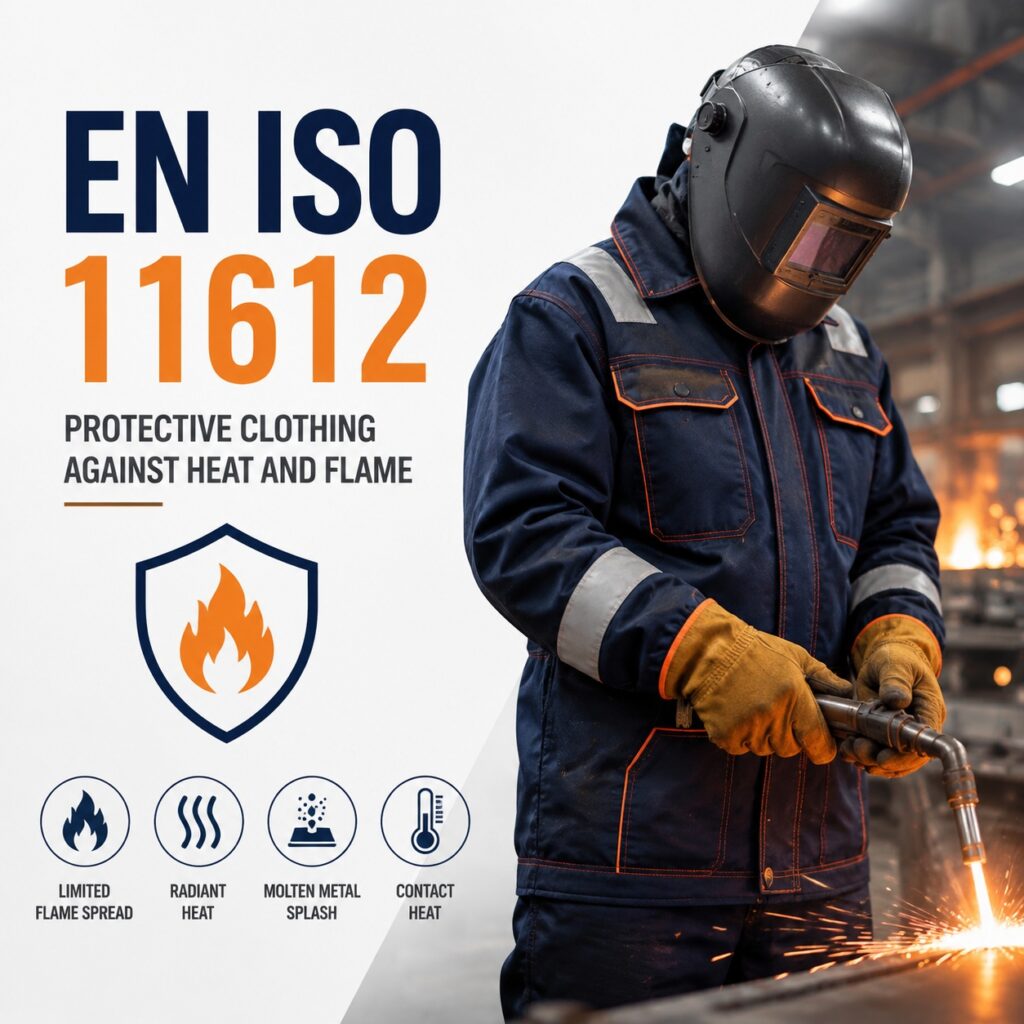
Workers in industries such as welding, metal processing, manufacturing, and energy production may face serious risks from heat, flames, and molten materials. Ordinary workwear cannot provide sufficient protection in these environments.
EN ISO 11612 is one of the most important international standards for protective clothing designed to protect workers against heat and flame hazards.
Understanding this standard helps companies choose the right flame-resistant clothing and improve workplace safety.
What Is EN ISO 11612?
EN ISO 11612 Protective clothing — Clothing to protect against heat and flame specifies the performance requirements for garments designed to protect workers exposed to heat and flame.
This standard evaluates protective clothing based on different types of thermal hazards, including:
- Limited flame spread
- Convective heat
- Radiant heat
- Contact heat
- Molten metal splash
- Large amounts of molten metal
Protective clothing certified to EN ISO 11612 helps reduce the risk of serious burns and injuries in high-temperature working environments.
What Does EN ISO 11612 Protect Against?
EN ISO 11612 clothing is designed for workplaces where workers may encounter:
1. Flame Exposure (Code A)
The garment must limit flame spread and prevent continuous burning.
Typical applications:
- Welding operations
- Metal processing
- Industrial maintenance
- Fire-related workplaces
2. Convective Heat (Code B)
This measures protection against heat transferred through hot air.
Common environments:
- Furnaces
- Foundries
- High-temperature production areas
3. Radiant Heat (Code C)
Radiant heat comes from hot surfaces, molten metal, or intense heat sources.
Examples:
- Steel plants
- Glass manufacturing
- Metal casting facilities
4. Molten Metal Splash (Codes D and E)
Workers handling molten metals require additional protection against metal splashes.
Industries include:
- Aluminum processing
- Steel manufacturing
- Casting operations
Understanding EN ISO 11612 Marking
EN ISO 11612 garments are usually marked with protection codes.
Example:
EN ISO 11612 A1 B1 C1 D1 E1 F1
Meaning:
| Code | Protection |
|---|---|
| A | Limited flame spread |
| B | Convective heat |
| C | Radiant heat |
| D | Molten aluminum splash |
| E | Molten iron splash |
| F | Contact heat |
The higher the performance level, the greater the protection provided.
EN ISO 11612 vs Regular Workwear
Many workers wear standard cotton uniforms, but ordinary fabrics may:
- Catch fire quickly
- Continue burning after ignition
- Shrink or melt under high temperatures
- Increase injury severity
Flame-resistant clothing designed according to EN ISO 11612 uses specially selected fabrics and construction methods to provide improved protection.
Who Needs EN ISO 11612 Protective Clothing?
EN ISO 11612 workwear is commonly used in:
Welding and Metalworking
Workers may experience:
- Sparks
- Molten metal
- Radiant heat
Recommended PPE:
- Flame-resistant jackets
- Welding clothing
- Protective trousers
Electrical and Energy Industries
Workers may face:
- Thermal hazards
- Flash fire risks
Common solutions:
- Flame-resistant coveralls
- Arc-rated protective clothing
Manufacturing Facilities
High-temperature processes require clothing that protects workers while maintaining comfort.
How to Choose EN ISO 11612 Protective Clothing?
1. Identify Workplace Hazards
Before purchasing, evaluate:
- Heat level
- Flame exposure possibility
- Molten metal risks
- Working duration
- Other PPE requirements
The correct protection level depends on the actual working environment.
2. Check Fabric Performance
Important factors include:
- Flame-resistant fabric quality
- Durability after washing
- Breathability
- Comfort during long shifts
3. Consider Worker Comfort
Protective clothing must be worn consistently to be effective.
Look for:
- Ergonomic designs
- Proper sizing
- Flexible movement
- Comfortable materials
4. Verify Certification
Before purchasing, confirm:
✔ EN ISO 11612 compliance
✔ Test reports
✔ Correct product labeling
✔ Manufacturer documentation
EN ISO 11612 and Other PPE Standards
EN ISO 11612 is often combined with other standards depending on workplace hazards.
Examples:
| Application | Additional Standards |
|---|---|
| Welding | EN ISO 11611 |
| Anti-static environments | EN 1149 |
| Electrical arc protection | IEC 61482 |
| General protective clothing | EN ISO 13688 |
A complete PPE solution often requires multiple standards working together.
How GONOW SAFETY Supports Flame Resistant Clothing Solutions
At GONOW SAFETY, we provide protective clothing solutions designed for demanding industrial environments.
Our product range includes:
- Flame-resistant coveralls
- Heat-resistant workwear
- Industrial protective clothing
- Customized PPE garments
We help customers select suitable protective clothing based on workplace hazards, industry requirements, and international safety standards.
With professional PPE sourcing capabilities and customized solutions, GONOW SAFETY supports companies looking for reliable safety protection worldwide.
Conclusion
EN ISO 11612 is a key standard for protective clothing used in environments involving heat and flame hazards.
Choosing the right flame-resistant workwear requires more than checking certification. Companies should consider workplace risks, protection levels, comfort, and product reliability.
The right protective clothing helps workers stay safer while maintaining productivity in challenging industrial environments.