Heat and flame hazards exist in many industries, but not all thermal risks are the same.
A worker in a manufacturing facility may need protection against:
- Heat exposure
- Flame contact
- Molten metal splash
while firefighters or emergency responders may face:
- Extreme radiant heat
- High-temperature fire environments
- Short-duration intense thermal exposure
Two important standards address different levels of thermal protection:
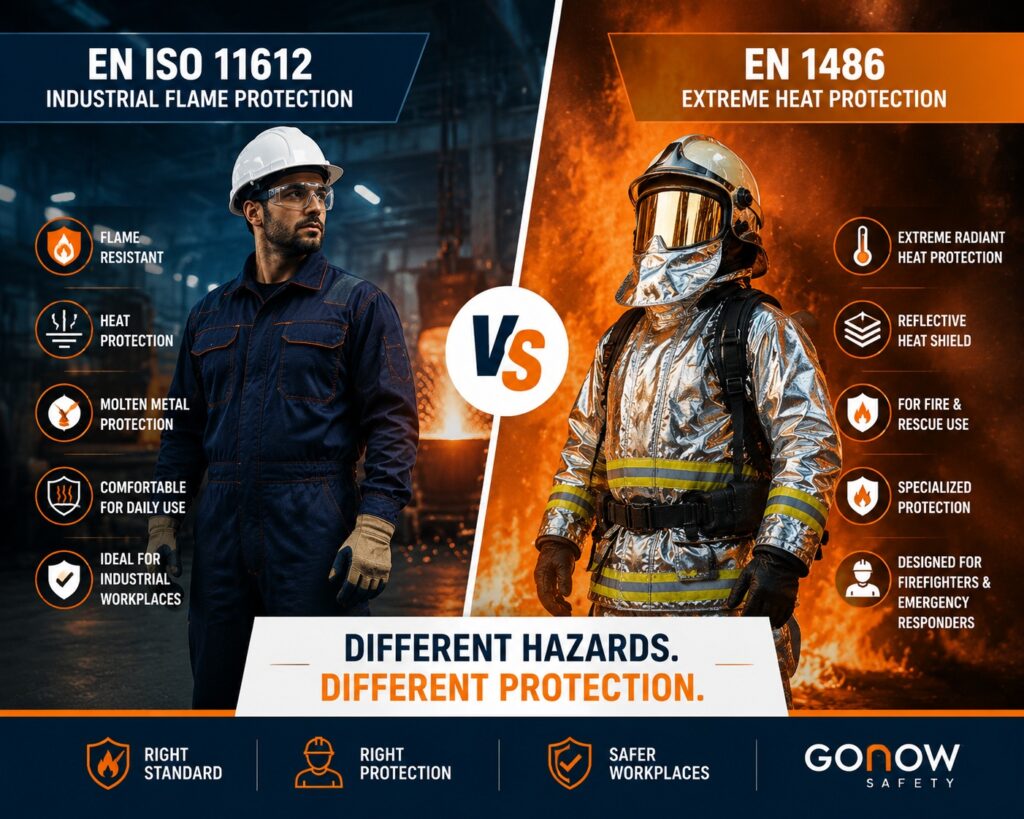
- EN ISO 11612 — Protective clothing against heat and flame
- EN 1486 — Specialized reflective protective clothing for firefighters
Understanding the difference helps companies choose the right protective clothing for the actual hazard.
What Is EN ISO 11612?
EN ISO 11612: Clothing to Protect Against Heat and Flame
EN ISO 11612 is one of the most widely used standards for industrial heat and flame protective clothing.
It specifies requirements for garments designed to protect workers against:
- Limited flame spread
- Convective heat
- Radiant heat
- Contact heat
- Molten metal splash
Common Applications
EN ISO 11612 clothing is widely used in:
Manufacturing
Examples:
- Metal processing
- Machinery operations
- Industrial maintenance
Welding and Fabrication
Workers may face:
- Sparks
- Heat exposure
- Flame risks
Energy and Utilities
Applications include:
- Electrical maintenance
- Industrial operations
What Is EN 1486?
EN 1486: Specialized Reflective Heat Protective Clothing
EN 1486 is designed for extreme thermal environments where workers may face very high levels of radiant heat.
It focuses on:
- Reflective heat protection
- Extreme thermal exposure
- Specialized firefighting applications
Common Applications
EN 1486 is mainly used for:
- Firefighting operations
- Emergency response
- High-temperature rescue situations
EN ISO 11612 vs EN 1486: Key Differences
| Feature | EN ISO 11612 | EN 1486 |
|---|---|---|
| Main Purpose | Industrial heat and flame protection | Extreme heat protection |
| Typical Users | Industrial workers | Firefighters & emergency responders |
| Hazard Level | Normal to high industrial hazards | Extreme thermal environments |
| Main Protection | Flame resistance and heat transfer protection | Reflective radiant heat protection |
| Typical Garment | FR coveralls, jackets, workwear | Reflective heat suits |
Protection Focus Comparison
EN ISO 11612
Designed to protect against:
Flame Spread
Helps prevent clothing from continuing to burn.
Convective Heat
Protection from hot air exposure.
Radiant Heat
Protection from heat radiation sources.
Molten Metal Splash
Protection for certain industrial applications.
EN 1486
Designed for:
Extreme Radiant Heat
Reflective outer layers help reduce heat absorption.
Fire Rescue Conditions
Used where workers approach intense heat sources.
Short-Duration High Thermal Exposure
Provides specialized protection during extreme situations.
Material and Design Differences
EN ISO 11612 Clothing
Common features:
- Flame-resistant fabrics
- Comfortable industrial design
- Daily workplace usability
Examples:
- FR coveralls
- Flame-resistant jackets
- Protective trousers
EN 1486 Clothing
Common features:
- Aluminum reflective outer layer
- Multi-layer thermal insulation
- Specialized firefighter design
Examples:
- Reflective heat suits
- Rescue suits
- High-temperature protective ensembles
EN ISO 11612 vs EN 1486: Which One Should You Choose?
Choose EN ISO 11612 When:
Your workplace involves:
✔ Industrial heat exposure
✔ Flame risks
✔ Welding sparks
✔ Hot surfaces
✔ Routine operations
Examples:
- Manufacturing plants
- Metal industries
- Maintenance work
Choose EN 1486 When:
Your workplace involves:
✔ Extreme radiant heat
✔ Fire rescue operations
✔ High-temperature emergencies
✔ Close approach to heat sources
Examples:
- Fire brigades
- Emergency response teams
- Specialized rescue operations
Can One Garment Meet Both Standards?
In some cases, protective clothing systems may combine multiple protection standards.
For example:
Industrial workers may require:
- EN ISO 11612
- EN 1149-5
- IEC 61482
for:
- Flame protection
- Anti-static protection
- Arc flash protection
However, EN 1486 represents a specialized protection level designed for extreme thermal situations.
It is not simply a higher version of EN ISO 11612.
Common Mistakes When Selecting Heat Protective Clothing
Mistake 1: Choosing the Highest Protection Level Automatically
More protection does not always mean better suitability.
Heavy specialized garments may reduce:
- Mobility
- Comfort
- Working efficiency
Mistake 2: Confusing Flame Resistance With Extreme Heat Protection
A flame-resistant coverall does not automatically protect against extreme radiant heat.
Mistake 3: Ignoring Exposure Duration
Thermal protection depends on:
- Heat intensity
- Exposure time
- Working distance
How GONOW SAFETY Supports Heat Protection Solutions
At GONOW SAFETY, we provide protective clothing solutions designed for different industrial hazards.
Our solutions include:
- Flame-resistant clothing
- Heat protective garments
- Welding protective clothing
- Arc flash protective clothing
- Customized PPE solutions
We help customers select suitable PPE based on:
- Workplace risks
- Industry requirements
- International safety standards
From industrial flame protection to specialized thermal protection, GONOW SAFETY supports safer workplaces with reliable PPE solutions.
Conclusion
EN ISO 11612 and EN 1486 both provide protection against thermal hazards, but they serve different purposes.
Simply:
EN ISO 11612
→ Industrial heat and flame protection for everyday workplace hazards.
EN 1486
→ Specialized protection for extreme heat and firefighting environments.
Choosing the correct standard ensures workers receive protection that matches their actual working conditions.