
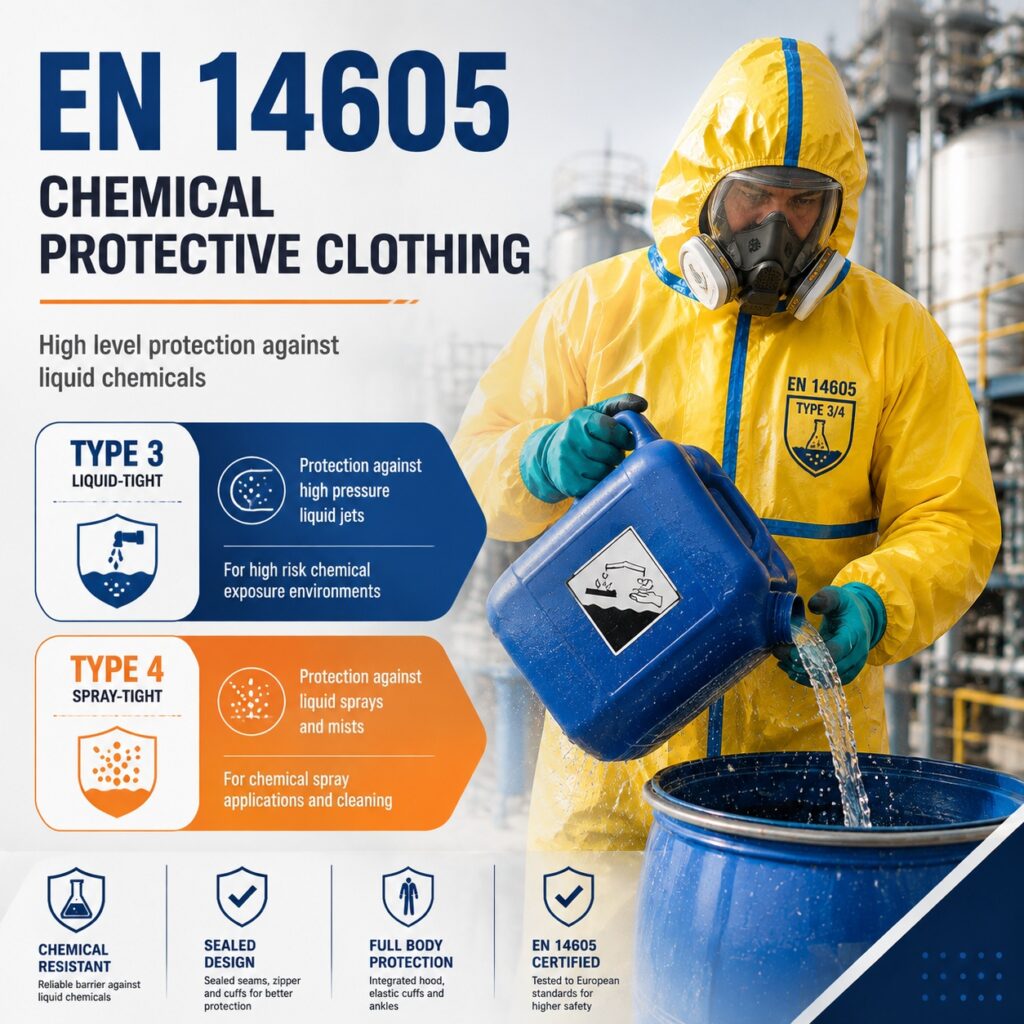
Workers in chemical processing, industrial manufacturing, emergency response, and hazardous material handling may face exposure to dangerous liquid chemicals. In these environments, ordinary workwear or limited splash protection may not provide sufficient safety.
Selecting the correct chemical protective clothing standard is essential for reducing exposure risks and protecting workers from hazardous substances.
EN 14605 is an important standard for protective clothing designed to provide protection against liquid chemicals, including higher-level protection against chemical sprays and liquid jets.
This guide explains what EN 14605 means, the difference between Type 3 and Type 4 protection, and how companies can choose suitable chemical protective clothing.
What Is EN 14605?
EN 14605 specifies requirements for protective clothing that provides protection against liquid chemicals.
Unlike EN 13034 Type 6 clothing, which is designed for limited chemical splash protection, EN 14605 covers garments that provide a higher level of protection against liquid chemical exposure.
EN 14605 mainly includes:
- Type 3: Liquid-tight protective clothing
- Type 4: Spray-tight protective clothing
These garments are designed for environments where workers may experience more significant chemical exposure.
Understanding EN 14605 Type 3 Protection
Type 3 — Liquid-Tight Chemical Protective Clothing
Type 3 clothing provides protection against strong liquid chemical penetration, including situations where chemicals may contact the garment under pressure.
Typical risks include:
- Liquid chemical jets
- Pressurized chemical leaks
- Accidental chemical releases
Common applications:
- Chemical manufacturing
- Industrial chemical handling
- Emergency response
- Hazardous material operations
Typical products:
- Chemical protective suits
- Liquid-tight coveralls
Understanding EN 14605 Type 4 Protection
Type 4 — Spray-Tight Chemical Protective Clothing
Type 4 clothing provides protection against liquid chemical sprays.
It is designed for environments where workers may encounter:
- Continuous chemical spraying
- Liquid mist
- Chemical cleaning processes
Common applications:
- Industrial cleaning
- Agricultural chemical spraying
- Pharmaceutical manufacturing
- Food processing sanitation
EN 14605 Type 3 vs Type 4: What Is the Difference?
| Standard | Protection Level | Exposure Type |
|---|---|---|
| EN 14605 Type 3 | Higher liquid protection | Liquid jets and pressurized chemicals |
| EN 14605 Type 4 | Spray protection | Liquid sprays and mists |
| EN 13034 Type 6 | Limited protection | Accidental chemical splashes |
The correct choice depends on:
- Chemical type
- Exposure possibility
- Working conditions
- Risk assessment
EN 14605 vs EN 13034: Which Chemical Suit Do You Need?
Many buyers are unsure whether they need EN 13034 or EN 14605.
EN 13034 Type 6
Suitable for:
- Low-level chemical exposure
- Occasional splashes
- Routine maintenance work
Examples:
- Cleaning operations
- General industrial handling
EN 14605 Type 3/4
Suitable for:
- Higher chemical exposure
- Chemical spray environments
- Liquid chemical hazards
Examples:
- Chemical processing
- Industrial spraying
- Emergency chemical response
Key Features of EN 14605 Chemical Protective Clothing
1. Strong Chemical Barrier
EN 14605 garments require materials that resist chemical penetration.
Important factors include:
- Chemical resistance
- Fabric performance
- Exposure time
2. Secure Seams and Closures
Chemical protection depends heavily on garment construction.
Important design features:
- Sealed seams
- Covered zippers
- Elastic cuffs
- Integrated hood designs
These features help reduce chemical entry points.
3. Full Body Protection
EN 14605 protective clothing usually provides coverage for:
- Head
- Arms
- Legs
- Torso
This reduces exposed areas during hazardous operations.
Industries Using EN 14605 Protective Clothing
1. Chemical Manufacturing
Workers may handle:
- Acids
- Solvents
- Industrial chemicals
Recommended:
- Type 3 chemical suits
- Chemical resistant gloves
- Face protection
2. Industrial Cleaning
High-pressure cleaning operations may involve:
- Chemical detergents
- Cleaning agents
- Liquid sprays
Recommended:
- Type 4 chemical protective clothing
3. Pharmaceutical Industry
Workers may require protection from:
- Chemical ingredients
- Cleaning chemicals
- Contamination risks
4. Emergency Response
Hazardous material teams may require higher-level chemical protection during chemical incidents.
How to Choose EN 14605 Chemical Protective Clothing?
Step 1: Evaluate Chemical Exposure
Consider:
- Chemical concentration
- Contact method
- Exposure duration
- Workplace conditions
Step 2: Select the Correct Protection Type
Choose:
Type 3
when dealing with:
- Liquid jets
- High-risk chemical exposure
Choose:
Type 4
when dealing with:
- Chemical sprays
- Liquid mist exposure
Step 3: Consider Complete PPE Protection
Chemical protective clothing should work together with:
- Chemical resistant gloves
- Respiratory protection
- Safety goggles
- Safety footwear
A complete PPE system provides better workplace protection.
Common Mistakes When Buying EN 14605 Clothing
Mistake 1: Choosing Type 6 Instead of Type 3/4
Limited splash protection may not be enough for high-risk chemical operations.
Mistake 2: Ignoring Seam Protection
Even resistant materials cannot provide effective protection if seams allow chemical penetration.
Mistake 3: Selecting PPE Without Risk Assessment
The correct standard depends on the actual workplace hazard.
How GONOW SAFETY Supports Chemical Protective Clothing Solutions
At GONOW SAFETY, we provide protective clothing solutions for industries requiring reliable chemical protection.
Our product solutions include:
- Chemical protective coveralls
- Liquid chemical protection suits
- Disposable protective clothing
- Customized PPE solutions
We help customers select suitable PPE based on:
- Workplace hazards
- Chemical exposure risks
- International safety standards
From limited chemical splash protection to higher-level chemical protection, GONOW SAFETY supports safer industrial operations worldwide.
Conclusion
EN 14605 provides important protection for workers exposed to higher levels of liquid chemical hazards.
Understanding the difference between:
- EN 13034 Type 6
- EN 14605 Type 3
- EN 14605 Type 4
helps companies select the right chemical protective clothing for their workplace.
The right PPE standard is not only about compliance — it is about protecting workers in real working environments.