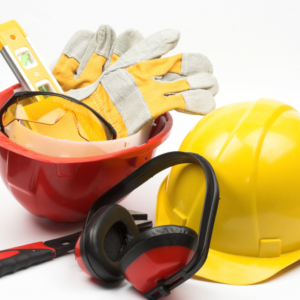
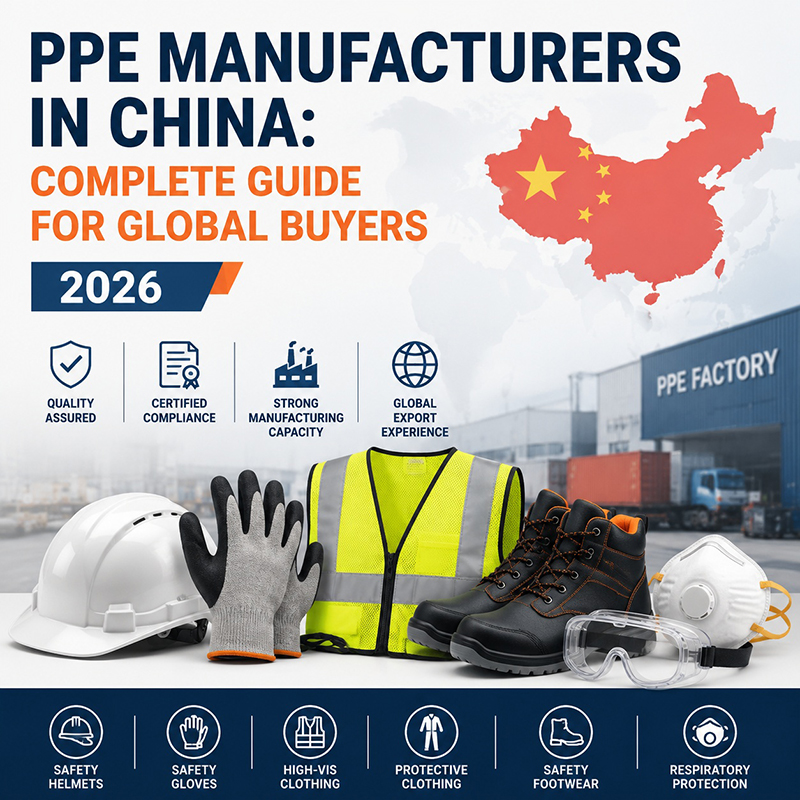
China has become the world’s leading manufacturing center for Personal Protective Equipment (PPE), supplying safety products to construction companies, industrial facilities, mining operations, oil and gas projects, logistics providers, and government organizations worldwide.
For international buyers, selecting the right PPE manufacturer is not simply about finding the lowest price. Product quality, certification compliance, manufacturing capability, and long-term reliability are equally important factors.
This guide explains how to identify a reliable PPE manufacturer in China and what buyers should consider before placing an order.
Why Global Buyers Source PPE from China
China offers several advantages that make it one of the preferred destinations for PPE sourcing:
Competitive Manufacturing Costs
Large-scale production and mature supply chains allow Chinese manufacturers to offer competitive pricing while maintaining product quality.
Wide Product Selection
Many manufacturers provide complete PPE solutions, including:
- Safety Helmets
- Safety Gloves
- High-Visibility Clothing
- Protective Coveralls
- Safety Footwear
- Respiratory Protection
- Traffic Safety Products
Export Experience
Leading Chinese PPE suppliers regularly export to:
- North America
- Europe
- Middle East
- Africa
- Southeast Asia
- South America
This experience helps streamline documentation, packaging, compliance requirements, and logistics processes.
Customization Services
Many PPE manufacturers offer OEM and ODM services, allowing distributors and importers to develop private-label safety products.
How to Choose a Reliable PPE Manufacturer in China
Not all suppliers offer the same level of quality and service. Before selecting a manufacturer, buyers should evaluate several critical factors.
1. Verify Product Certifications
Certification is one of the first indicators of product quality and compliance.
Depending on the target market, PPE products may require:
European Market
- CE Certification
- EN397 Safety Helmet Standard
- EN388 Protective Gloves Standard
- EN ISO 20471 High-Visibility Clothing Standard
North American Market
- ANSI Standards
- OSHA Requirements
International Standards
- ISO 9001 Quality Management System
Always request certification documents and verify their validity before placing large orders.
2. Evaluate Manufacturing Capability
A reliable PPE factory should demonstrate:
- Stable production capacity
- Modern manufacturing equipment
- Consistent quality control procedures
- Material traceability systems
- Experienced production teams
When possible, request factory photos, videos, or third-party audits.
3. Assess Quality Control Procedures
Quality control directly affects worker safety.
Ask potential suppliers about:
- Incoming material inspection
- In-process quality checks
- Final product inspection
- Testing procedures
- Defect management systems
Manufacturers with documented quality procedures typically deliver more consistent products.
4. Review Export Experience
International trade requires more than manufacturing capability.
Experienced exporters can assist with:
- Product labeling requirements
- Packaging compliance
- Shipping documentation
- Customs clearance support
- Certification paperwork
This reduces delays and potential compliance issues.
Common PPE Products Sourced from China
Safety Helmets
Safety helmets remain one of the most frequently sourced PPE products.
Applications include:
- Construction
- Infrastructure Projects
- Mining
- Utilities
- Manufacturing
Key considerations:
- Impact resistance
- Suspension system quality
- Comfort and ventilation
- Compliance certifications
Safety Gloves
Different industries require different glove solutions.
Common categories include:
- Cut-resistant gloves
- Coated work gloves
- Chemical-resistant gloves
- Welding gloves
- General-purpose industrial gloves
High-Visibility Clothing
High-visibility garments improve worker visibility in hazardous environments.
Widely used in:
- Road Construction
- Logistics Operations
- Warehousing
- Airport Ground Services
Protective Clothing
Protective clothing helps reduce exposure to:
- Chemicals
- Heat
- Sparks
- Dust
- Mechanical hazards
Safety Footwear
Industrial safety footwear protects workers against:
- Impact injuries
- Compression hazards
- Puncture risks
- Slip accidents
Common Mistakes Buyers Make When Sourcing PPE
Many procurement teams focus primarily on price. This can lead to quality issues and higher long-term costs.
Avoid these common mistakes:
Choosing Based on Price Alone
The lowest-priced supplier may not provide consistent quality.
Skipping Sample Evaluation
Always test samples before placing bulk orders.
Ignoring Certifications
Unverified certifications can create compliance risks.
Not Reviewing Quality Systems
Strong quality systems are essential for repeat orders.
Failing to Assess Communication
Poor communication often leads to production delays and misunderstandings.
Example: What to Look for in a Professional PPE Supplier
A professional PPE supplier should provide:
✓ Complete product documentation
✓ Quality inspection procedures
✓ Export experience
✓ Responsive communication
✓ Customization capabilities
✓ Long-term supply stability
Companies such as GONOW SAFETY focus on providing integrated PPE solutions for distributors, contractors, industrial projects, and safety equipment importers worldwide.
Product categories include:
- Safety Helmets
- Safety Vests
- Safety Gloves
- Protective Clothing
- Safety Footwear
- Traffic Safety Products
For buyers seeking a dependable sourcing partner, working with an experienced manufacturer can simplify procurement and improve supply chain reliability.
Future Trends in China’s PPE Industry
The PPE industry continues to evolve as workplace safety standards increase globally.
Key trends include:
Lightweight PPE
Improved comfort encourages worker compliance.
Sustainable Materials
Manufacturers are increasingly exploring environmentally responsible materials.
Smart PPE Technology
Advanced products now incorporate:
- Sensors
- Real-time monitoring
- Wearable safety systems
Industry-Specific Solutions
Customized PPE designed for specific industries continues to grow in demand.
Conclusion
China remains one of the world’s most important sources of Personal Protective Equipment. However, selecting the right supplier requires more than comparing prices.
Buyers should evaluate manufacturers based on certifications, quality management systems, export experience, communication efficiency, and long-term reliability.
By following a structured supplier evaluation process, companies can reduce sourcing risks, improve worker safety, and establish successful long-term partnerships with qualified PPE manufacturers in China.